
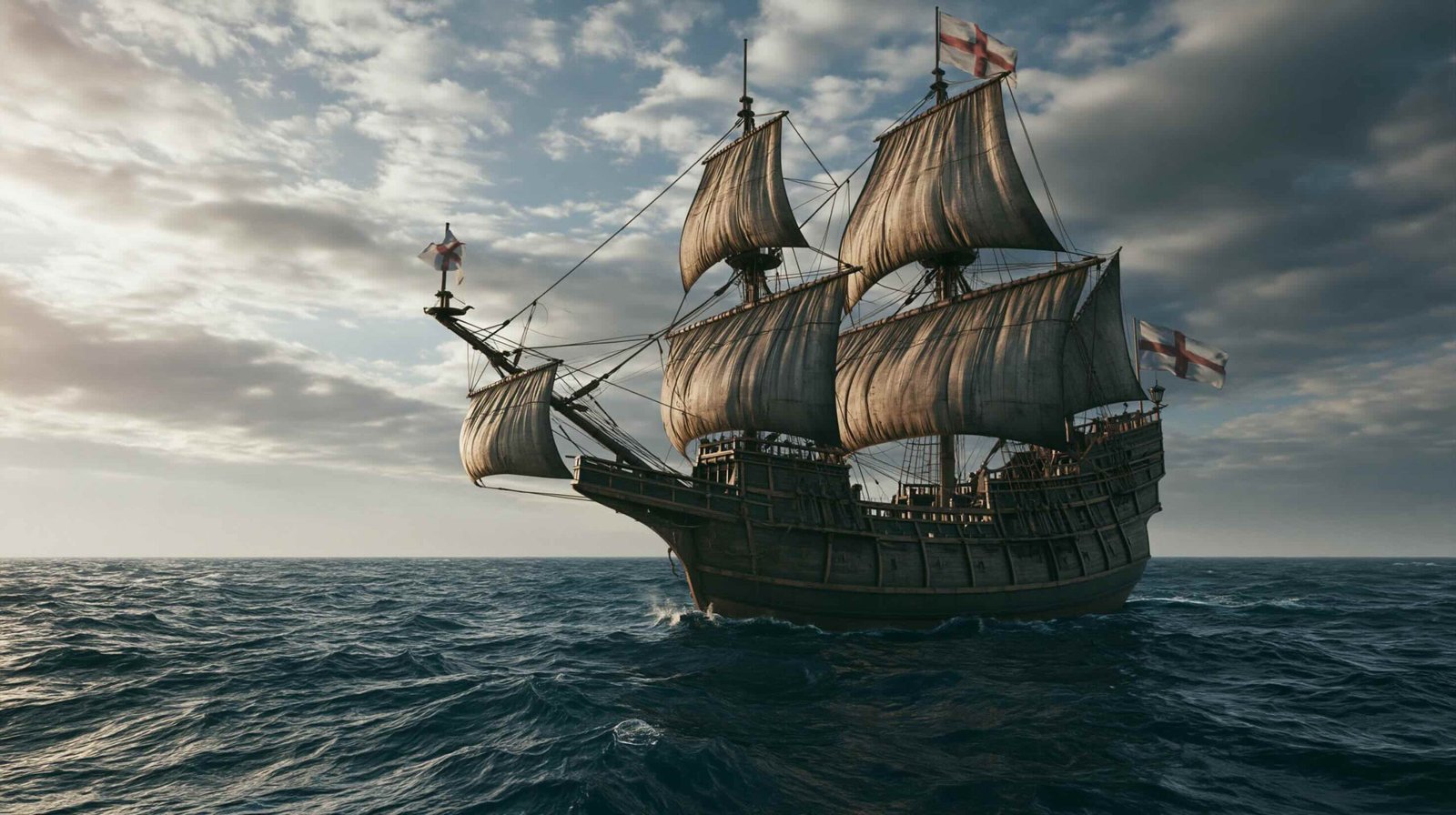

A ship called Jesus of Lübeck launched from a German port around 1520. It was a carrack, a large sailing vessel weighing about 700 tons. It had four masts and a high forecastle. For about 20 years, it served as a representative ship for the Free City of Lübeck, a powerful trading city in the Hanseatic League.
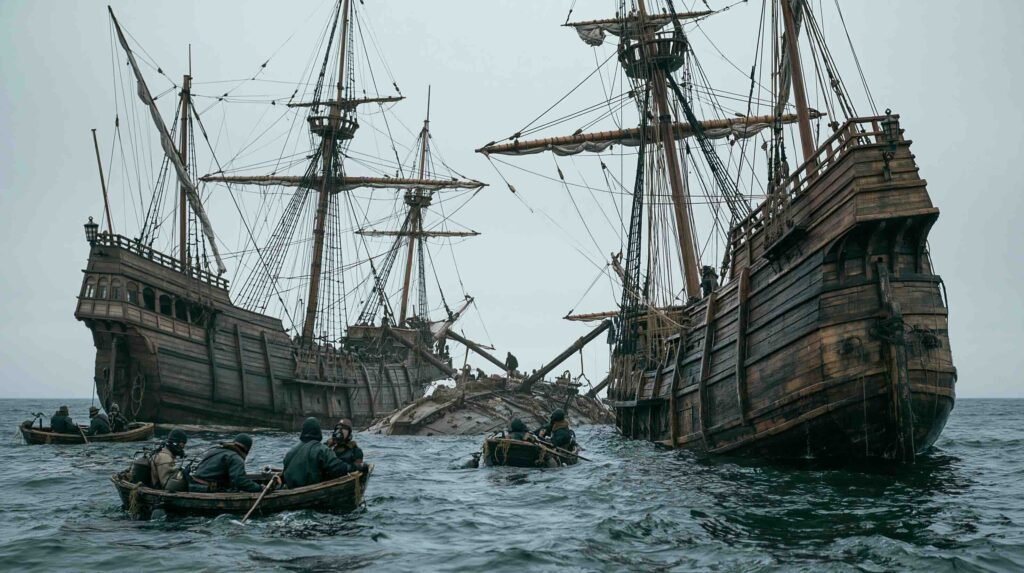
Then King Henry VIII of England bought it. Around 1540, Henry needed ships to build his navy. He acquired Jesus of Lübeck and put it to work. The ship saw action during the French invasion of the Isle of Wight in 1545. That same year, Henry’s flagship, the Mary Rose, sank in the Solent. Jesus of Lübeck and another ship called Samson tried to raise the Mary Rose from the seabed. They failed.
After Henry died, the ship sat in English harbour’s. It was aging. It needed repairs. But Queen Elizabeth I saw a different use for it. In 1563, Elizabeth chartered Jesus of Lübeck to a group of merchants. The lead merchant was John Hawkins, a privateer from Plymouth. Hawkins had already made one slaving voyage in 1562 using smaller ships. He had transported 300 Africans from Guinea to Hispaniola and sold them to Spanish planters. The profits were enormous. Elizabeth invested in the next voyage. She wanted a cut.
Between 1562 and 1568, Hawkins organised four slave voyages to West Africa and the West Indies. Jesus of Lübeck became his flagship for the most important of these expeditions. It was the largest ship in his fleet.

The pattern was brutal. Hawkins’ ships would sail to the coast of West Africa, near modern Sierra Leone and Ghana. His men would raid villages or trade with local leaders for captives. They packed the Africans into the holds of their ships, chained together in spaces too small to stand. The voyage across the Atlantic took 6 to 8 weeks. Many died. Those who survived were sold in the Caribbean.
The name of the flagship did not go unnoticed. Journalist Michael Eli Dokosi reported that Hawkins persuaded some West Africans to board the “Good Ship Jesus” by promising them salvation. Then he sold them into slavery. The Church of the Brethren’s publisher later asked: “Can there be a worse case of taking the Lord’s name in vain?”
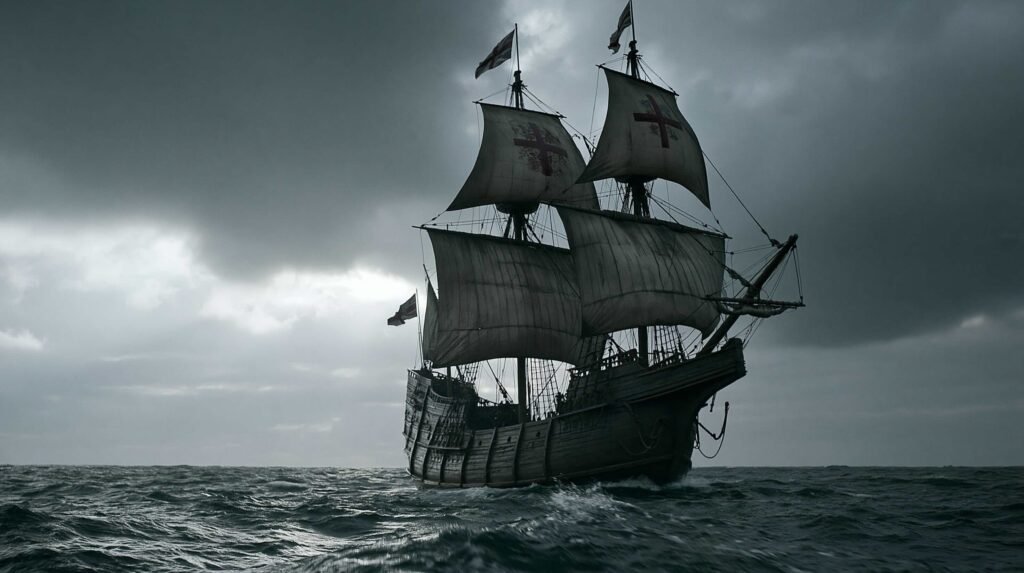
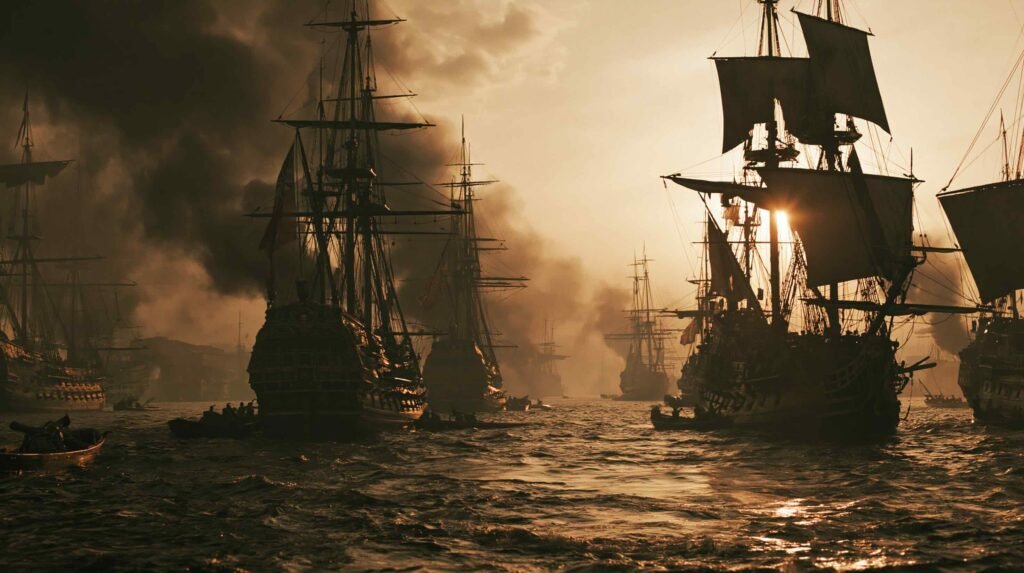
On the final voyage in September 1568, Jesus of Lübeck and several other English ships anchored at San Juan de Ulúa, the Spanish port for Veracruz, Mexico. They needed repairs and supplies. A Spanish treasure fleet arrived and trapped them in the harbor. The Spanish attacked. In the resulting battle, Spanish forces disabled and captured Jesus of Lübeck. The heavily damaged ship was later sold to a local merchant for 601 ducats.
Jesus of Lübeck was gone. But the trade it pioneered was just beginning. Over the next 239 years, British ships transported an estimated 3.1 million enslaved Africans across the Atlantic. British merchants built ports like Liverpool and Bristol on the profits. British banks financed the trade. British plantations in the Caribbean produced sugar, tobacco, and cotton that fuelled the Industrial Revolution.
The ship’s name has haunted historians and artists. In 1991, British artist Keith Piper created an exhibition called “A Ship Called Jesus”. He explored the contradiction between Christian symbolism and the brutality of the slave trade. He wrote: “In 1564, we were forced to embark on a voyage in a Ship named Jesus. Metaphorically, we have been sailing in her ever since”.
Jesus of Lübeck was captured in 1568. But its legacy lasted for centuries. A 700-ton carrack with a holy name became the vessel that launched England’s participation in one of history’s greatest crimes. The ship is gone. The questions it raises are not.
Sources:
- Wikipedia – Jesus of Lübeck (https://en.wikipedia.org/wiki/Jesus_of_L%C3%BCbeck)
- Facebook post – The Slave Ship Name (https://www.facebook.com/originalfireman/posts/the-slave-ship-name-jesus-in-the-atlantic-slave-trade-under-the-pirate-john-hawk/1011186009316831/)
- Keith Piper – Ship Called Jesus Gallery Guide (https://www.keithpiper.info/scj_leaflets.html)
• • Brethren.org – In the name of Jesus (https://www.brethren.org/messenger/from-the-publisher/in-the-name-of-jesus/)