
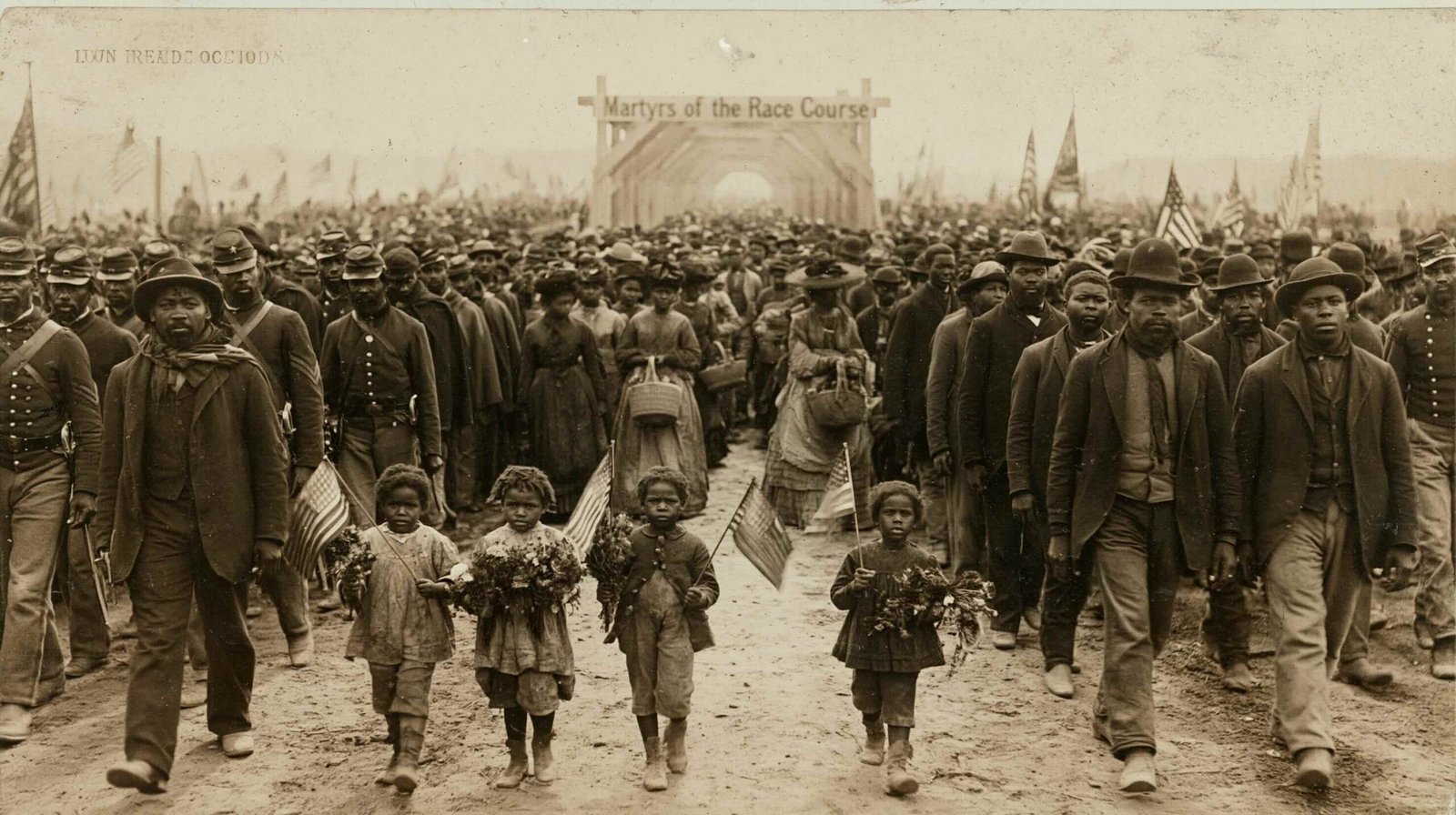

On May 1, 1865, just three weeks after Confederate General Robert E. Lee surrendered at Appomattox, an extraordinary event took place in Charleston, South Carolina. Ten thousand people gathered at the Washington Race Course and Jockey Club. Most of them were newly freed Black Americans.
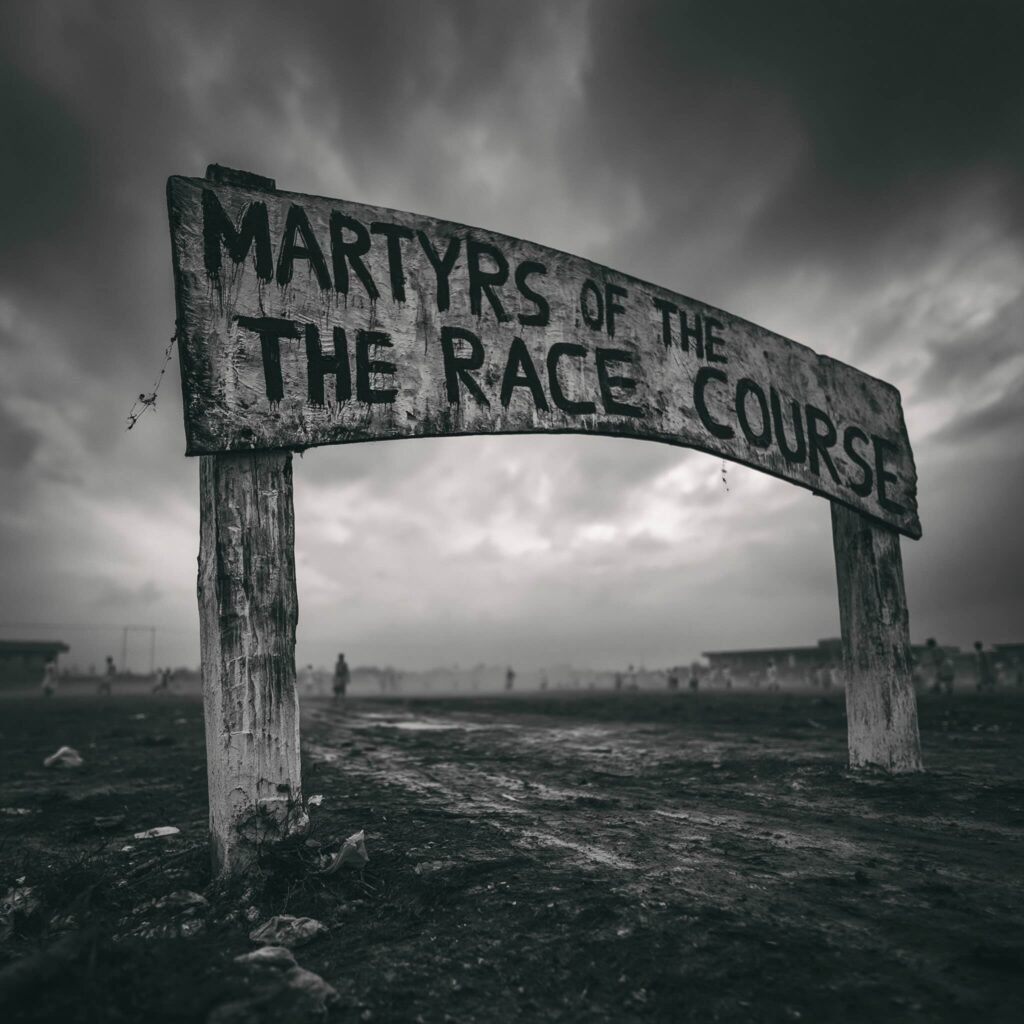
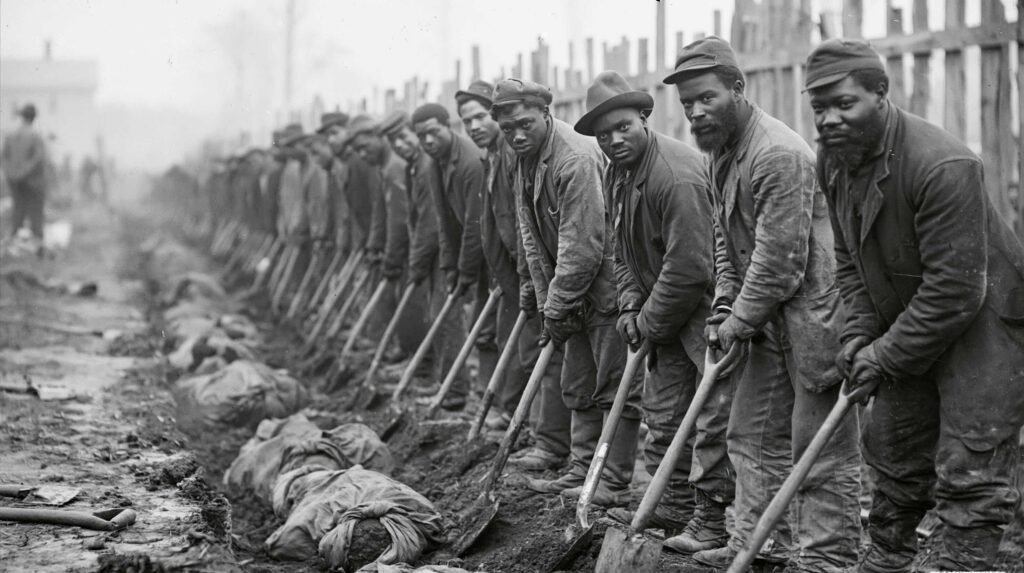
The race course had served a dark purpose during the war. Confederates had converted the site into an outdoor prison for captured Union soldiers. The conditions were brutal. At least 257 Union prisoners died from exposure and disease. Their bodies were thrown into a shallow mass grave behind the grandstand. When Confederate forces evacuated Charleston in February 1865, the enslaved population of the city found themselves free. Among the first acts of this newly liberated community was a sacred duty. They would not leave the Union dead in an unmarked pit.
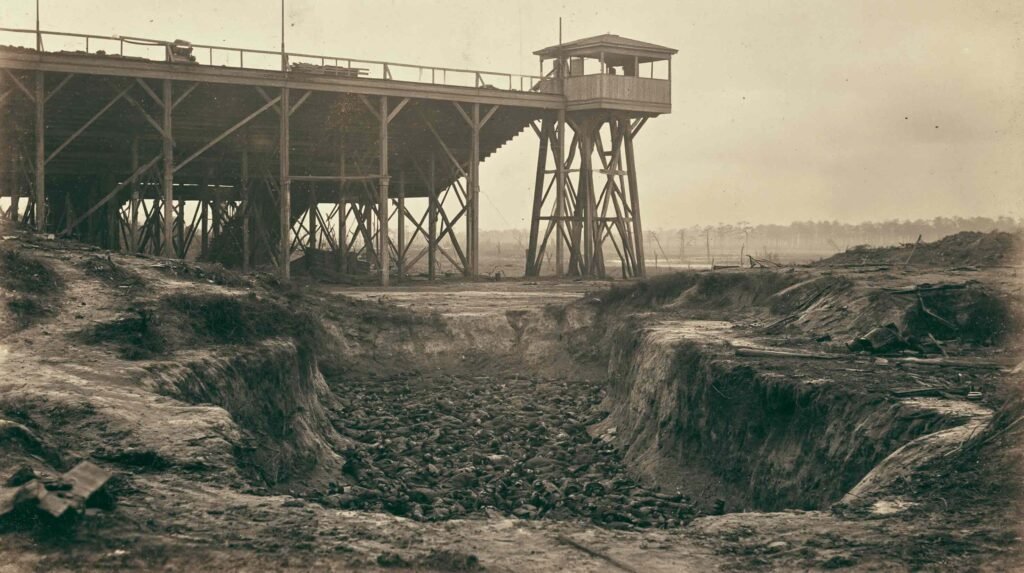
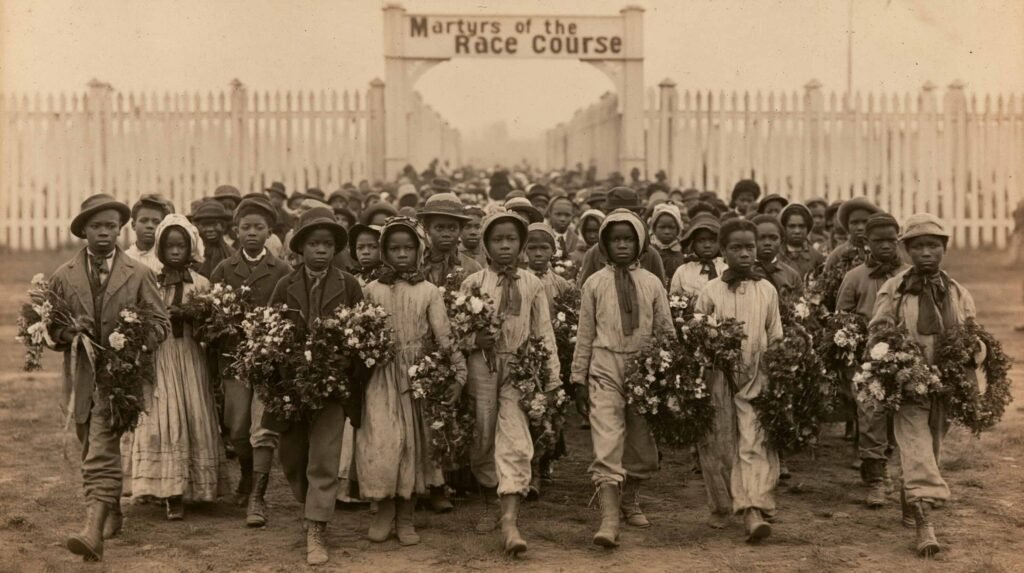
In the weeks leading up to May 1, about two dozen Black Charlestonians exhumed the mass grave. They reinterred each soldier in an individual, marked grave. They built a ten-foot-tall whitewashed fence around the cemetery. At the entrance, they erected an arch with black-painted letters that read “Martyrs of the Race Course”. On May 1, the procession began around nine in the morning. Three thousand Black schoolchildren led the parade, their arms overflowing with roses and flowers. They circled the race track and entered the cemetery under the arch.
Behind the children marched members of the Patriotic Association of Colored Men, an organization that had been distributing supplies to freed families. Then came Black women carrying baskets of flowers, wreaths, and crosses. Black ministers recited scripture. Black Union regiments, including the legendary 54th Massachusetts Volunteer Infantry, performed military drills. The children sang “The Star-Spangled Banner” and “John Brown’s Body,” a tribute to the fervent abolitionist. White missionaries and Union officers, including General Hartwell and Colonel Beecher, the brother of Harriet Beecher Stowe, stood in solidarity with the crowd.

James Redpath, the white director of the Freedmen’s Bureau in Charleston, described the day in the New-York Tribune as “a procession of friends and mourners as South Carolina or the United States never saw before”. When the ceremony ended, the graves were completely covered in flowers. “Not a speck of earth could be seen,” Redpath wrote. “There were few eyes among those who knew the meaning of the ceremony that were not dim with tears of joy”.
The event was forgotten. Not immediately, but within a few decades, it had been erased from public memory. By 1868, General John A. Logan, the head of a Union Army veterans’ group, issued an order designating May 30 as “Decoration Day”, a day to decorate the graves of fallen soldiers. Logan’s order is often credited as the official origin of Memorial Day.
But historian David Blight discovered the truth. In 1999, while researching at Harvard’s Houghton Library for his book “Race and Reunion: The Civil War in American Memory,” Blight found a collection of Union veterans’ papers. One folder was labeled “First Decoration Day.” Inside was a handwritten account of the May 1, 1865, Charleston event.
Blight called the Avery Research Center for African American History and Culture in Charleston. A graduate student named Damon Fordham answered. “I said, ‘I just found this in a collection of veterans materials. Have you ever heard of this story?’ And the guy said, ‘No. That never happened'”. Blight asked Fordham to check the microfilm of the Charleston Courier. Two hours later, Fordham called back. “Oh my God, here it is,” he said. The May 2, 1865, edition of the newspaper described the parade in detail.
The story had been suppressed. For more than a century, groups like the United Daughters of the Confederacy and the Ladies Memorial Association controlled the public memory of the South. They erected Confederate monuments, controlled school textbooks, and suppressed narratives that did not fit the “Lost Cause” mythology. In 1916, a United Daughters of the Confederacy official asked the Ladies Memorial Association of Charleston whether the May 1, 1865, event had actually occurred. The reply was a denial: “I regret that I was unable to gather any official information in answer to this”.
Today, the site is Hampton Park, named after Confederate General Wade Hampton III, who enslaved nearly 1,000 people before the war. The race course, the cemetery, and the arch are all gone. The Union soldiers’ bodies were moved to Beaufort National Cemetery in the 1880s. But a state historical marker was erected in Hampton Park in 2017. It reads: “On May 1, 1865, a parade to honor the Union war dead took place here. The event marked the earliest celebration of what became known as ‘Memorial Day'”.
The first Memorial Day was not organized by generals or politicians. It was organized by formerly enslaved people who understood exactly what the war had been about. As historian David Blight put it: “What you have there is black Americans recently freed from slavery announcing to the world with their flowers, their feet, and their songs what the War had been about. What they basically were creating was the Independence Day of a Second American Revolution”.
Sources:
- National Museum of American History (2013)
- Washington Post – “Black people may have started Memorial Day. Whites erased it from history” (2023)
- WCBD News 2 – “Hampton Park tied to one of nation’s first Memorial Day events” (2026)
- Vox – “How a group of African Americans was almost erased from the history of Memorial Day” (2016)
- History News Network – “The Overlooked Black History of Memorial Day” (2020)
- American Urban Radio Networks – “Charleston’s 1865 Tribute by Freed Black Americans” (2025)
- Nextdoor – “The Extraordinary Dawn of the First Memorial Day” (2026)