



Before there was a restaurant industry in America, before there was French cuisine in American kitchens, there was James Hemings. He was a chef. He was enslaved. And he is the reason you eat what you eat. He was born in 1765 in Virginia. His mother Elizabeth was enslaved. His father John Wayles was a white slave trader who also fathered Martha Jefferson, Thomas Jefferson’s wife. That meant James Hemings was a half brother to the woman who owned him by marriage. The family tree is tangled and brutal and impossible to separate from the property lines of a Virginia plantation.
When he was around eight years old, he became part of Thomas Jefferson’s household at Monticello, inherited through the Wayles estate. Jefferson noticed him. In 1784, when Jefferson was appointed America’s Minister to France, he decided to take Hemings with him. The plan was straightforward. Hemings would learn French cooking. He would come back and run the kitchen at Monticello. Jefferson would get a French trained chef without paying a white man’s salary to get one. What happened next was not what Jefferson planned.
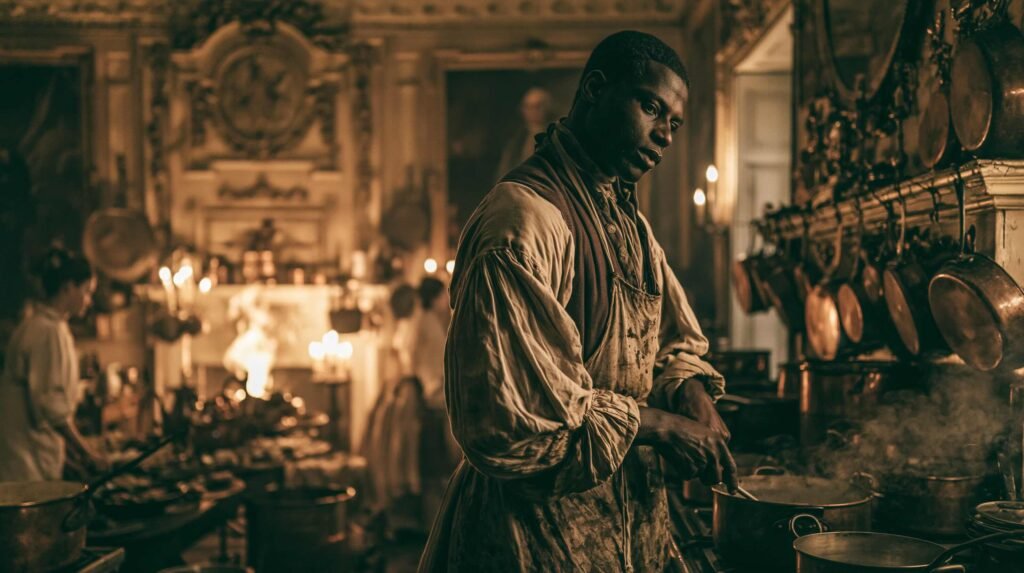
In Paris, Hemings did not just learn French cooking. He mastered it. He apprenticed with Monsieur Combeaux, a well known Parisian caterer and restaurateur. He worked under the lead chef of the Prince of Condé, one of the most prestigious kitchens in France. He studied pastry. He studied sauces. He paid for private French lessons out of his own money. By 1787, at 22 years old, he was chef de cuisine in Jefferson’s home on the Champs-Élysées.
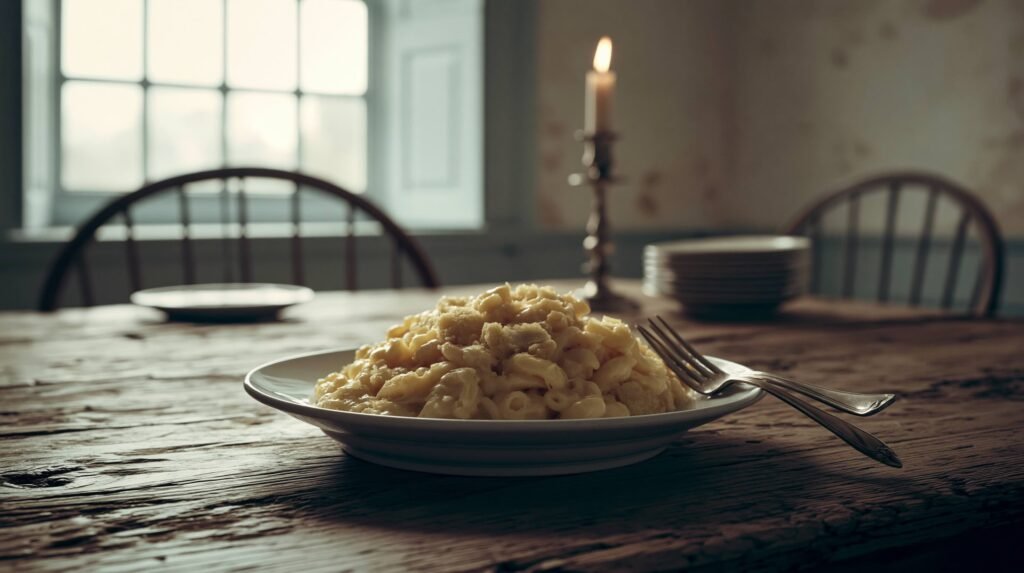
Think about that. A 22 year old Black man, legally enslaved, running a kitchen in one of the most prestigious addresses in Paris, managing a staff of white French cooks, preparing meals for the highest levels of European society. In America, he could not own himself. In Paris, he was a head chef. When the French Revolution escalated in 1789, Jefferson returned to the United States. Hemings came with him. And he brought recipes that Americans had never seen. Crème brûlée. Meringues. French fried potatoes. Macaroni and cheese.

He did not just bring the recipes. He adapted them. French techniques applied to American ingredients. The cooking he had learned in Paris became something new in Virginia. What Hemings served at Monticello was the beginning of a distinctly American approach to fine dining.
Jefferson valued his skill enough to make a deal. If Hemings trained a replacement, he would be freed. Hemings spent three years teaching his brother Paul everything he had learned. In 1796, Jefferson kept his word. James Hemings was granted manumission. He walked away from Monticello a free man.
He was 30 years old. He had spent his entire life in slavery. What he did next is not well documented. He lived in Philadelphia for a time. He worked. He was free but he was not equal, and the difference between those two things in 1790s America was a daily wound. In 1801, he died at 36. The cause of death is believed to be suicide.

He left no cookbook. He never owned a restaurant. The man who introduced America to some of its most beloved foods has no grave marker that bears his name. But the food survived. Every time someone orders mac and cheese at a diner, every time a plate of French fries lands on a table, every time crème brûlée is served at a dinner party, James Hemings is in that room.
His name was erased from the story. But the food never left.
Sources
Institute of Culinary Education, “James Hemings Brought America Its Favorite Foods” (ice.edu)
White House Historical Association, “Slavery and French Cuisine in Jefferson’s Working White House”
Wikipedia, “James Hemings”
Monticello.org, “The Life of James Hemings”
All That’s Interesting, “James Hemings: The Enslaved Chef Who Transformed American Cuisine”
BBC Travel, “The Enslaved Man Who Popularised Mac and Cheese”
ABC News / TODAY Food, “James Hemings: The Enslaved Chef of Thomas Jefferson”