
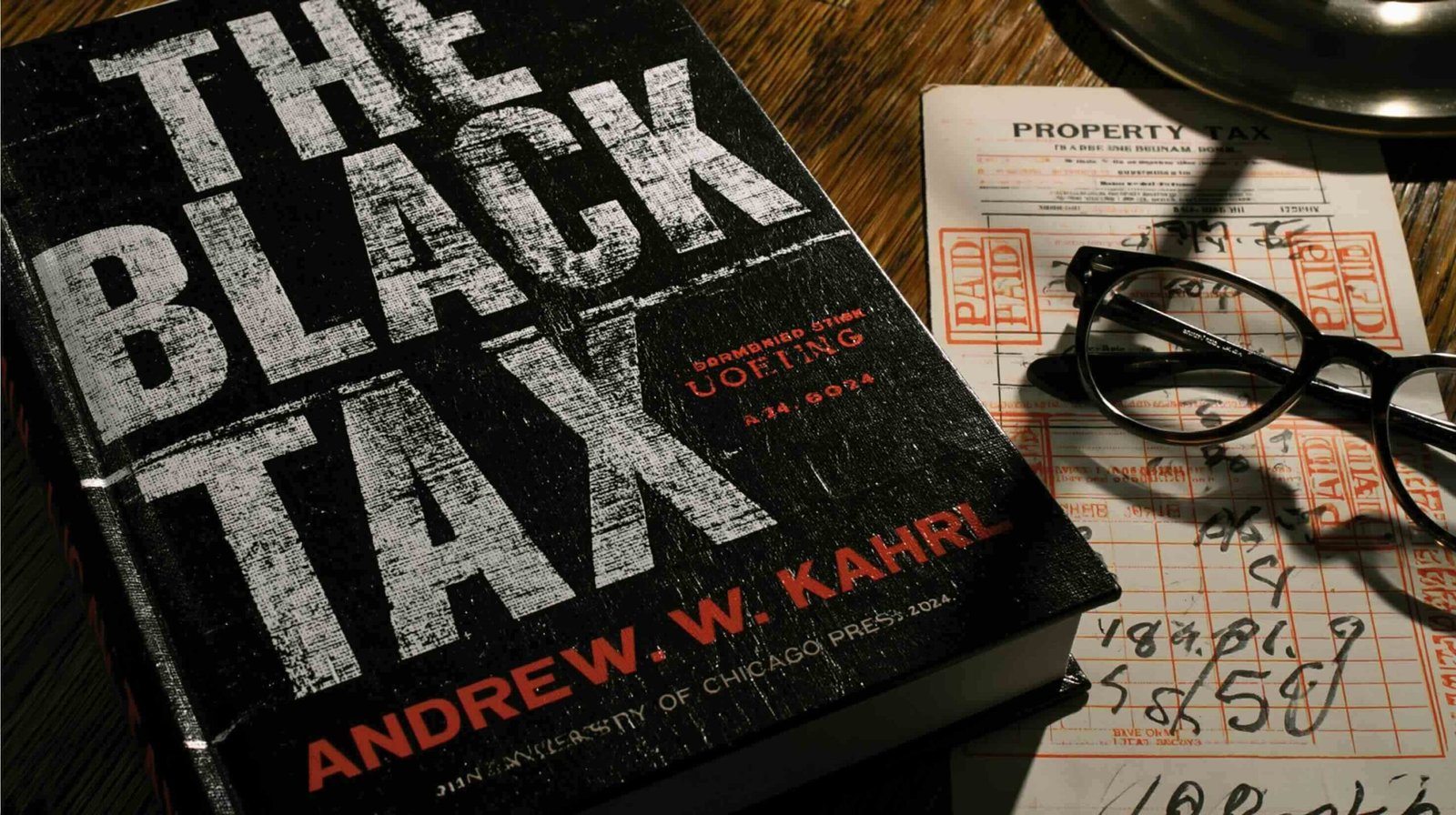

The facts, then. In 2024, historian Andrew W. Kahrl published a book that exposes one of the longest running cons in American history. The title is “The Black Tax: 150 Years of Theft, Exploitation, and Dispossession in America.” The argument is simple. From the end of Reconstruction to the present day, local tax assessors have consistently overtaxed the lands and homes that Black people own and the neighbourhoods where they live. This is not a metaphor. Kahrl puts numbers on it. Black Americans have been overtaxed by over 275 billion.They have lost an estimated 326 billion in land value. The cumulative generational wealth difference runs into the trillions.
The mechanism is local property taxes. In the post-Reconstruction South, former plantation owners received tax abatements on their large holdings. Poor Black farmers paid taxes on virtually every piece of property they owned, including tools, mules, and furniture. Between 1880 and 1910, Black taxpayers were subsidizing white school systems in every southern state. This was not a bug. It was a feature. Unequal tax burdens were designed to thwart Black independence by making it impossible to get an economic foothold. Expropriation of Black land was the goal. Lost Black property was added to the holdings of white beneficiaries.
The pattern followed Black migrants north. In Prince George’s County, Maryland, in 1928, property owned by a Black land development syndicate was assessed at nearly three times its market value and twenty times the assessed value of comparable white lots. Jim Crow school funding epitomised the dynamic. White politicians colluded with school boards, redistributing proceeds from Black taxpayers to over resourced white schools. The substandard education Black students received from this system imposed a double tax. Black families were “in a constant state of fundraising” because their taxes went to pay for white children’s school supplies.
Kahrl also exposes the predatory system of tax lien sales. If a property owner falls behind on taxes, the government sells the lien to a private investor. The investor can demand repayment with interest, fees, and penalties. Some states cap the interest at 48 percent. In too many cases, the investor simply takes the property.

The book tells the story of Lillian Ware, a Black homeowner in Evanston, Illinois, who regularly paid her taxes but missed one special assessment bill. A tax buyer purchased her lien, waited two years, and demanded she pay $17,000 or be evicted. She lost her home. The most harrowing chapter may be the story of Edwards, Mississippi. In 1964, the town sold its public swimming pool to avoid integration. A private corporation bought it and installed a wall with a members only sign. When Black residents protested, a white official told them they “were going to pay for it. Your taxes are going to be doubled”.

White officials made good on the threat. The assessor raised assessments on Black owned property by 51 percent while raising white property by only 5.2 percent. Supporters of the boycott received the greatest increases. Black informants who served the white power structure saw their assessments unchanged. The town waited until the appeal period expired before mailing tax bills. When Black homeowners complained, an official admitted the higher taxes were sent “to teach them a lesson”.
The Lawyers’ Committee for Civil Rights under Law challenged the assessments. A sociologist named James W. Loewen was hired to determine if race had been a factor. He found that it had. The Black residents of Edwards lost the case. The Fifth Circuit upheld the decision. The Supreme Court declined to hear the case.
Kahrl follows the story into the era of Black mayors. In Gary, Indiana, Mayor Richard Hatcher campaigned on making U.S. Steel pay its fair share. The company had received fraudulently low property assessments costing the city between 16 million and 30 million in annual revenue. When Hatcher tried to collect, the company threatened to leave. The local tax assessor fudged his assessment. Hatcher was forced to lay off workers and cut school and fire department budgets .
Kahrl argues that white taxpayer backlash against Black political power was vicious. Black political power posed the direct threat of fair taxation and full government responsiveness. White movements used taxpayer rights language to reject the social compact and embrace austerity rather than restructuring inequities.
The book also explodes another myth. Black owned land was valuable precisely because it was Black owned. Developers could acquire it cheaply through tax sales and partition sales. In the Sea Islands of South Carolina, between 1954 and 1969 alone, more than 14,000 Black people lost their land, in no small part due to tax auctions .
The value of Black people’s land could only be fully realized once they had been pushed off it. A study cited by Kahrl explains why. Researchers created identical neighborhood videos, varying only the race of the residents. White viewers consistently preferred the all white neighborhood. It was the absence of Black people that made the neighborhood more valuable .
Kahrl ends the book in the present. Federal tax cuts and state austerity have made local governments even more dependent on property taxes. The same structures that dispossessed Black landowners in the 1890s are still in place. The book is a sweeping indictment. And the indictment is still open .
Sources:
- University of California, Berkeley Library – The Black Tax record
- Yale Lillian Goldman Law Library – The Black Tax record
- Democracy Journal – “Taxed for Being Black” by Victor Ray (2024)
- Modern American History – “Use-Value, Exchange-Value, and the Empty Promise of Black Homeownership” (2024)
- Modern American History – “Localized Racism, Legalized Theft, and the Long Dispossession of U.S. Cities” (2024)
- Modern American History – “Busting Myths” by Dorothy A. Brown (2024)
- Cambridge University Press – Into the Stacks book launch