
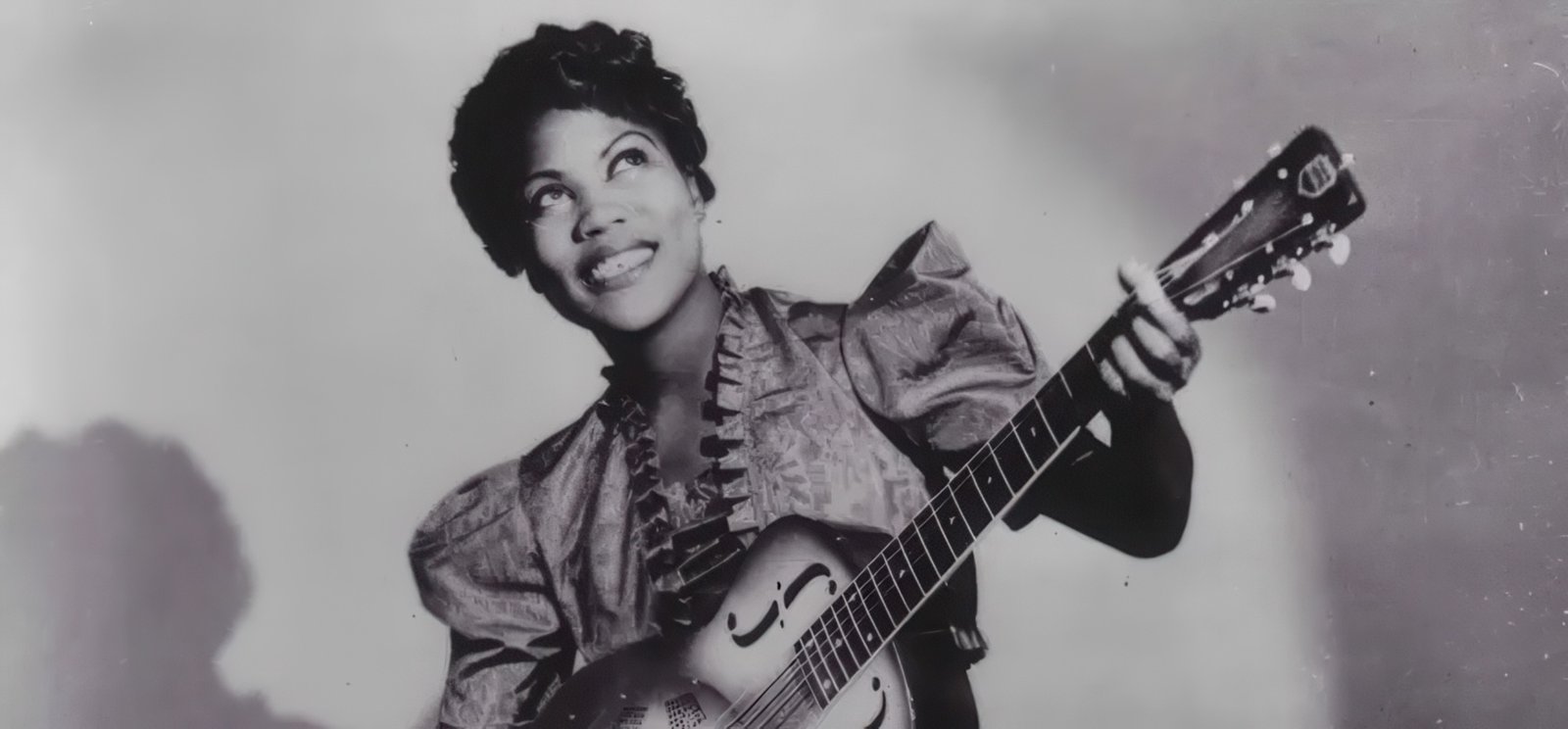

Imagine a world where rock and roll exists but no one knows who created it. That world is real. It happened. And the person who made it happen was a queer Black woman from Arkansas with an electric guitar and a voice that could shake church windows loose from their frames.
Her name was Sister Rosetta Tharpe. She was born in 1915. She died in 1973. And in between, she changed music forever.
Tharpe started early. At four years old, she was already singing and playing guitar. At six, she was traveling the South with her mother’s evangelical troupe, performing gospel songs in churches and revival tents. By the time she reached Chicago in the 1920s, she had absorbed the city’s jazz and blues sounds. She started mixing those secular rhythms into her gospel performances. Church audiences loved her voice but hated the beat.
In 1938, Tharpe signed with Decca Records. She was 23 years old. Her first single, “Rock Me”, was a gospel song with a swing band backing her up. It was an instant hit.

But Tharpe refused to stay in the church. She performed at the Cotton Club in Harlem, a nightclub famous for its glamorous showgirls and wealthy white patrons. She sang gospel songs in the same room where Cab Calloway led his orchestra. Conservative religious leaders condemned her. She did not care. She played for anyone who would listen.
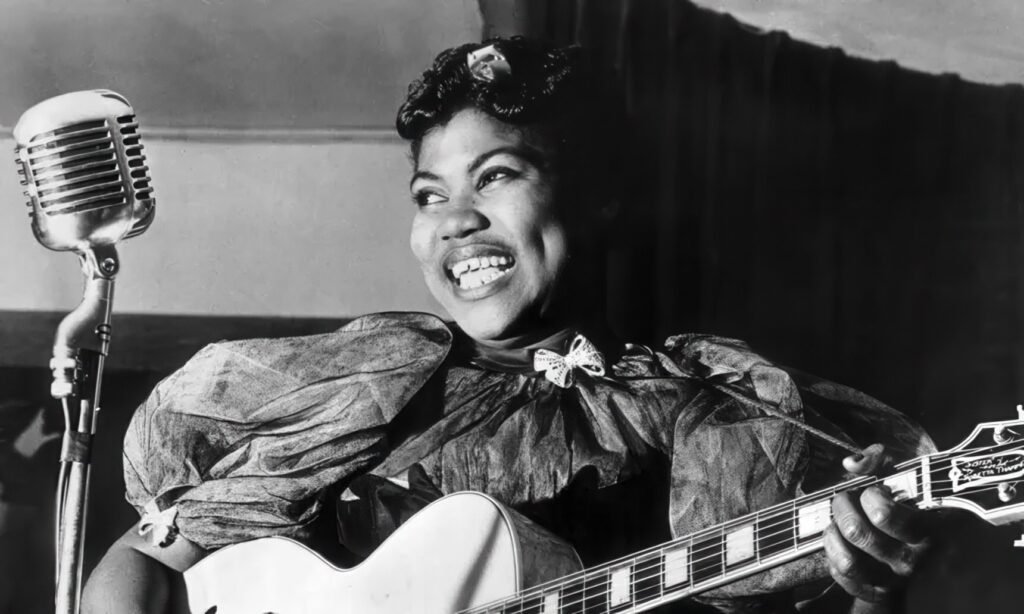
In 1944, Tharpe recorded “Strange Things Happening Every Day”. The song featured her voice and electric guitar with boogie woogie pianist Sammy Price. It was the first gospel record to cross over to popular audiences, hitting number 2 on Billboard’s race records chart in April 1945. That chart later became the R&B chart.
Some music historians call “Strange Things Happening Every Day” the first rock and roll record ever made. They have a strong argument. The song had a driving backbeat, distorted electric guitar, and a vocal delivery that sounded more like a shout than a hymn. It predated “Rocket 88” by seven years and “Rock Around the Clock” by eleven.
Little Richard called Tharpe his favorite singer. He said she was the first person to combine gospel with rock rhythms. In 1947, when he was 14 years old, Tharpe heard him singing before her show in Macon, Georgia. She invited him on stage. It was his first public performance outside the church. She paid him for it. He never looked back.
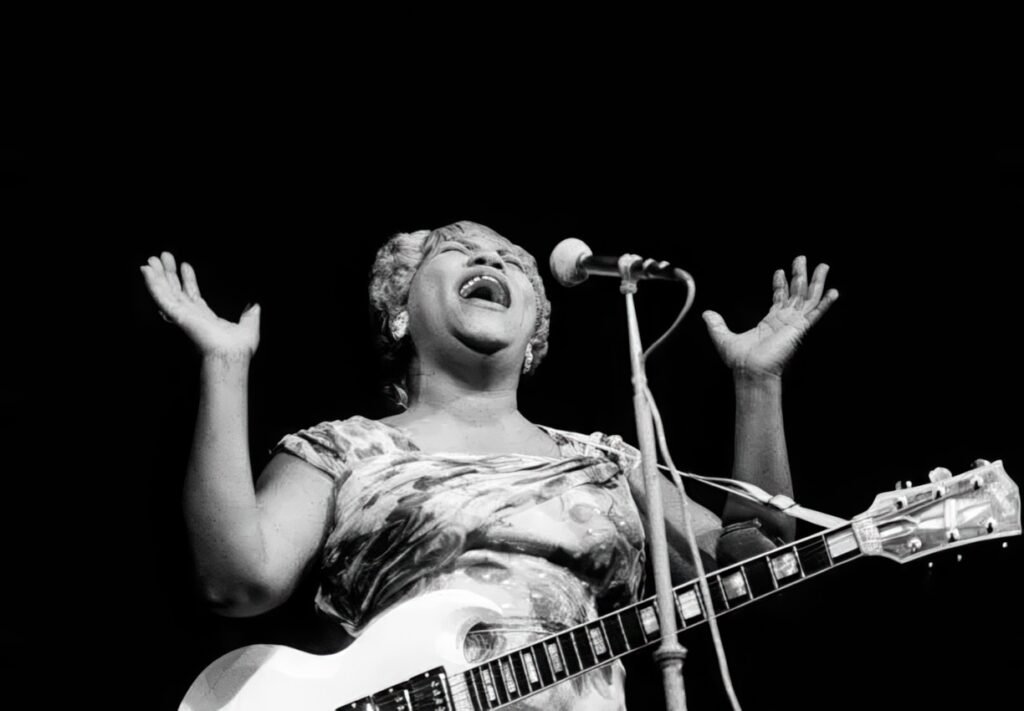
Johnny Cash also named Tharpe as his favorite singer. Elvis Presley, Chuck Berry, and Jerry Lee Lewis all cited her as an influence. Her guitar style, her showmanship, her willingness to mix sacred and secular sounds, and her pioneering use of electric guitar distortion laid the groundwork for everything that followed.
In the 1950s, as rock and roll exploded, Tharpe’s popularity in the United States declined. She was still recording and touring, but younger artists had taken the sound she helped create and run with it. She spent more of her career in Europe, where audiences still celebrated her.
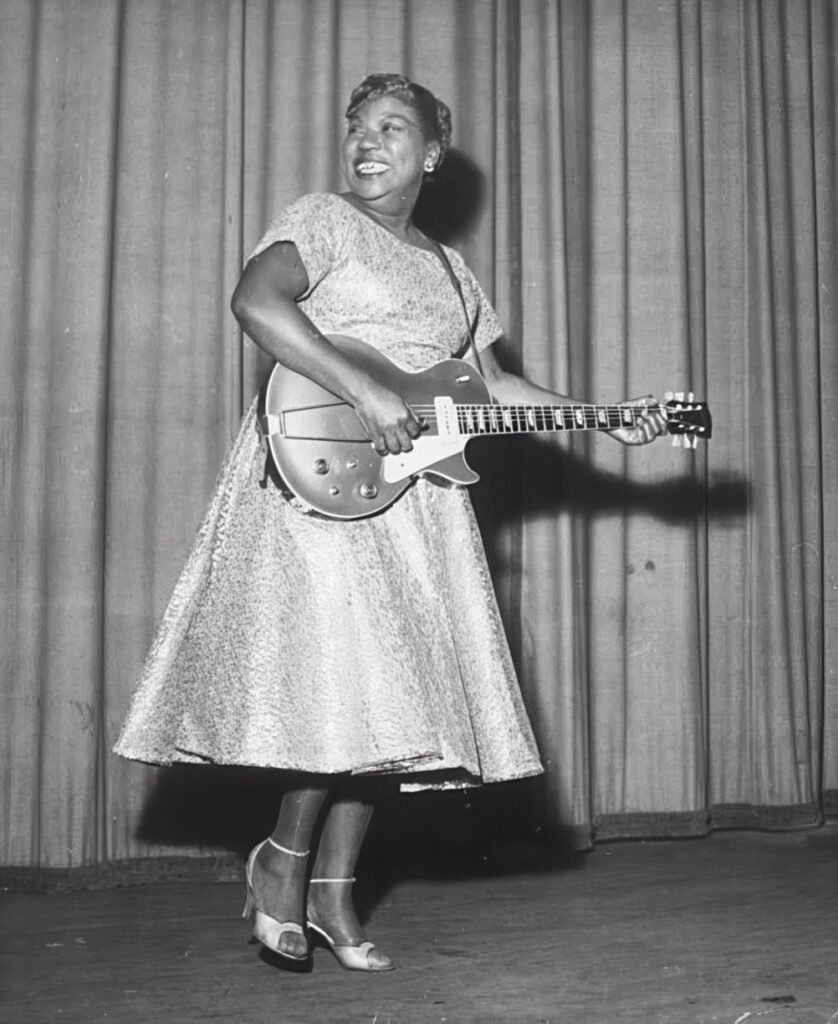
On May 7, 1964, Tharpe performed at a disused railway station in Manchester, England. The concert was filmed for Granada TV. It rained the entire time. Tharpe opened with “Didn’t It Rain,” changing her setlist in response to the weather. She strapped on her Gibson SG and played through the downpour. The audience sat on folding chairs, getting soaked, completely transfixed.
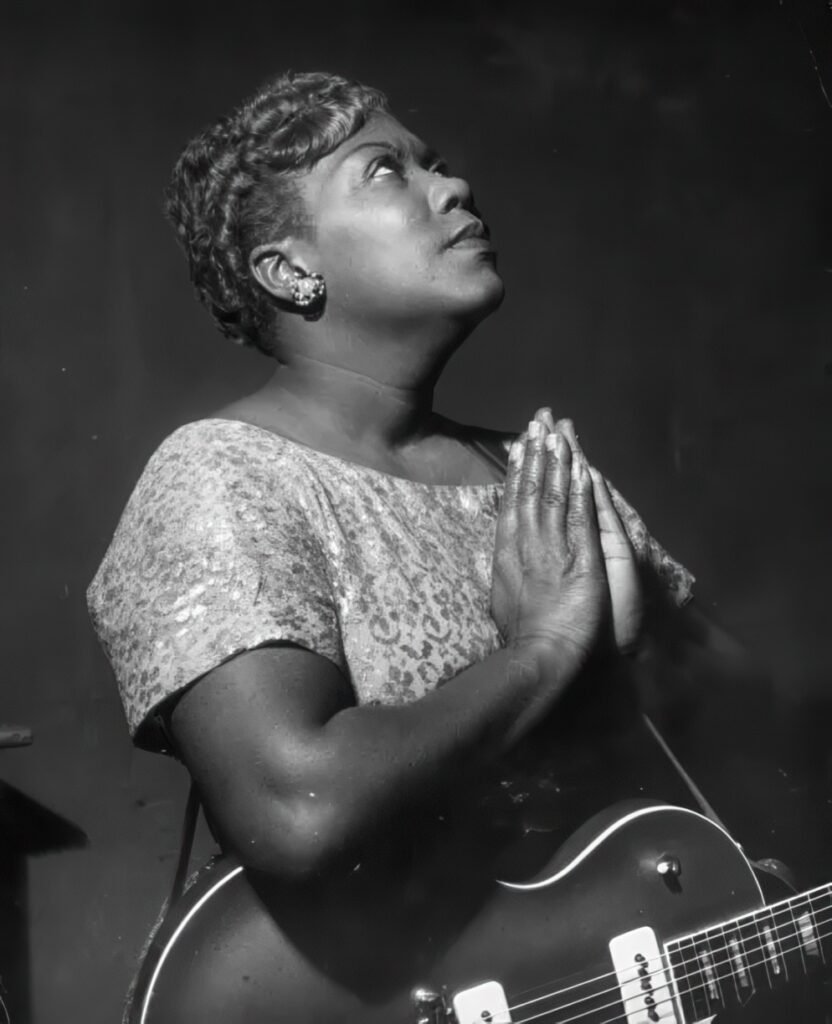
In the audience that night and watching at home were a group of young British musicians. They had never seen anything like her. Eric Clapton, Jeff Beck, and Keith Richards all cite that performance as a turning point in their musical development. They had crossed the Atlantic looking for American blues authenticity. They found it in a Black woman playing electric guitar in the Manchester rain.
Tharpe died in 1973 at 58 years old. For decades, her name faded from popular memory. The men she influenced became legends. She became a footnote.
In 2018, the Rock and Roll Hall of Fame finally inducted her as an Early Influence. Brittany Howard of Alabama Shakes gave the induction speech. She called Tharpe the “first guitar heroine of rock and roll”.
The award was 45 years late. But it was not too late to correct the record.
Sister Rosetta Tharpe did not just influence rock and roll. She helped build it. She played gospel in nightclubs, electric guitar in churches, and sacred music in the secular world. She refused to choose. And because of that refusal, she created space for everyone who came after her.
Sources:
- Wikipedia – Sister Rosetta Tharpe
- Britannica – Sister Rosetta Tharpe
- Mississippi Today – 1945: Sister Rosetta Tharpe hits the R&B charts
- BBC News – Muddy Waters and Sister Rosetta Tharpe’s “mind-blowing” station show
- Billboard – 2018 Rock and Roll Hall of Fame Inductees
- Rock and Roll Hall of Fame – Sister Rosetta Tharpe Inductee Page
- Wikipedia – Strange Things Happening Every Day