

George W. McLaurin was born on September 16, 1894, in Mississippi. In 1910, his family moved to the newly created state of Oklahoma. He earned his bachelor’s degree from Langston University, the state’s historically Black college, and went on to earn a master’s degree from the University of Kansas.
He became a professor at Langston University. He married Peninah. They had three children. They sent each child out of Oklahoma at age thirteen so they could complete their education in states where segregation did not cripple the classroom. One of those children, Dunbar Simms McLaurin, would go on to found Freedom National Bank in New York, one of the country’s most important Black-owned financial institutions.
McLaurin retired from Langston. But he was not finished. He applied to the University of Oklahoma’s graduate program in education. He was fifty-four years old. He wanted a doctorate. The university rejected him. Oklahoma law made it a misdemeanor to instruct Black and white students in the same classroom. A federal court ruled on September 29, 1948, that the rejection was unconstitutional. But the court did not tell the university how to handle integration. It left that to the state.
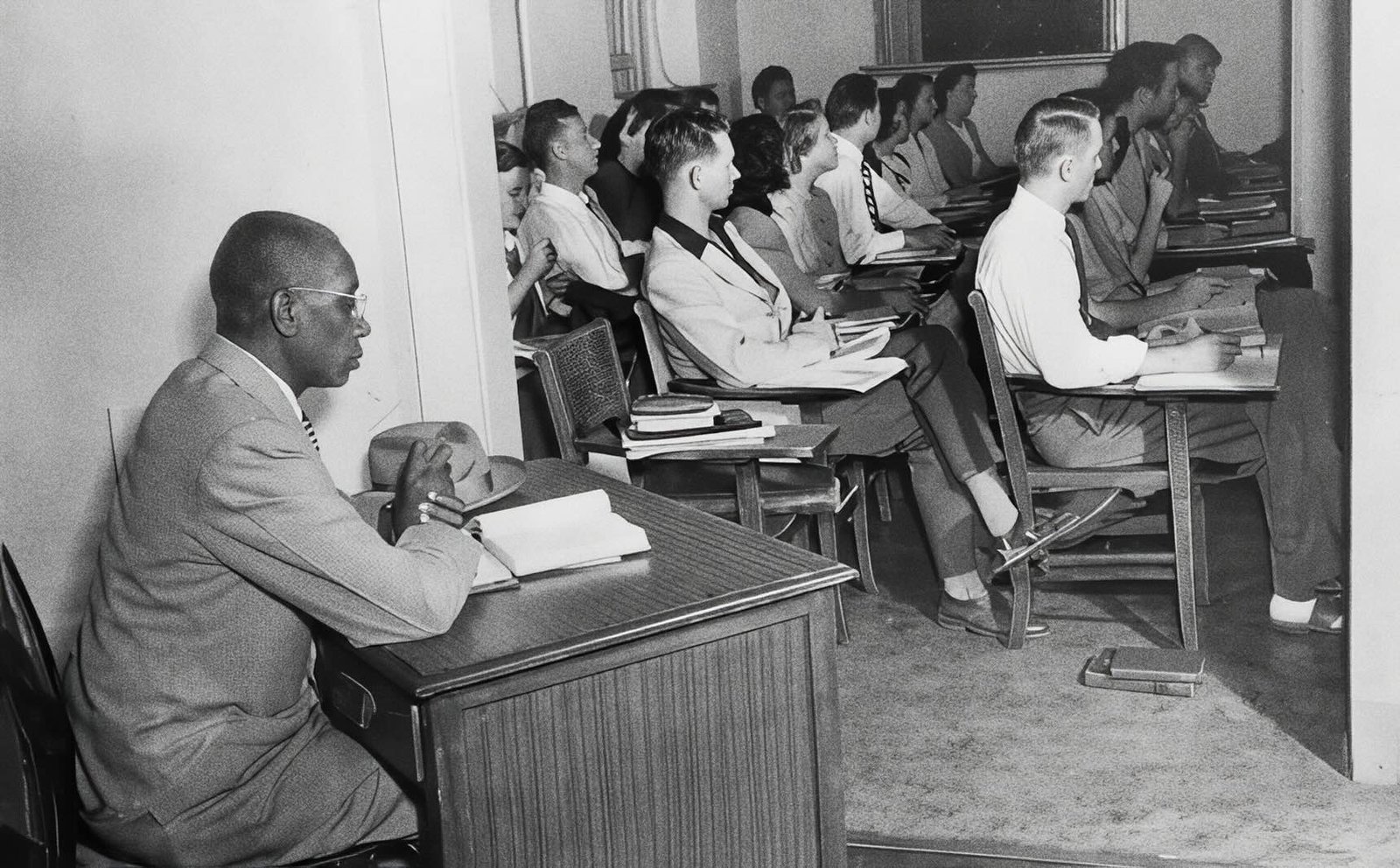
George Lynn Cross, the university president, found a creative solution that satisfied Oklahoma’s segregation laws: admit McLaurin but keep him separate. McLaurin’s classroom seat was an anteroom adjoining the lecture hall, with a glass window so he could see. Sometimes the desk was placed in the hallway outside the door. Sometimes in a storage closet. He could hear the professor, but he could not see the blackboard well. He could not raise his hand and contribute. He could not turn to a classmate and discuss an idea. He sat alone in a small room and took notes.

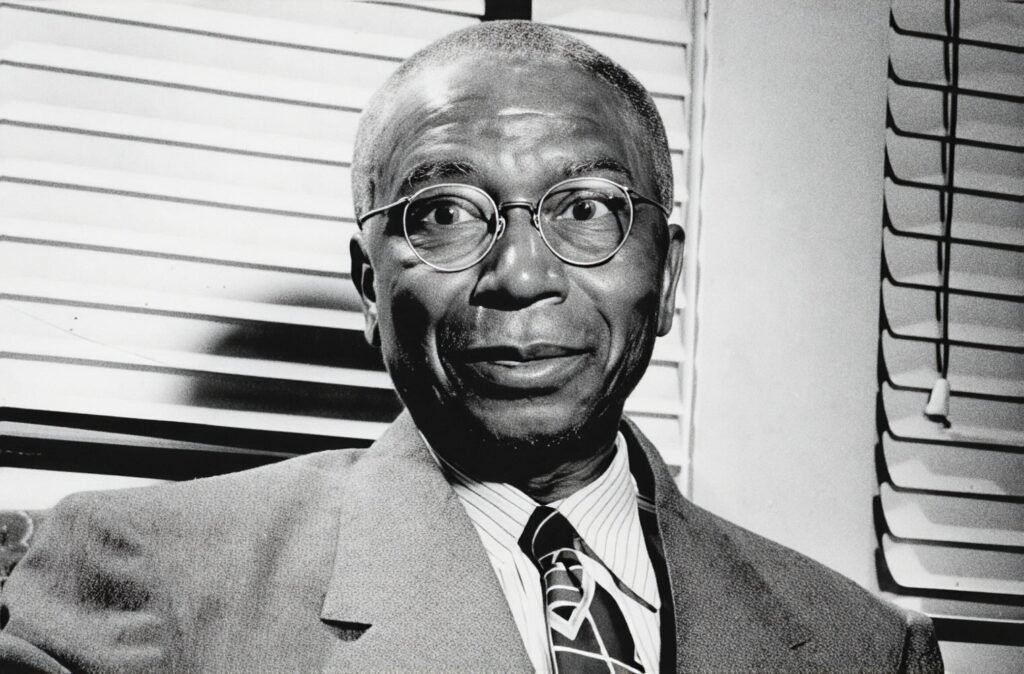
In the library, the university gave him a desk in the basement. It was screened off behind a stack of newspapers so that white students would not have to see him. In the cafeteria, he ate at a separate table at separate times. A sign marked “Reserved for Colored” told everyone where he belonged.
The university called this equality. It called it compliance with the Fourteenth Amendment. It was neither. McLaurin returned to federal court. The district court denied his motion, stating that racial segregation was “a deeply rooted social policy of the State of Oklahoma.” So McLaurin appealed to the Supreme Court of the United States.
His legal team included Thurgood Marshall of the NAACP Legal Defense Fund, along with Amos T. Hall and Roscoe Dunjee, two of Oklahoma’s most prominent Black attorneys. They argued that the segregation imposed on McLaurin deprived him of equal protection under the Fourteenth Amendment. It was not enough to admit a Black student to a white university, they said, if the university then treated him as though he did not belong there.
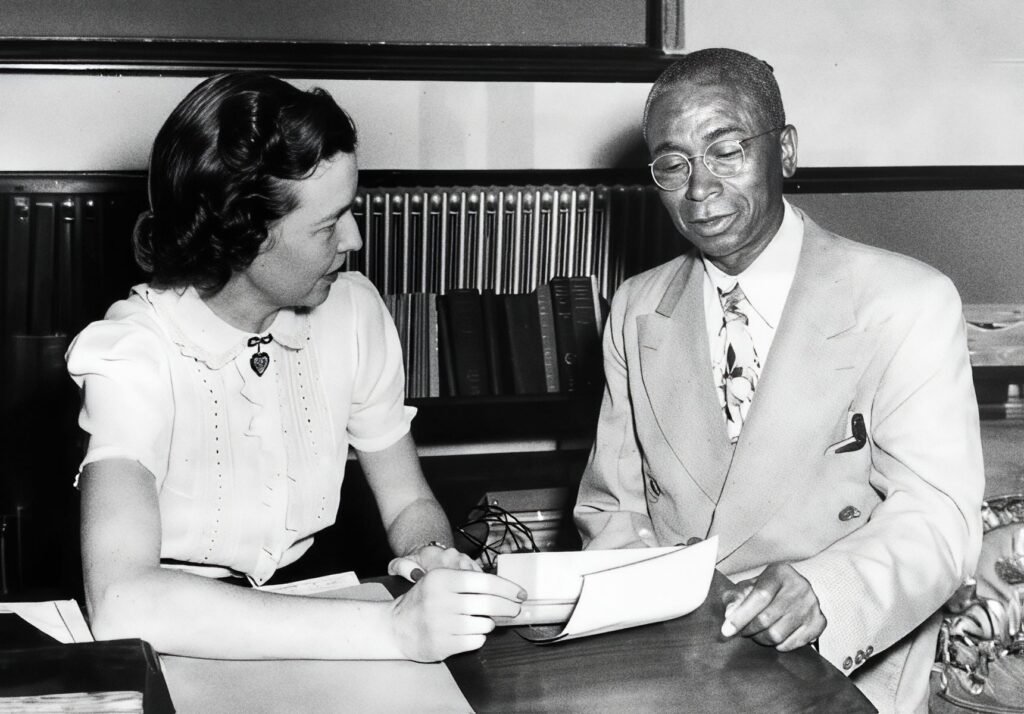
On June 5, 1950, the Supreme Court agreed. Unanimously. Chief Justice Fred Vinson wrote the opinion: “The result is that appellant is handicapped in his pursuit of effective graduate instruction. Such restrictions impair and inhibit his ability to study, to engage in discussion and exchange views with other students, and in general to learn his profession.”
The ruling was a landmark. It did not overturn Plessy v. Ferguson that would wait for Brown v. Board of Education four years later. But it cut the legs out from under “separate but equal” in higher education. If a university could not run an equal graduate programme while segregating students, then separate was inherently unequal. The logic of Brown was already there, in McLaurin.
The same day, the Court also ruled in Sweatt v. Painter, requiring the University of Texas Law School to admit Black applicants. After the decision, McLaurin finished his doctorate. He did not leave Oklahoma. He returned to Langston University, the historically Black college that had given him his start, and taught there until his retirement. He had not gone to OU to escape Black education. He had gone to prove that Black educators deserved the same tools as anyone else—and having won them, he took those tools back to the community that raised him.
He died on September 4, 1968, at the home of his son in Los Angeles. He was seventy-three. Peninah had died two years earlier. In 2008, Bizzell Memorial Library at the University of Oklahoma where McLaurin had been told to sit behind a screen of newspapers was designated a National Historic Landmark. Not for its architecture. For the story of the man who sat there.
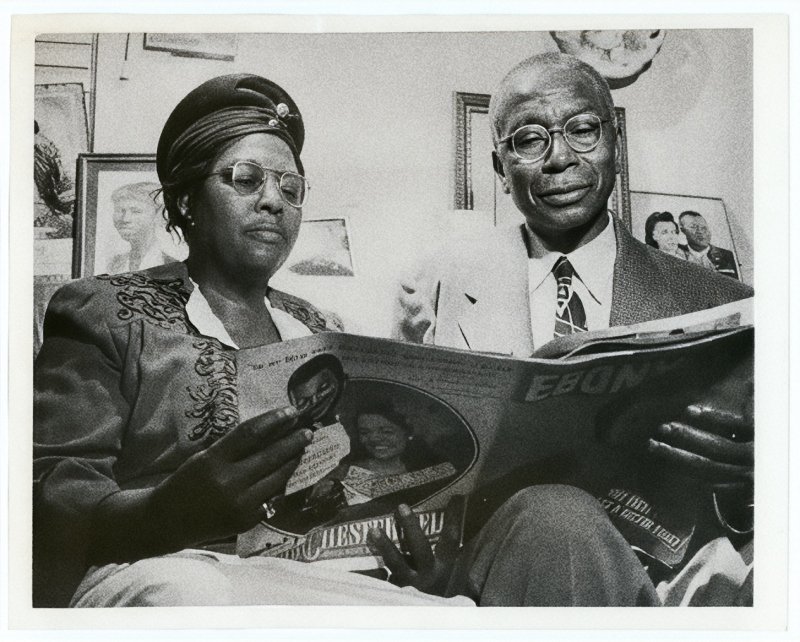
A lounge and memorial display in the university’s community centre now bears the names of George McLaurin and Sylvia A. Lewis, another student who challenged segregation at OU. An annual leadership conference is named after him, targeting first-generation college students, particularly those from minority groups. McLaurin’s legacy is not just a Supreme Court case. It is the principle that a person cannot be admitted and then erased. That sitting in a room apart is not the same as sitting in the room. That you cannot call something equal when one student is hidden behind newspapers.
He did not march. He did not shout. He enrolled. He sat alone. And then he changed the law.
Sources:
1. Wikipedia, “George W. McLaurin”
2. Wikipedia, “McLaurin v. Oklahoma State Regents”
3. OK Higher Education Heritage Society — George W. McLaurin biography
4. African American Registry — “George McLaurin, Educator born”
5. Britannica — “George W. McLaurin”
6. New York Times, “Oklahoma University Told to Admit Negro” (October 12, 1948)
7. McLaurin v. Oklahoma State Regents, 339 U.S. 637 (1950) — Supreme Court opinion
8. National Park Service, National Historic Landmark Nomination — Bizzell Library
9. David W. Levy, *Breaking Down Barriers: George McLaurin and the Struggle to End Segregated Education* (University of Oklahoma Press, 2020)