
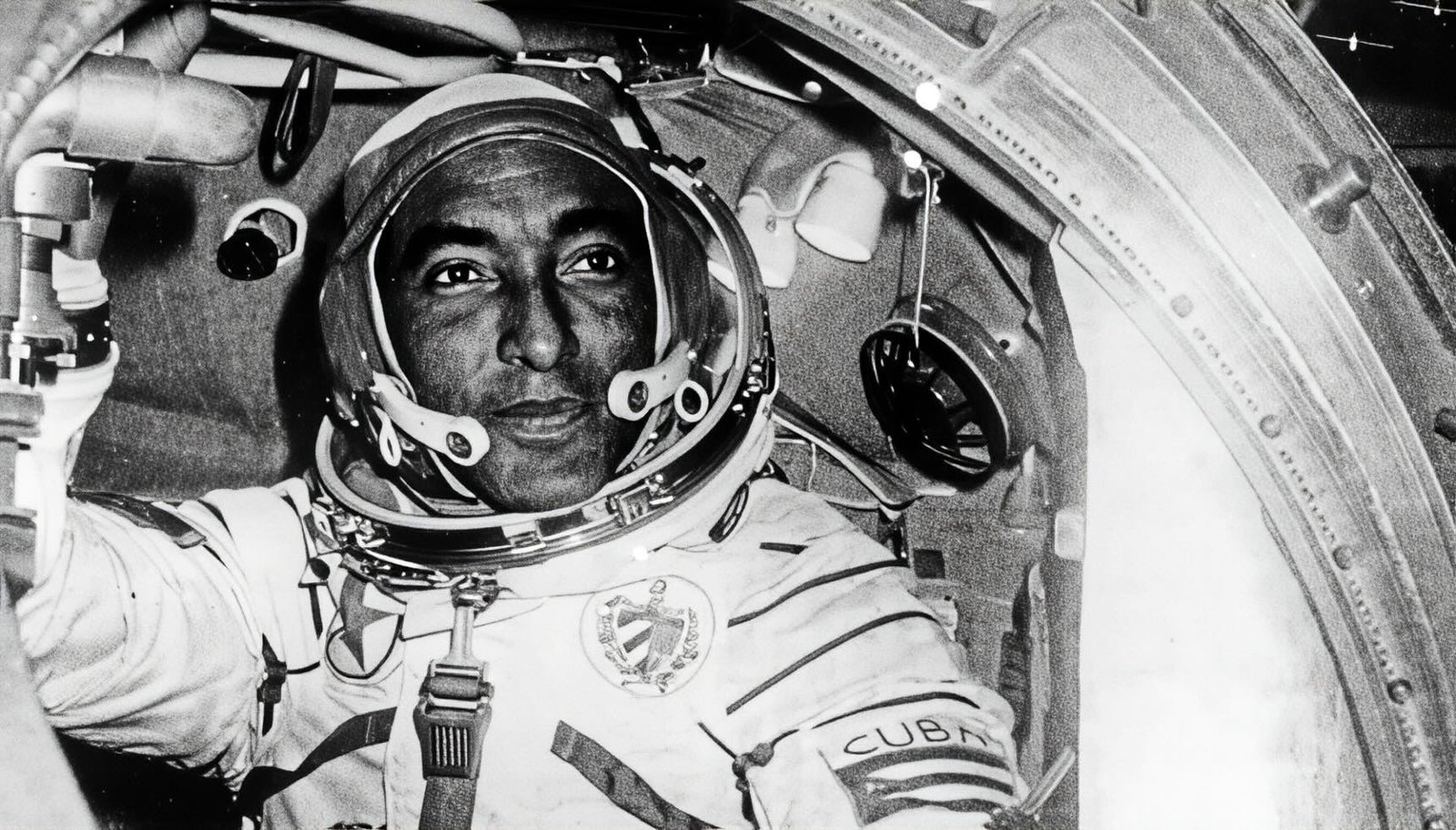

Arnaldo Tamayo Mendez was born poor, Black, and orphaned in a country that did not value any of those things. He died old, decorated, and largely unknown outside Cuba. That gap between what he did and what the world remembers tells you everything about how history gets written.
He came from Baracoa, a small coastal town in Guantanamo province. Orphaned as a baby. Adopted at one. By 13 he was on the streets shining shoes and selling vegetables. The Cuban Revolution pulled him out of that life. He joined the Young Rebels, went to technical school, and at 19 years old was flying MiG-15s over the Soviet Union. He had learned to fly before he could vote.
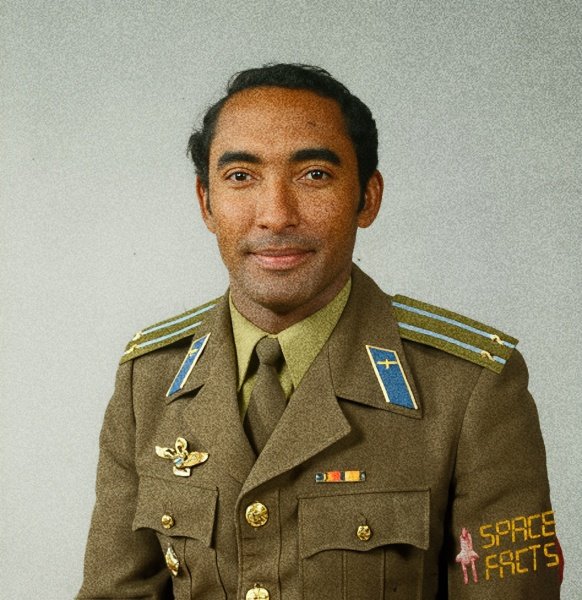
In 1962, he flew 20 reconnaissance missions during the Cuban Missile Crisis. He was 20 years old. Five years later he was in Vietnam, serving with Cuban forces allied to the North. When he came back, he studied at the Maximo Gomez command academy, rose through the ranks, and by 1978 was a lieutenant colonel selected for the Intercosmos programme.
The Intercosmos programme was the Soviet Union’s diplomatic space initiative. Between 1977 and 1988, it put 14 non-Soviet cosmonauts into orbit. The goal was not science. The goal was propaganda, alliance building, and the projection of socialist unity. Cuba was a key partner. Tamayo was one of two final candidates. The other was Jose Lopez Falcon. Falcon was not Afro-Cuban. Tamayo was. The choice mattered.

Historians disagree on exactly why Tamayo was selected. Cathleen Lewis, a curator at the National Air and Space Museum, points out that Fidel Castro would not have been blind to the propaganda value of sending a Black man into orbit before the Americans did. At the same time, Cuban forces fighting in the Angolan civil war were disproportionately Afro-Cuban. Sending a Black cosmonaut helped paint a better picture of race relations in Cuba. It was smart politics. It was also a genuine achievement for one man who had earned it.
Soyuz 38 launched on 18 September 1980. Tamayo and Yuri Romanenko docked with Salyut 6 and spent seven days running experiments. The sugar crystallisation experiment was designed to benefit Cuba’s sugar industry. The space adaptation syndrome experiment put them in special shoes that loaded the arch of the foot for six hours a day. It was not glamorous. It was work.
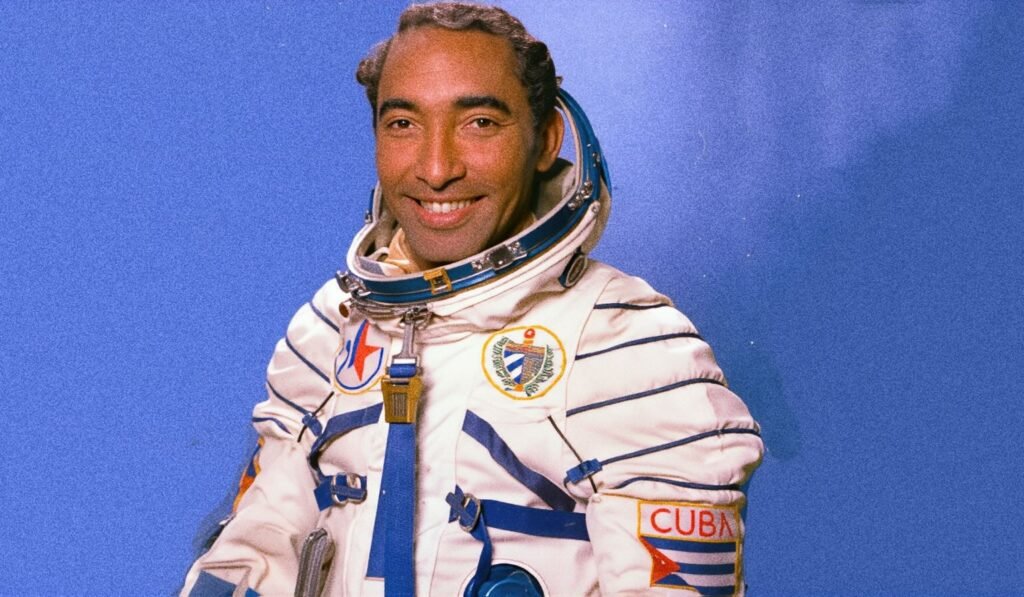
When they came down, it was night. They landed 180 kilometres from Dzhezkazgan in the Kazakh steppe. A night landing in a Soyuz capsule is not a gentle experience. Tamayo did not complain. He returned to Cuba as the first Hero of the Republic of Cuba, a medal created specifically for him. Moscow gave him the Order of Lenin. He never flew again.
The rest of his life was service. He became a brigadier general. He ran the Department of International Affairs for the Armed Forces. He was elected to the National Assembly in 1980 and still holds the seat, representing Guantanamo. He is one of the few Black men in Cuba to serve on commissions outside entertainment and hospitality, as Lewis noted.
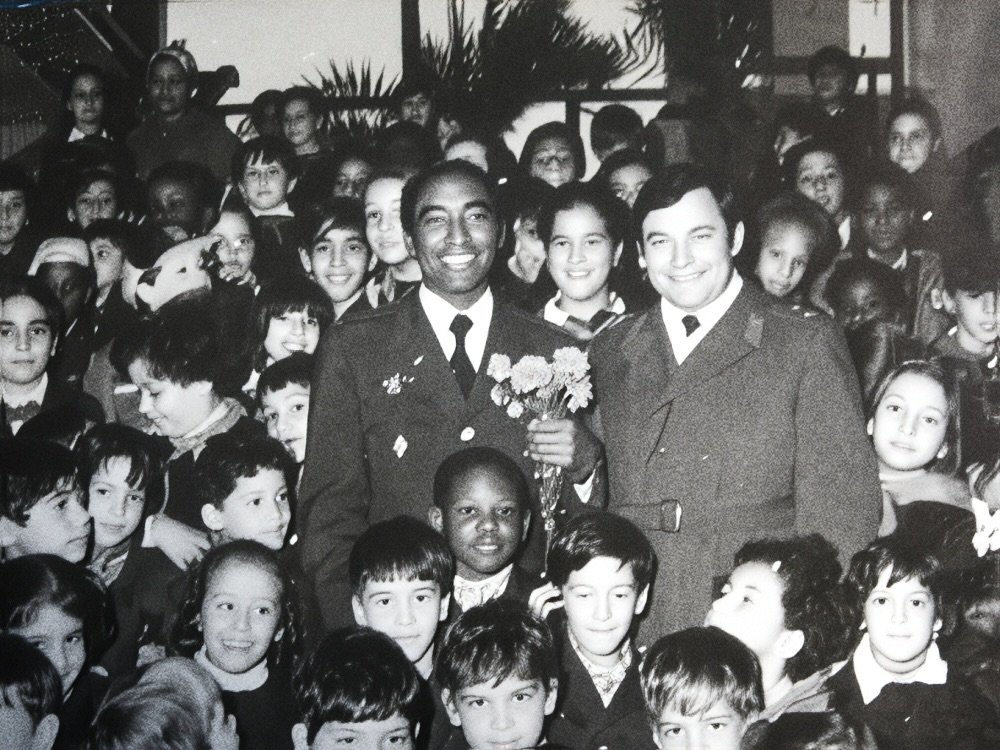
The question is why the world forgot him.
In 1983, Guion Bluford launched on Challenger. NASA and the American press called him the first Black person in space. Technically, it was wrong. Bluford was the first African American. Tamayo was the first Black person. The distinction got flattened. Partly because the US and the Soviet Union were not in the business of crediting each other’s achievements. Partly because race in America has always been seen through an American lens. And partly because Tamayo was Cuban, and Cuba was the enemy.
The Soviets did not help. Their press releases called Tamayo the first Latin American and the first Cuban. They mentioned his African heritage barely at all. It did not fit the narrative. The Soviet Union had its own deep racial problems, including riots against African students in Moscow in the 1980s. A Black cosmonaut was useful as a symbol. His actual identity as a Black man was inconvenient.
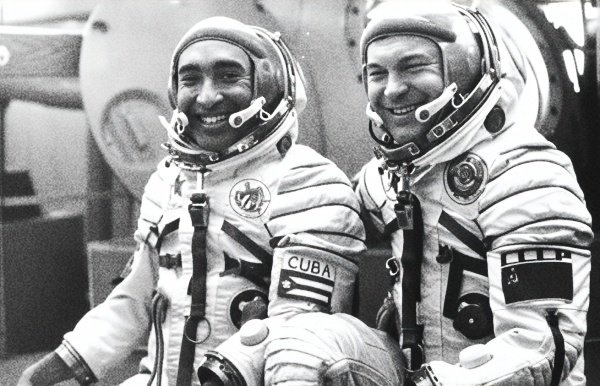
The result is a man who is celebrated in his own country and invisible everywhere else. He is still alive at 84. His spacesuit sits behind glass in Havana. The Russian space programme has never sent another Black cosmonaut. The American space programme has, but the record books still list Bluford first in many places. Arnaldo Tamayo Mendez is a footnote in a footnote, which is exactly where a poor Black orphan from Guantanamo was never supposed to be.
Sources
– Wikipedia, Arnaldo Tamayo Mendez
– Britannica, Arnaldo Tamayo Mendez
– Inverse, “The first Black man in space: How America forgot a historic orbital flight” (2020)
– Burgess, Colin and Vis, Bert, *Interkosmos: The Eastern Bloc’s Early Space Program* (Springer, 2016)
– BlackPast, “Tamayo Mendez, Arnaldo (1942- )”
– Spacefacts, Cosmonaut Biography: Arnaldo Tamayo Mendez
– Granma, “Guantanamo: Los candidatos del pueblo” (archived)
– National Air and Space Museum, Cathleen Lewis (curator interview)