

The facts, then. In November 1979, during the Iranian hostage crisis, an African-American woman in Philadelphia named Marion Stokes did something that would consume the rest of her life. She put a blank tape into her VCR and started recording the news. She did not stop for 33 years.
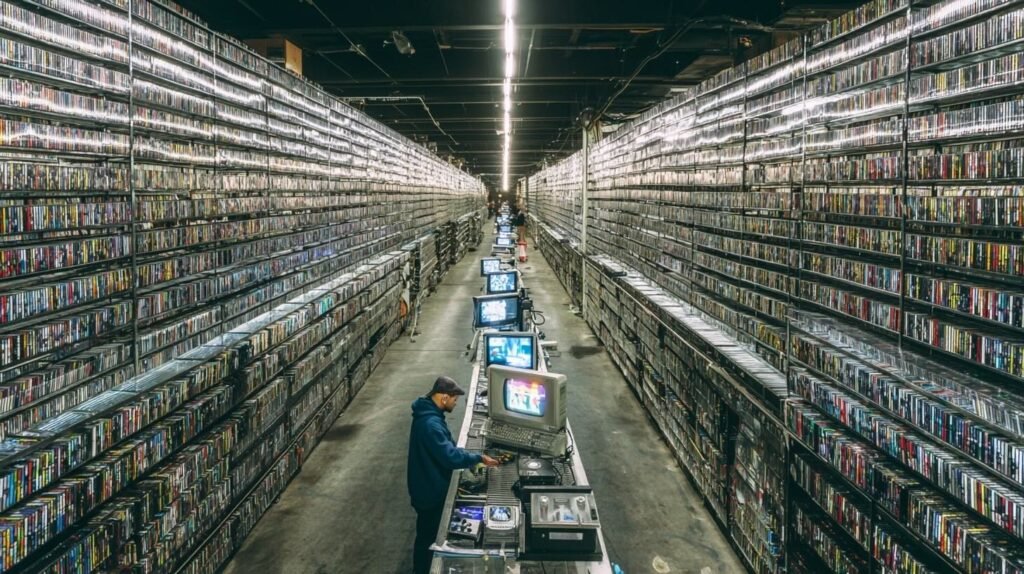
When Stokes died on December 14, 2012, coverage of the Sandy Hook massacre was playing on her televisions. Her final recording captured that tragedy. Between those two moments, the hostage crisis and the school shooting she had amassed over 70,000 VHS and Betamax tapes . She had recorded 24 hours a day, every day, for more than three decades.
Who Was Marion Stokes?
Marion Marguerite Butler was born on November 25, 1929, in the Germantown neighbourhood of Philadelphia. She graduated from Girls’ High and worked as a librarian for the Free Library of Philadelphia for nearly twenty years.

But she was never just a librarian. Stokes became a civil rights activist, participated in efforts to desegregate Girard College, and organised five buses from Philadelphia for the March on Washington for Jobs and Freedom in 1963. She was the Philadelphia chair of the Fair Play for Cuba Committee and was courted by the Communist Party USA, which sought to develop her as a potential leader. She was also on the founding board of the National Organisation for Women.
Her political activities cost her. She was fired from the library, likely due to her activism. The FBI surveilled her for years . She and her first husband, Melvin Metelits, even attempted to flee the United States and defect to Cuba, spending time in Mexico waiting for a visa that never arrived.
From 1967 to 1969, Stokes co-produced a Sunday morning public access television show in Philadelphia called Input, with her second husband, John Stokes. The show focused on social justice, bringing together executives, activists, and clergy to debate the politics of the day.
The Archive That Changed Everything
Stokes began her recording project because she was convinced that important details in news coverage were at risk of disappearing forever . Networks routinely wiped and reused their tapes. There was no YouTube, no digital archive. As her son Michael Metelits recalled, Stokes would gaze at the screen and say, “We’ve got to get this, nobody else is going to keep this”.
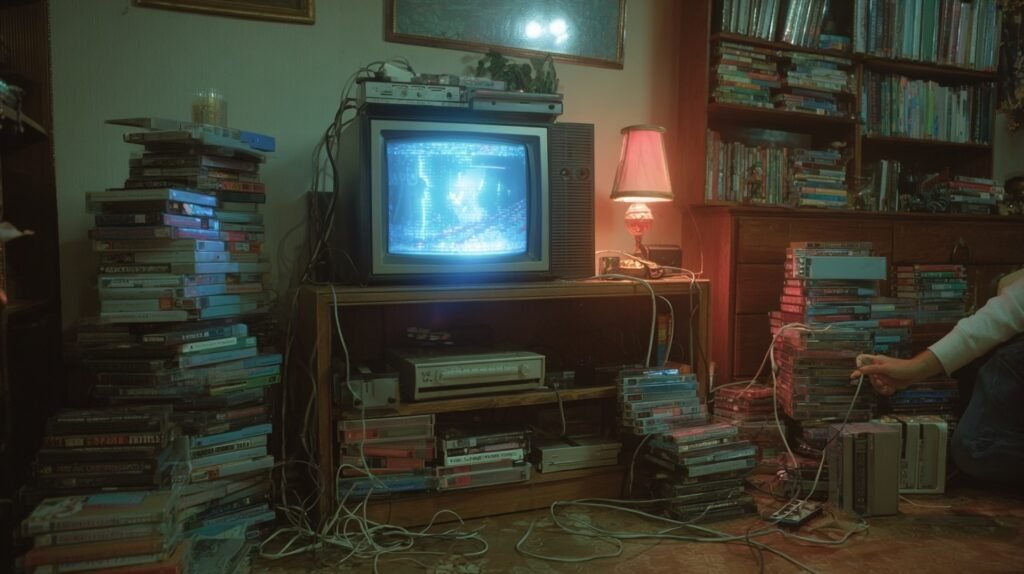
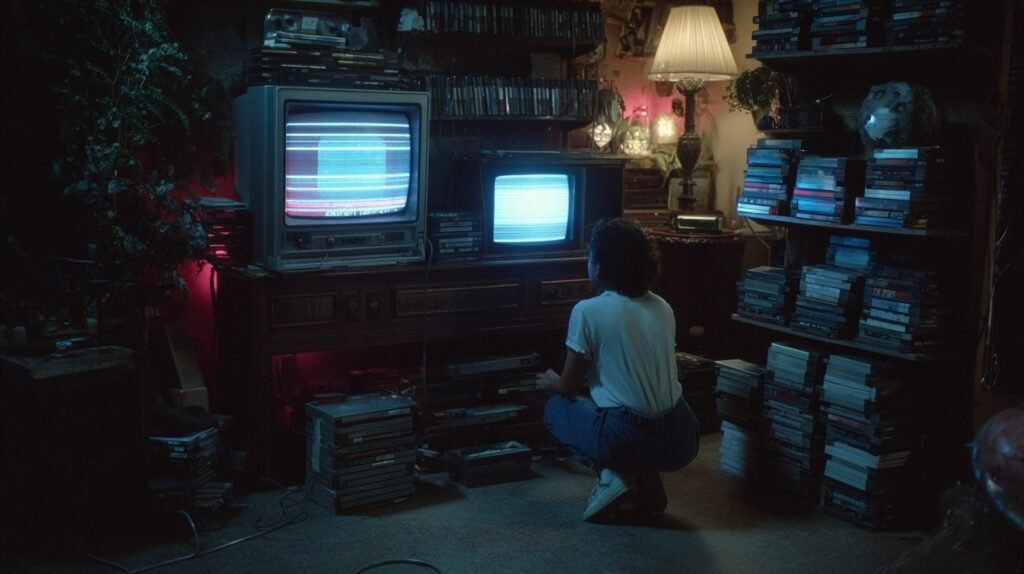
The operation was massive. Stokes ran multiple VCRs, sometimes three to five at once, and up to eight during major events . She owned several properties and rented additional storage units just to house the tapes. Family outings were planned around the six-hour length of a VHS tape. When the tape was about to end, Stokes and her husband would rush home to switch them out.
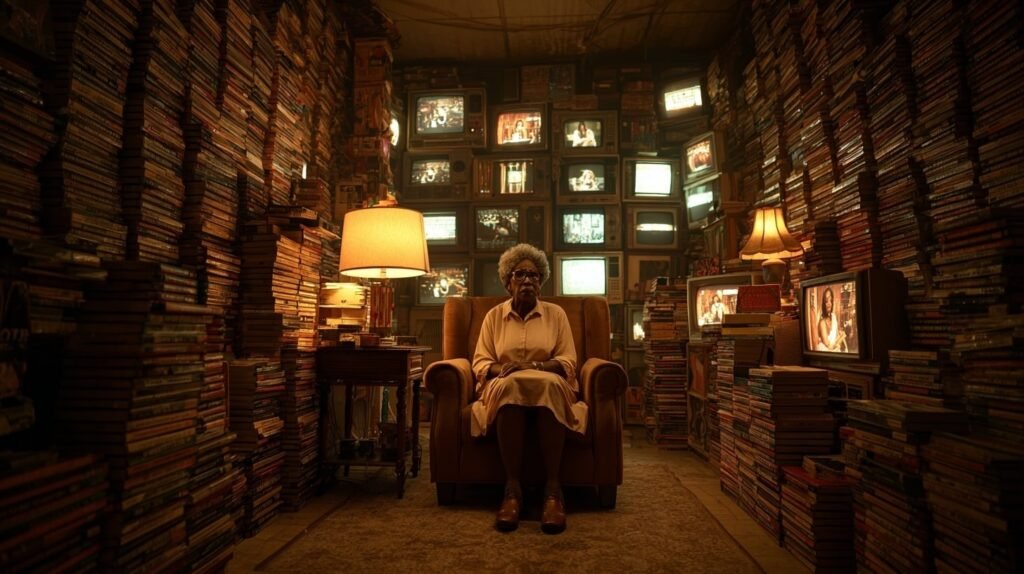
What did she record? Everything. CNN, Fox News, MSNBC, C-SPAN, CNBC, and local affiliates ran 24 hours a day in her apartment. She also recorded programs like The Cosby Show, Divorce Court, Nightline, Star Trek, The Oprah Winfrey Show, and The Today Show. By the time she died, the archive included 70,000 tapes, 30,000 to 40,000 books, and 192 Macintosh computers still in their original boxes.
Her Secret Weapon: Apple Stock
Stokes’s fortune came from a surprising source for a communist activist: Apple. She and her husband invested in the first round of Apple stock while the company was still fledgling. She was an “evangelist” for the company, her son said. In 1984, she made him come to her apartment to watch the famous “1984” Apple commercial together. She owned multiple versions of every Macintosh ever launched. She used her Apple profits to fund her recording project. Her chauffeur, Richard Stevens, said she intuitively knew when a tape would run out and would ask to be driven home to replace them.
The Legacy
After Stokes’s death, her son donated the entire tape collection to the Internet Archive in San Francisco. Four shipping containers were required for the move, which cost her estate $16,000. It remains the largest collection the Internet Archive has ever received.
The Internet Archive has undertaken the painstaking work of digitising the tapes, a project expected to cost over $500,000 and take years to complete . As of 2022, the project is still incomplete, partially due to lack of funding. In 2019, director Matt Wolf released a documentary about her life, Recorder: The Marion Stokes Project, which premiered at the Tribeca Film Festival. It tells the strange, moving story of a woman who believed that preserving the news was a form of activism, a way to protect the truth in an age of “fake news”.
Stokes once said, “I’m archiving, that’s all”. But she was doing much more. She was building a time capsule of American life. And thanks to her, seventy thousand tapes now exist, evidence that one woman, armed with VCRs and a mission, could capture history as it happened.
Sources
Wikipedia – Marion Stokes (https://en.wikipedia.org/wiki/Marion_Stokes)
ALL IMAGES GENERATED WITH A.I