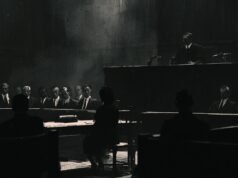

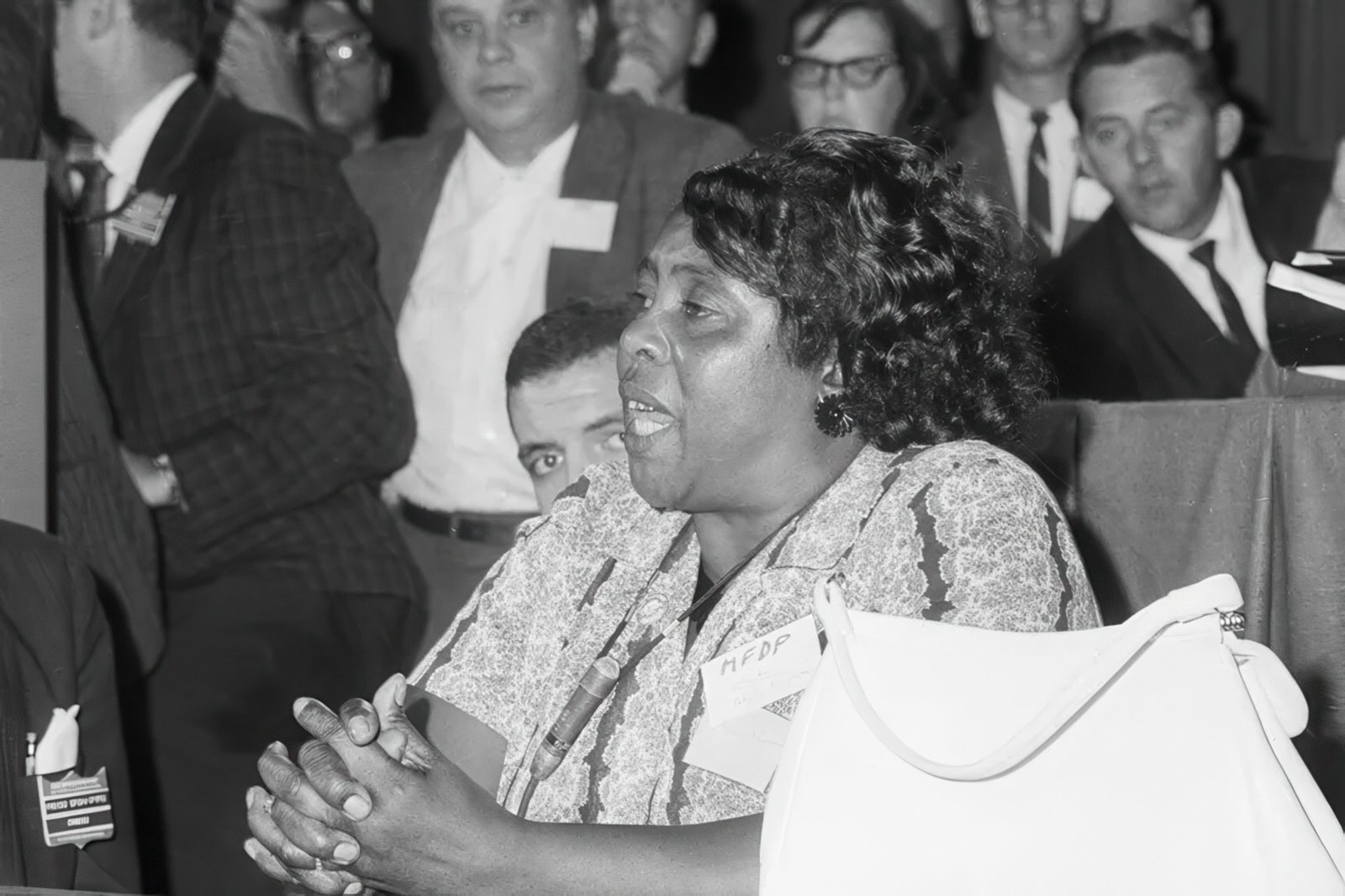

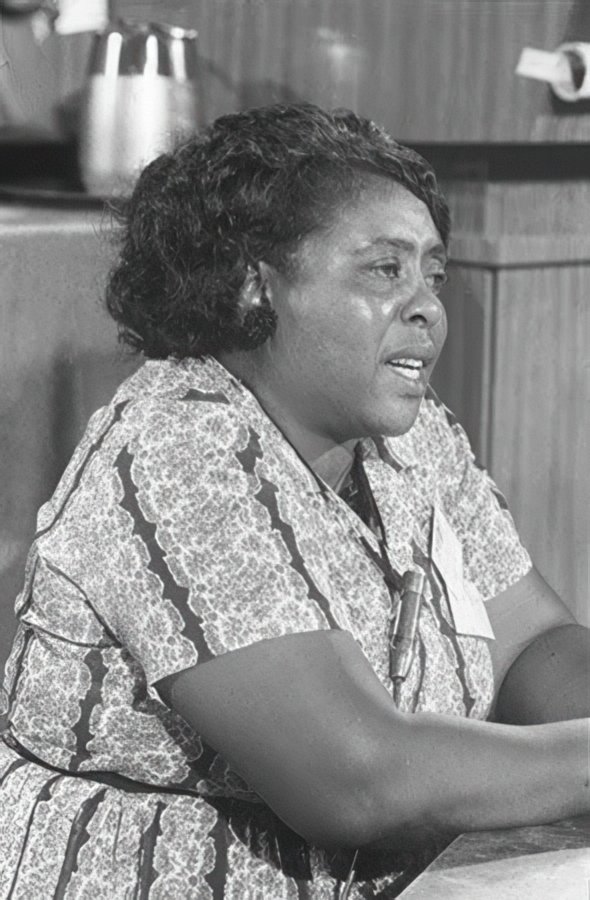
The facts, then. On August 22, 1964, a Black sharecropper from Mississippi sat before the Credentials Committee of the Democratic National Convention in Atlantic City. Her name was Fannie Lou Hamer. She was 46 years old. She had a sixth-grade education. And she was about to tell the nation the truth about America.
Hamer was born on October 6, 1917, in Montgomery County, Mississippi, the youngest of 20 children. Both of her parents were sharecroppers. By age six, she was picking cotton. By 12, she had left school to help support her family. By 13, she could pick 200 to 300 pounds of cotton a day. She had a permanent limp from childhood polio, but it did not slow her down .
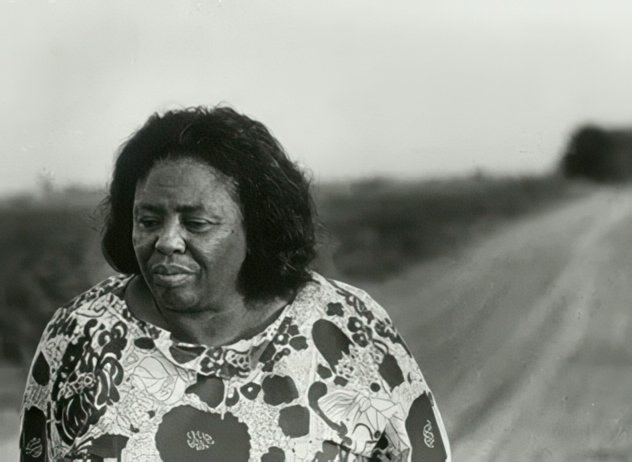
In 1945, she married Perry “Pap” Hamer and worked as a timekeeper on a plantation in Sunflower County, Mississippi. For 18 years, she lived the life of a sharecropper. She did not know Black people could vote until 1962 .
On August 31, 1962, Hamer attended a meeting organized by the Student Nonviolent Coordinating Committee at a local church. A young activist asked who wanted to go to the courthouse to register to vote. Hamer raised her hand. “I guess if I’d had any sense, I’d have been a little scared but what was the point of being scared?” she later said. “The only thing they could do was kill me, and it kinda seemed like they’d been trying to do that a little bit at a time since I could remember” .

She volunteered immediately. That decision cost her everything. She was fired from the plantation. Her husband was forced to stay until harvest. She and her family were shot at 15 times in a drive-by shooting. They fled to another county for three months .
On June 9, 1963, Hamer was returning from a voter registration workshop in South Carolina. The group stopped at a cafe in Winona, Mississippi. A highway patrolman forced them out. When an activist tried to record his license plate number, the entire group was arrested .
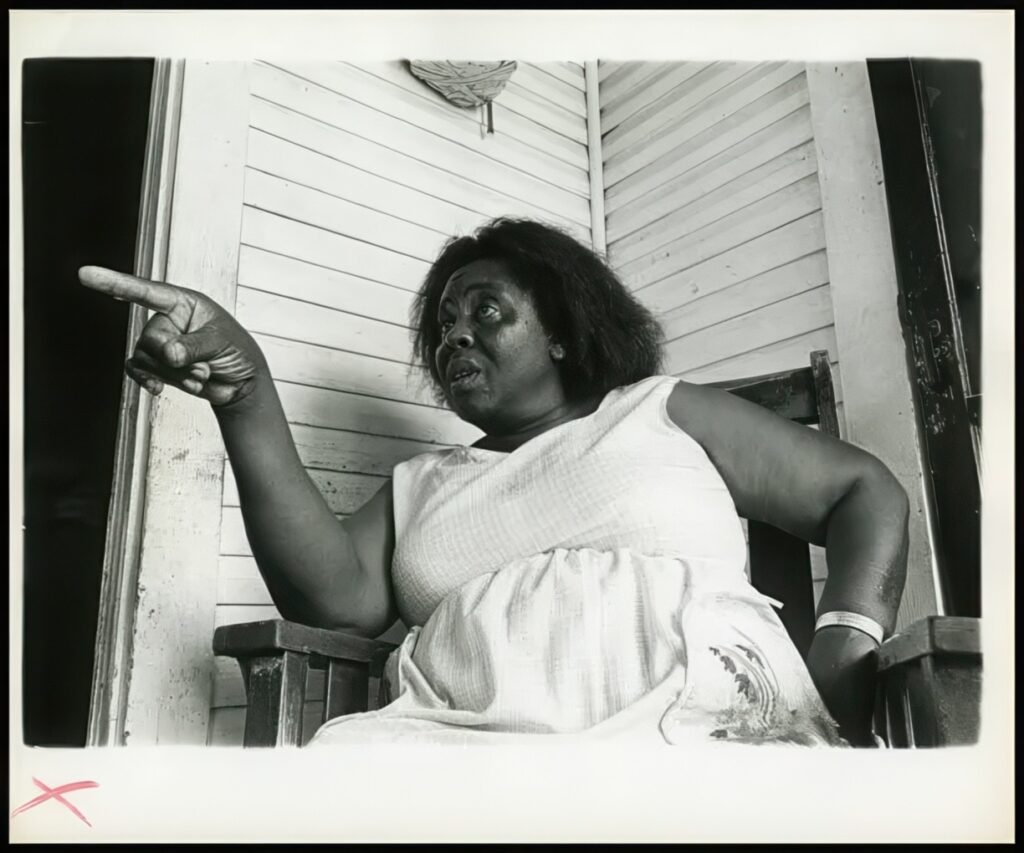
In the county jail, police ordered two inmates to beat Hamer with a blackjack while she was held down. She was also groped repeatedly by officers. The beating caused permanent kidney damage, a blood clot in her eye, and a worsened limp. She required more than a month to recover .
She did not stop. In 1964, she co-founded the Mississippi Freedom Democratic Party. The party challenged the all-white Mississippi delegation at the Democratic National Convention. Hamer testified before the Credentials Committee. She described the beatings, the threats, the daily terror of being Black in Mississippi.
She asked: “Is this America, the land of the free and the home of the brave, where we have to sleep with our telephones off the hooks because our lives be threatened daily, because we want to live as decent human beings, in America?”
President Lyndon B. Johnson interrupted her testimony with an impromptu press conference to limit its coverage. He did not want to lose Southern votes. But the networks aired her full speech that night. America watched a poor Black woman from the Delta hold up a mirror to the nation.
Her words helped pave the way for the Voting Rights Act of 1965. Johnson signed the act, but he did not invite Hamer to the ceremony.
In 1967, Hamer founded the Freedom Farm Cooperative on 40 acres of land. She eventually expanded it to 640 acres. The farm included a pig bank, vegetable gardens, a Head Start program, a garment factory, a sewing cooperative, and housing for evicted families. It fed over 1,500 families and built 92 homes. Hamer famously said: “If you have a pig in your backyard, if you have some vegetables in your garden, you can feed yourself and your family, and nobody can push you around”.
The cooperative closed in 1976 due to floods, droughts, and lack of government support. White-owned farms received federal subsidies. Hamer’s cooperative received none .
Hamer died of breast cancer on March 14, 1977, at 59 years old. Her tombstone in Ruleville, Mississippi, bears her signature phrase: “I’m sick and tired of being sick and tired”.
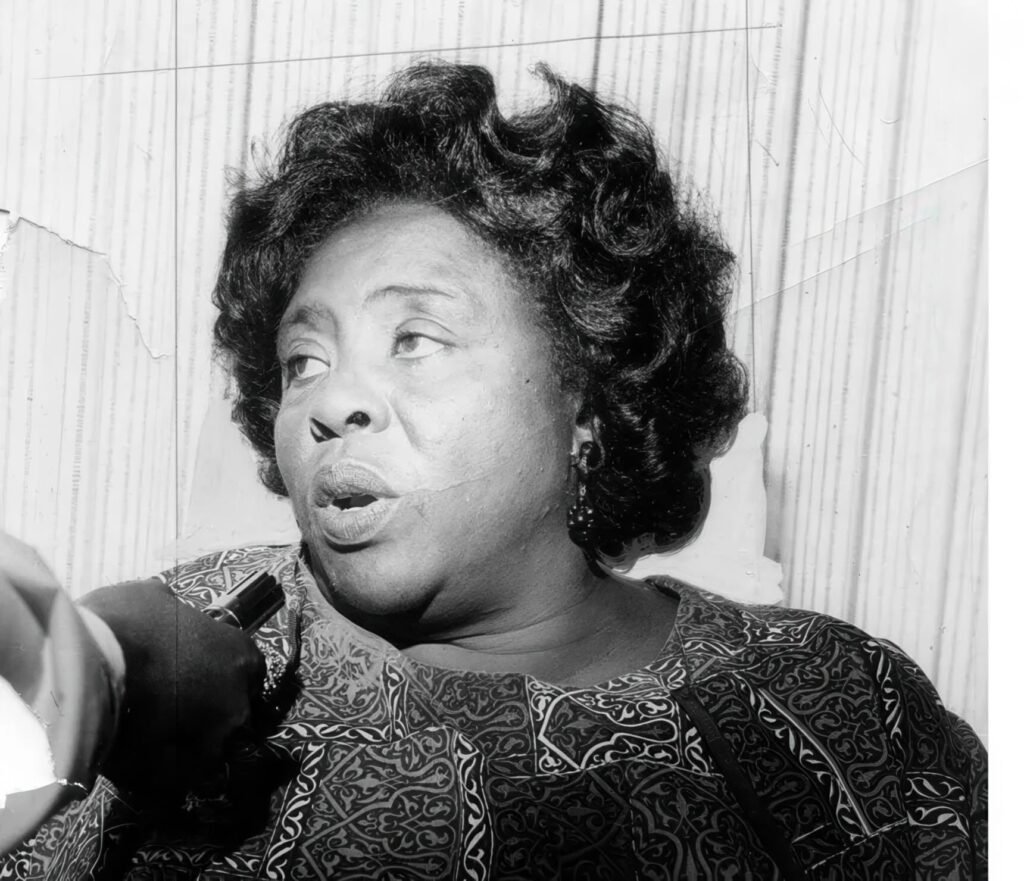
She never held elected office. She never received a presidential medal. But she changed the country more than most presidents ever will. And when she spoke, America listened.
Sources:
- Smithsonian American Women’s History Museum – Fannie Lou Hamer and the Fight for Voting Rights (https://womenshistory.si.edu/blog/fannie-lou-hamer-and-fight-voting-rights)
- Wikipedia – Fannie Lou Hamer (https://en.wikipedia.org/wiki/Fannie_Lou_Hamer)
- Wikipedia – Freedom Farm Cooperative (https://en.wikipedia.org/wiki/Freedom_Farm_Cooperative)
- Mississippi Today – 1964: Fannie Lou Hamer testifies at DNC (https://mississippitoday.org/2024/08/22/1964-fannie-lou-hamer-dnc/)
- Tri-County Independent – “I’m sick and tired of being sick and tired” (https://www.tricountyindependent.com/in-depth/news/special-reports/2020/06/25/milwaukee-has-made-little-progress-toward-equity-how-can-change/3181671001/)
- The Daily Beast – Remembering Civil Rights Heroine Fannie Lou Hamer (https://www.thedailybeast.com/remembering-civil-rights-heroine-fannie-lou-hamer-im-sick-and-tired-of-being-sick-and-tired/)
- The Tennessean – Fannie Lou Hamer’s legacy, 60 years after challenging Democrats (https://www.tennessean.com/story/news/politics/elections/2024/08/21/fannie-lou-hamer-dnc-legacy/74889046007/)