

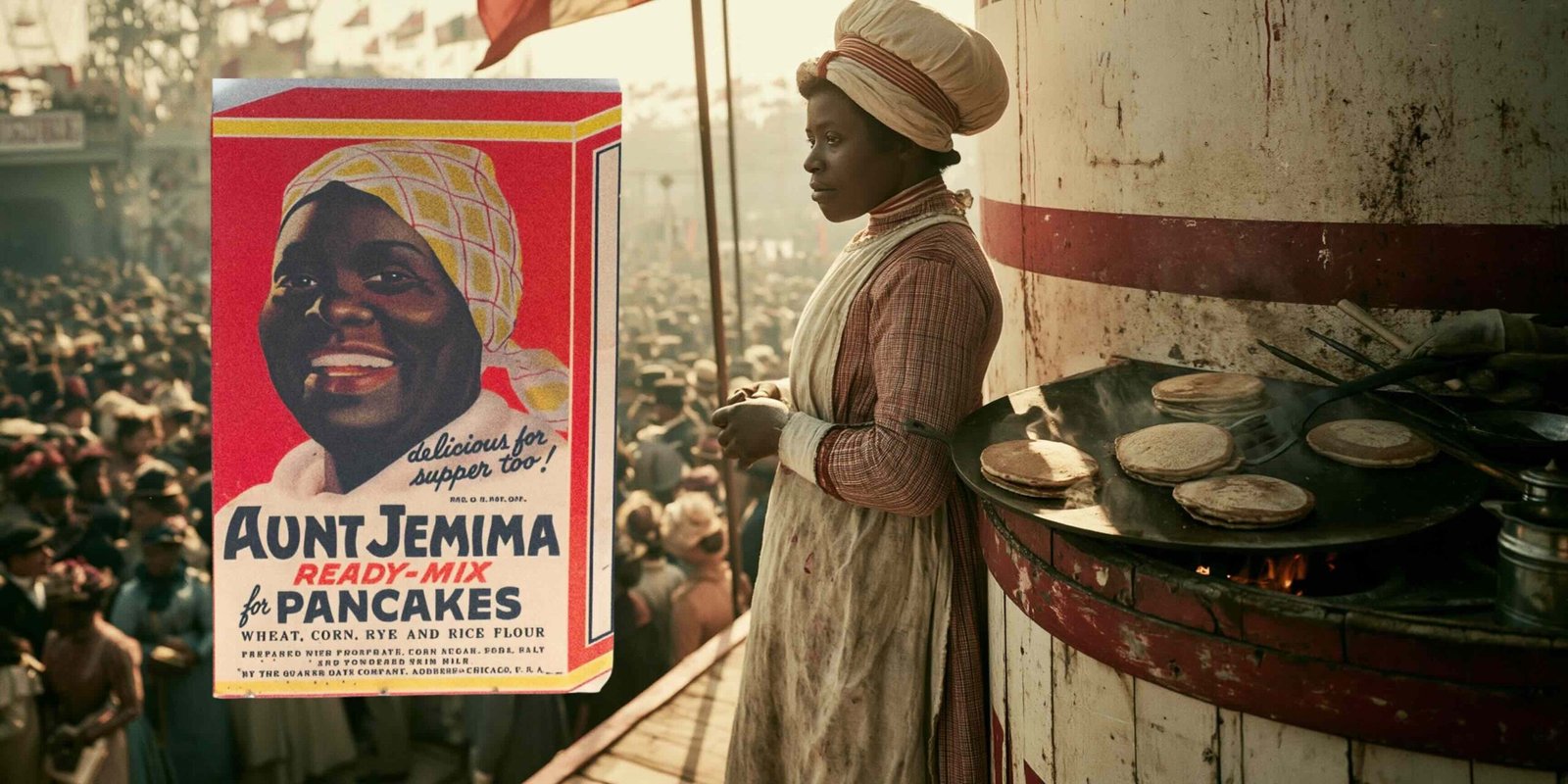

Let that sit for a moment. Nancy Green was born into slavery in Montgomery County, Kentucky, on March 4, 1834. The exact number of children she had is not known. Her husband’s name was George Green. She lost both of them by the end of the Civil War. By the time she was sixty, she had survived the worst that nineteenth-century America could throw at a black woman.
Then she got the call. The R.T. Davis Milling Company needed a face for their new pancake mix. They had been using white men in blackface to sell it. The marketing world was changing. They wanted someone real. Someone who looked like the mammy character their customers expected to see. Judge Charles Morehead Walker, whose family Nancy had worked for as a nanny and cook, recommended her.
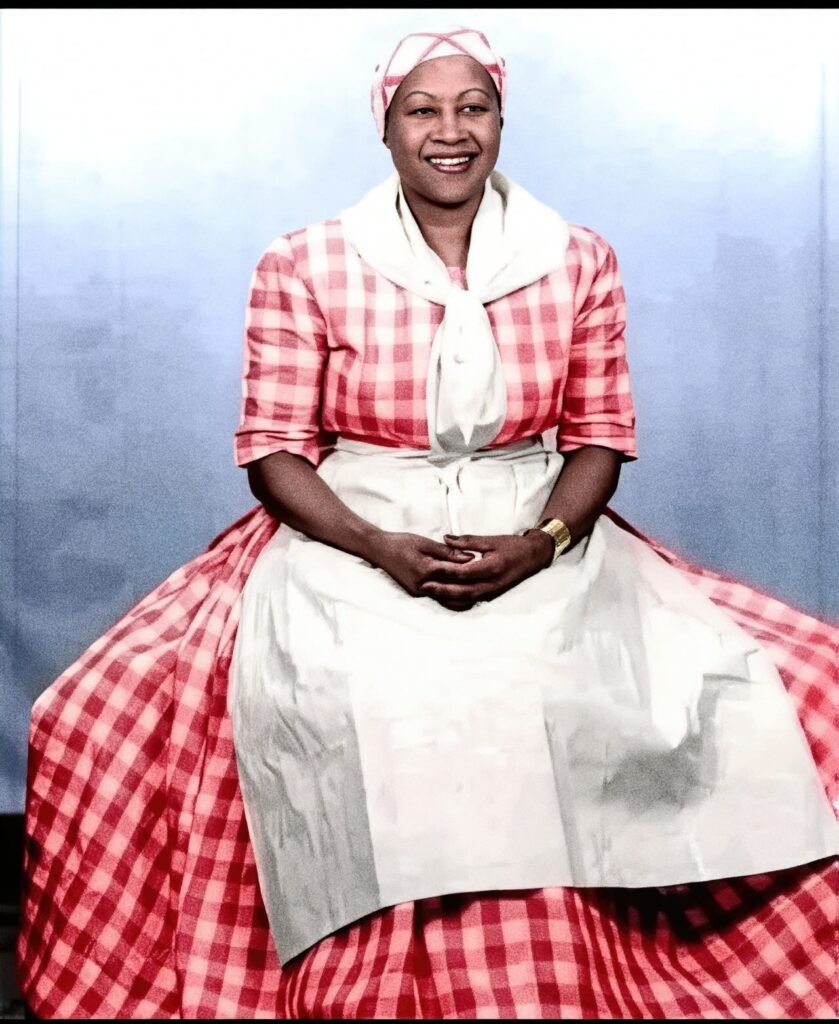
She was 59 years old when she walked onto the stage at the World’s Columbian Exposition in Chicago. Beside her stood a flour barrel twenty-four feet high. She cooked pancakes, she sang, she smiled, she performed. The crowd loved her. The R.T. Davis Milling Company had found their living trademark. Here is what most people do not know. The recipe was not hers. The name was not hers. The costume was designed by white executives based on minstrel show characters. Nancy Green was playing a role written for her by people who saw her as a type, not a person.
She knew that. And she did not care. Because the money let her do real work. Nancy Green was one of the founding members of Olivet Baptist Church in Chicago. Under her support, it became the largest black church in America with more than 9,000 members. She used her income from the Aunt Jemima contract to fund antipoverty programs. She became a missionary. She spoke out against poverty and for equal rights. She turned a caricature into a platform.

She played the role for twenty years. When the company asked her to go to the Paris Exposition in 1900, she refused. They replaced her with Agnes Moodey, described by the company as “a Negress of sixty years.” After that came other women. Lillian Richard. Anna Short Harrington. Each one played the same role. Each one was erased the same way. Nancy Green died on August 30, 1923. She was standing on a Chicago sidewalk when a car driven by Dr. H.S. Seymour collided with a laundry truck and hurtled onto the pavement. She was 89.
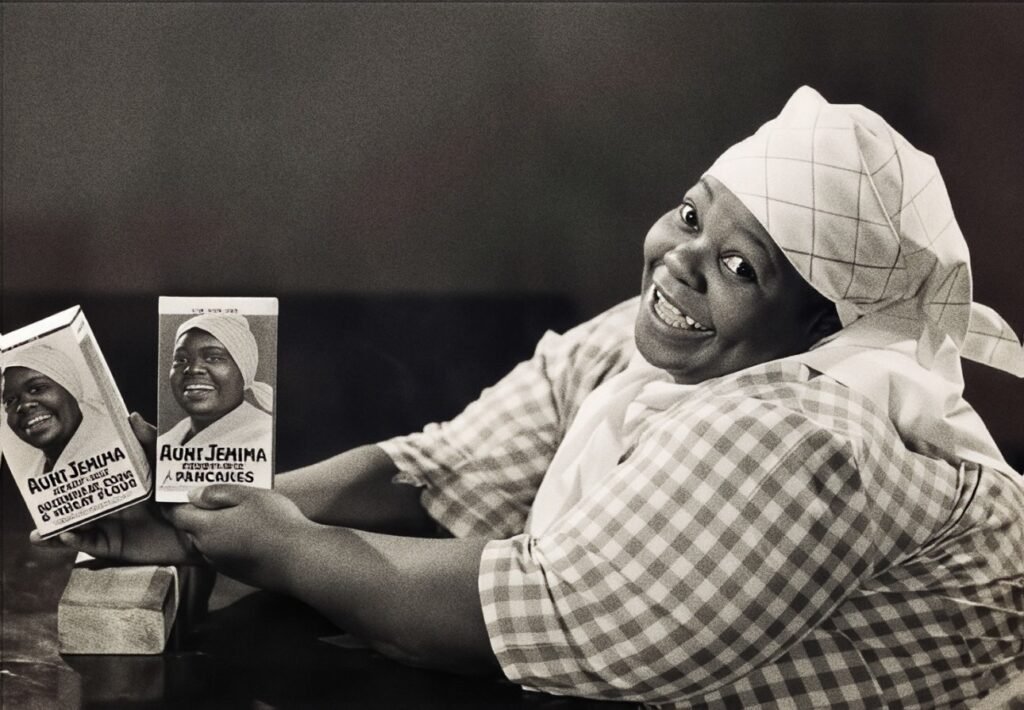
She was buried in Oak Woods Cemetery. No headstone. No marker. The advertising world’s first living trademark had no name on her grave. For 92 years, nobody knew where she was. Sherry Williams of the Bronzeville Historical Society spent fifteen years looking. She found the plot. She reached out to Quaker Oats, the company that now owned the Aunt Jemima brand, and asked for help. Their response: “Nancy Green and Aunt Jemima aren’t the same. Aunt Jemima is a fictitious character.”
They were technically correct. The character was a fiction. But the woman who wore it was real. And she had done more with that role than the company ever did. In September 2020, a headstone was placed. Nancy Green. 1834 to 1923. Finally named. The lesson is not simple. Nancy Green was exploited. She was paid a wage, not a royalty. She played a stereotype that harmed generations of black women who came after her. But she also used that role to lift her community, to fund a church, to fight poverty, to be a missionary, to survive.
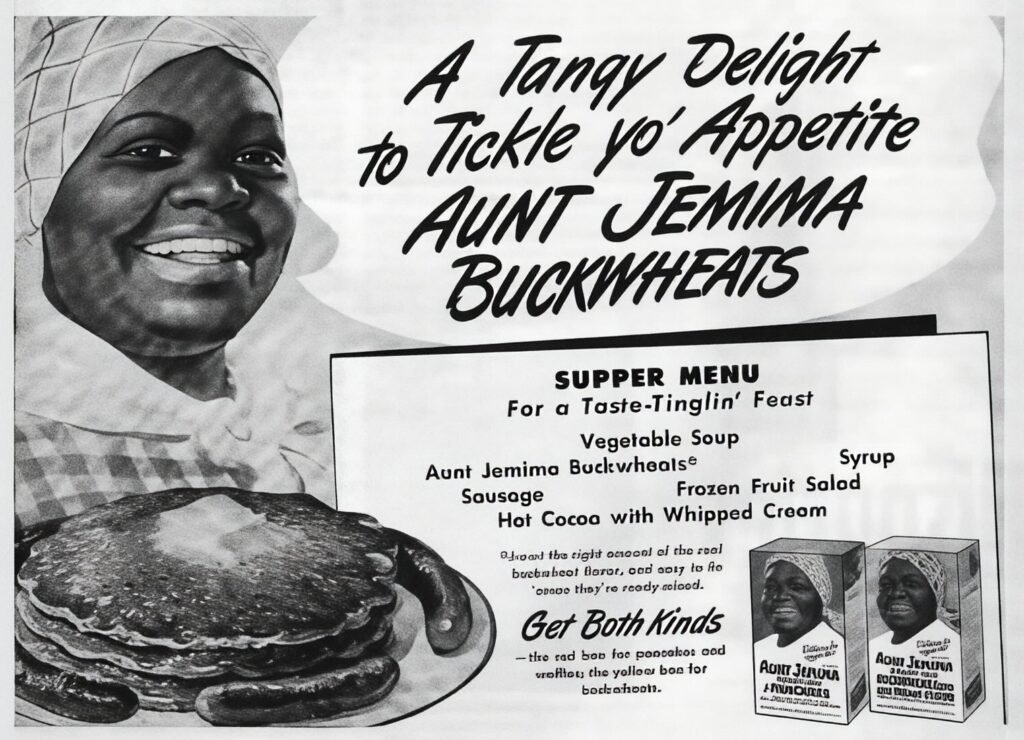
She did not choose the hand she was dealt. She played it as well as anyone could. The question her story leaves is this: how many other Nancy Greens are there? Women who wore masks the world gave them, who turned those masks into survival, who did real good behind a lie, and who were buried in unmarked graves because the corporations that profited from them decided they were “fictitious.”
We do not know. But we should look.
Sources
– Wikipedia: Nancy Green
– Kentucky Center for African American Heritage: Nancy Green bio
– AA Registry: Nancy Green, the Original Aunt Jemima
– Chicago Tribune, 4 September 1923: “Aunt Jemima of Pancake Fame Is Killed by Auto”
– WBEZ (Nagasawa, June 2020): The Fight to Preserve the Legacy of Nancy Green
– Chicago Defender (Gibson, August 2020): Nancy Green Receives a Headstone
– Legacy.com (Crowther, June 2020): Finally, a Proper Headstone
– New York Times (Roberts, July 2020): Overlooked No More: Nancy Green