
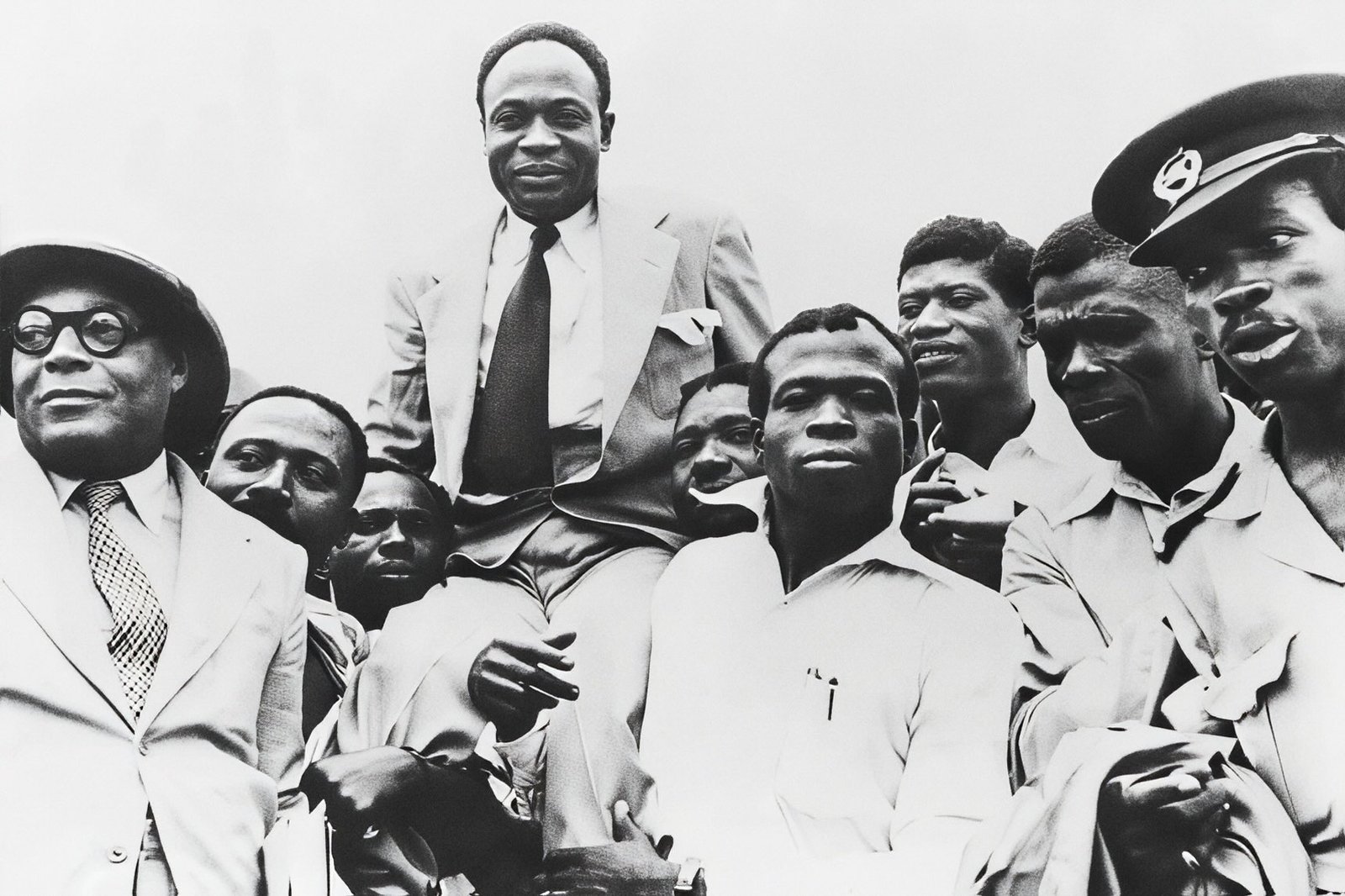

On February 21, 1966, Kwame Nkrumah boarded a plane for Hanoi. Ho Chi Minh had invited him to mediate the Vietnam War. Nkrumah believed he could do it. He was the most powerful man in Africa. He had led Ghana to independence nine years earlier. He had stared down the British Empire and won. A war in Southeast Asia — why couldn’t he help end that too?
He left Ghana in the hands of a three-man commission. No vice president. No succession plan. He thought he would be gone a week.
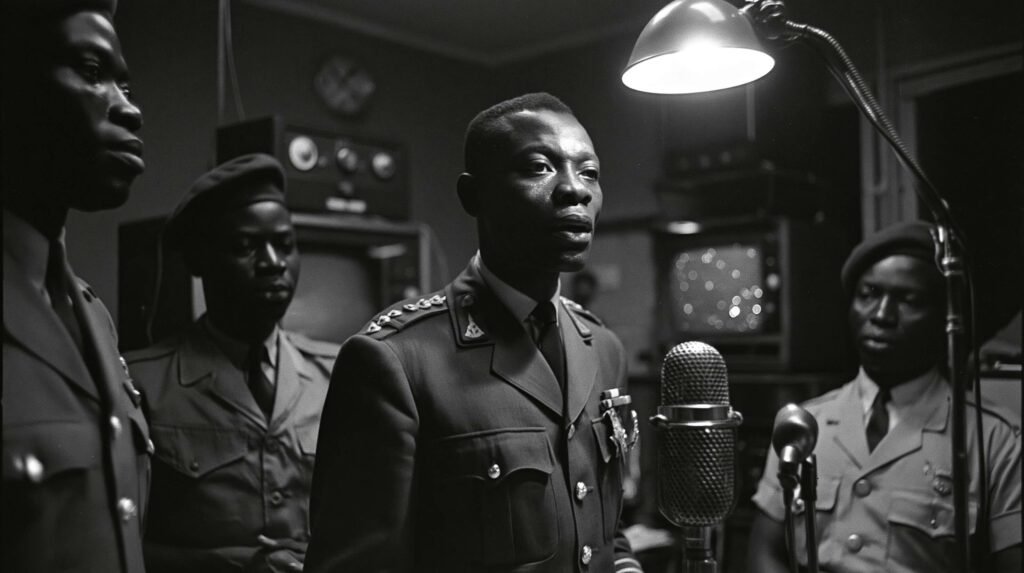
Three days later, at dawn on February 24, Colonel Emmanuel Kwasi Kotoka and Major Akwasi Amankwa Afrifa launched Operation Cold Chop. They seized the radio station. At six in the morning, Kotoka announced: “Kwame Nkrumah is overthrown, and the myth surrounding him is broken. All ministers are dismissed. The C.P.P. is disbanded.”
Nkrumah learned about it from the Chinese ambassador in Beijing. He was still in transit. He had not even reached Hanoi yet.

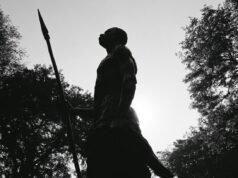
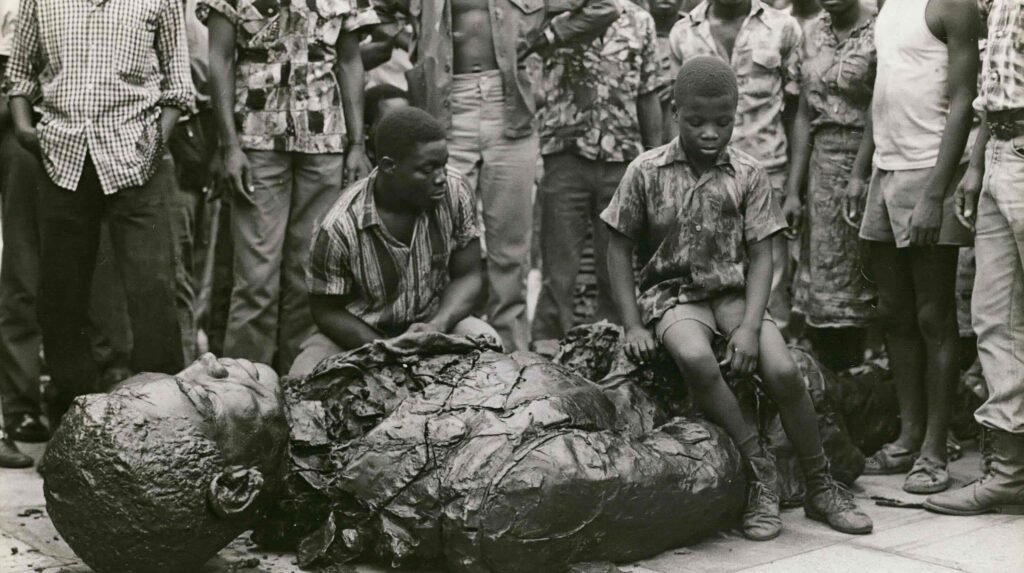
His statue outside Parliament House in Accra was pulled down within hours. A crowd gathered around it. Someone sat on the broken torso. The myth, as Kotoka said, was broken.
But the myth was never just a myth. Nkrumah had built Ghana’s first university. He had built the Akosombo Dam, bringing electricity to parts of the country that had never seen it. He had made Ghana the voice of African liberation at the United Nations. He had poured his life into a vision of a united Africa, one currency, one army, one people, no colonial borders. That vision was real enough that the West spent years trying to kill it.
The CIA knew.
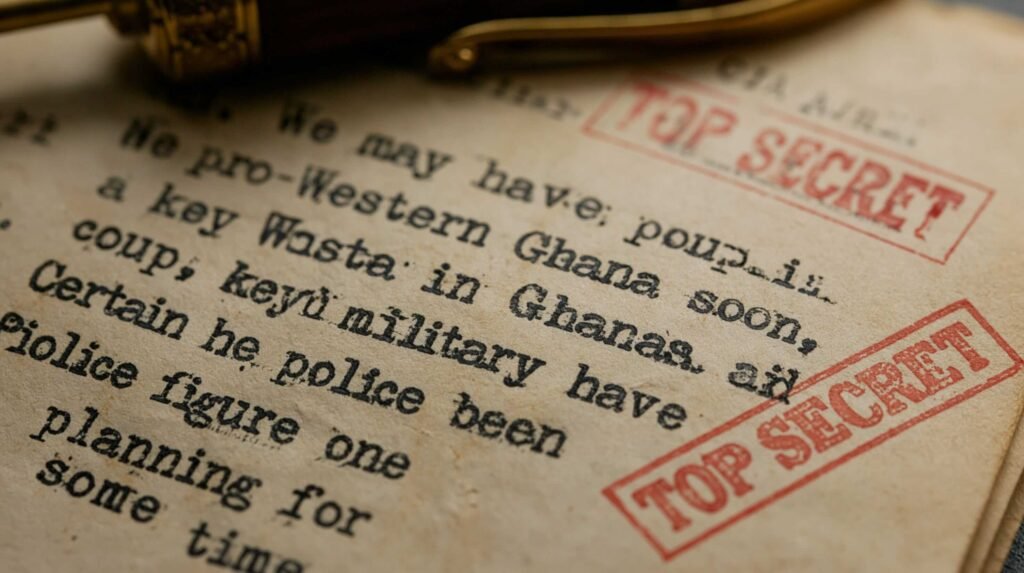
Declassified documents confirm it. On May 27, 1965 — nine months before the coup — Robert W. Komer, a National Security Council staffer, wrote to his superior: “We may have a pro-Western coup in Ghana soon. Certain key military and police figures have been planning one for some time. The plotters are keeping us briefed.”
The US ambassador to Ghana, William P. Mahoney, knew the plotters by name. He knew their meeting schedule. He knew who would replace Nkrumah. He had discussed the coup with CIA Director John McCone nearly a year before it happened.
A former CIA officer, John Stockwell, wrote in his memoir that the Accra station was given “full, if unofficial credit” for the coup. The station chief, Howard T. Banes, had maintained intimate contact with the plotters. The station had even proposed storming the Chinese embassy during the coup to steal secret documents — a plan that was rejected, not for moral reasons, but because it was too risky.
Stockwell also wrote that eight Soviet military advisers were killed during the coup. The CIA coordinated the recovery of classified Soviet equipment as the coup unfolded.
In 2025, Ghanaian President John Mahama said it plainly: “Declassified documents from the United States archives reveal that this was a coup inspired and engineered by the CIA.”
The exile.
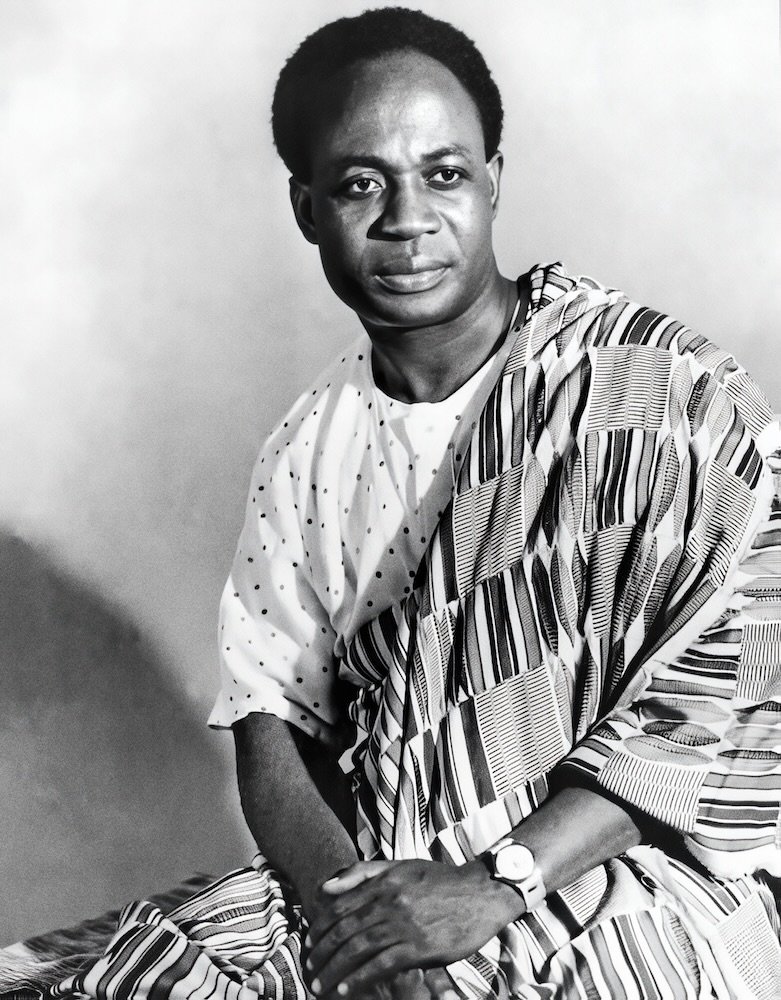
Nkrumah never returned to Ghana. He landed in Guinea, where President Sékou Touré made him honorary co-president. Touré gave him a 21-gun salute at the airport and declared that Nkrumah was still a head of state.
For five years, Nkrumah lived in Conakry. He wrote. He tended roses. He waited for Ghana to call him back. The call never came.
He died in Bucharest, Romania, on April 27, 1972. Skin cancer, the doctors said. He was 62.
His body was embalmed and buried in Guinea. It took months of negotiation before Ghana was allowed to bring him home. On July 7, 1972, a Guinean Air Force plane flew his remains to Accra. He was buried in his home village of Nkroful.
What the coup did.
Ghana under Nkrumah was on a trajectory. Industrialisation, pan-African leadership, a voice in the world that could not be ignored. The coup stopped all of it. The Convention People’s Party — two million members strong — was dissolved by a single radio announcement. Nkrumah’s supporters were purged from government. The prisons filled.
Ghana would spend most of the next three decades under military rule. The country that had been the model for African independence became a case study in how fast that independence could be stolen back.
In Dark Days in Ghana, Nkrumah wrote: “An all-out offensive is being waged against the progressive, independent states. It has been one of the tasks of the C.I.A. and other similar organisations to discover these potential quislings and traitors in our midst, and to encourage them, by bribery and the promise of political power, to destroy the constitutional government of their countries.”
He wrote that in 1969. The documents that proved him right were declassified thirty years later.
The last word.
Nkrumah is not remembered for his authoritarian excesses. The Preventive Detention Act, the one-party state, the life presidency — those things are footnotes now. What survives is the vision. A united Africa. A continent that answers to itself.
He died in exile, overthrown by men he trusted, while he was on his way to stop a war that had nothing to do with him. That is the measure of the man. And that is the measure of the forces that brought him down.
Sources:
1. Edward A. Ulzen Memorial Foundation — “February 21, 1966: Nkrumah departs for peace mission in Hanoi” (eaumf.org)
2. Paul Lee, “Nkrumah and the CIA IV” — University of Texas/Africa Studies (laits.utexas.edu)
3. John Stockwell, In Search of Enemies: A CIA Story (1978)
4. Foreign Relations of the United States, 1964-1968, Volume XXIV, Africa — US State Department Office of the Historian
5. Kwame Nkrumah, Dark Days in Ghana (1969)
6. Iloveafrica.com — “Mahama: Declassified US Documents Confirm CIA’s Role In Nkrumah’s 1966 Overthrow” (2025)
7. GhanaWeb — “The mystery around what actually happened to Kwame Nkrumah’s body”
8. GhanaRemembers — “The final days of Kwame Nkrumah”