

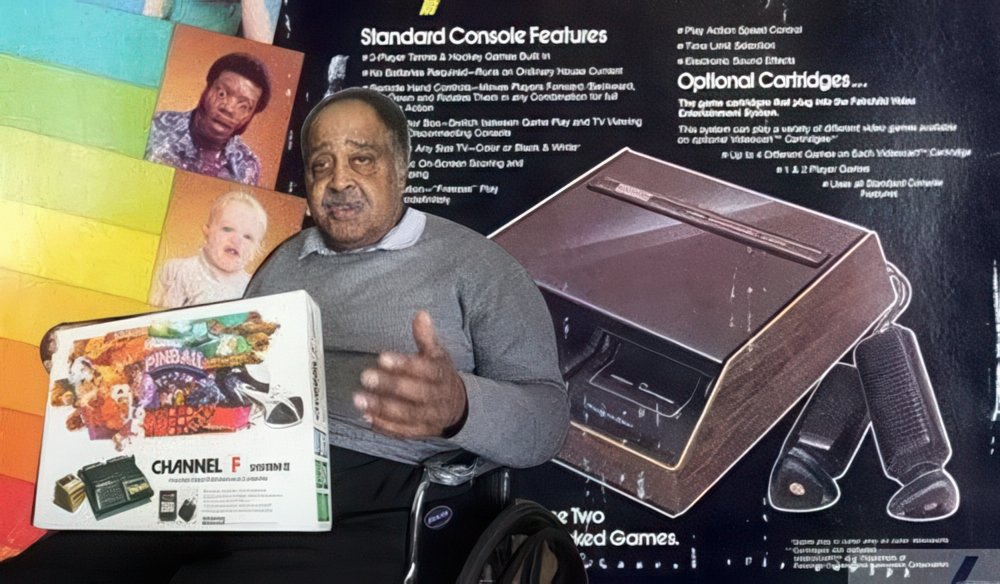

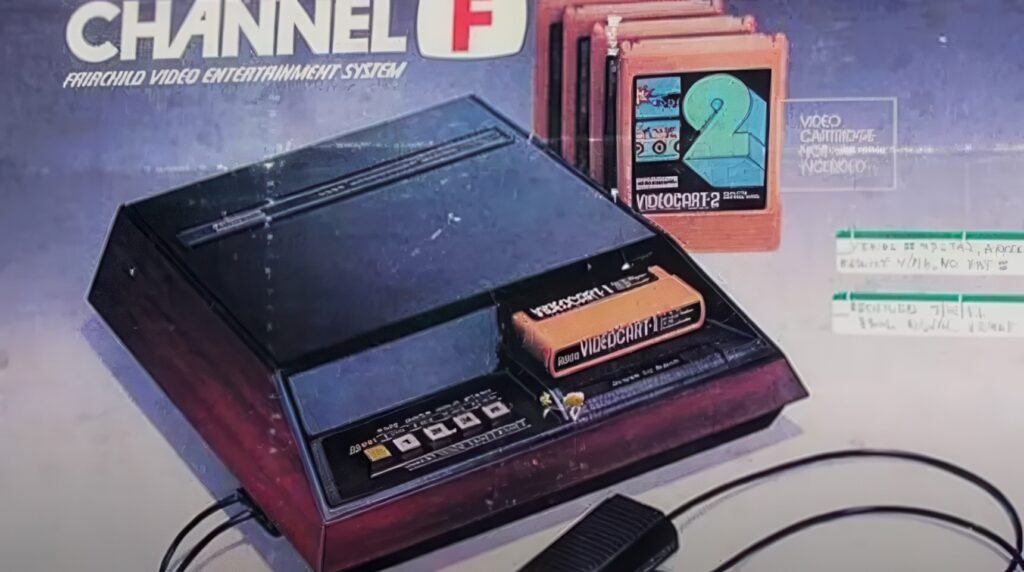
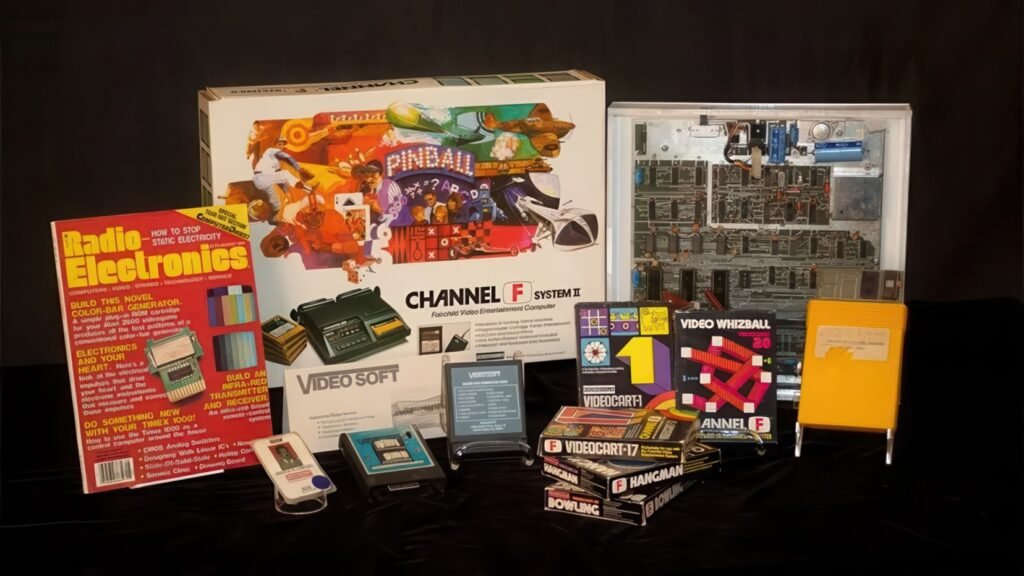
The facts, then. In 1976, a Black engineer from Brooklyn named Gerald “Jerry” Lawson led the team that released the Fairchild Channel F, the first home video game console with interchangeable game cartridges. Before Lawson, if you bought a console, you were stuck with whatever games the manufacturer built into the machine. You could not buy new games. You could not swap them out. The hardware was the software.
Lawson changed that. He took technology licensed from a company called Alpex and refined it into a durable, user-friendly ROM cartridge that could be inserted and removed repeatedly without any risk of electric shock. Players could now build a library of games. Console manufacturers could now make money from game sales, not just hardware. That business model still defines the video game industry today.
Early Life
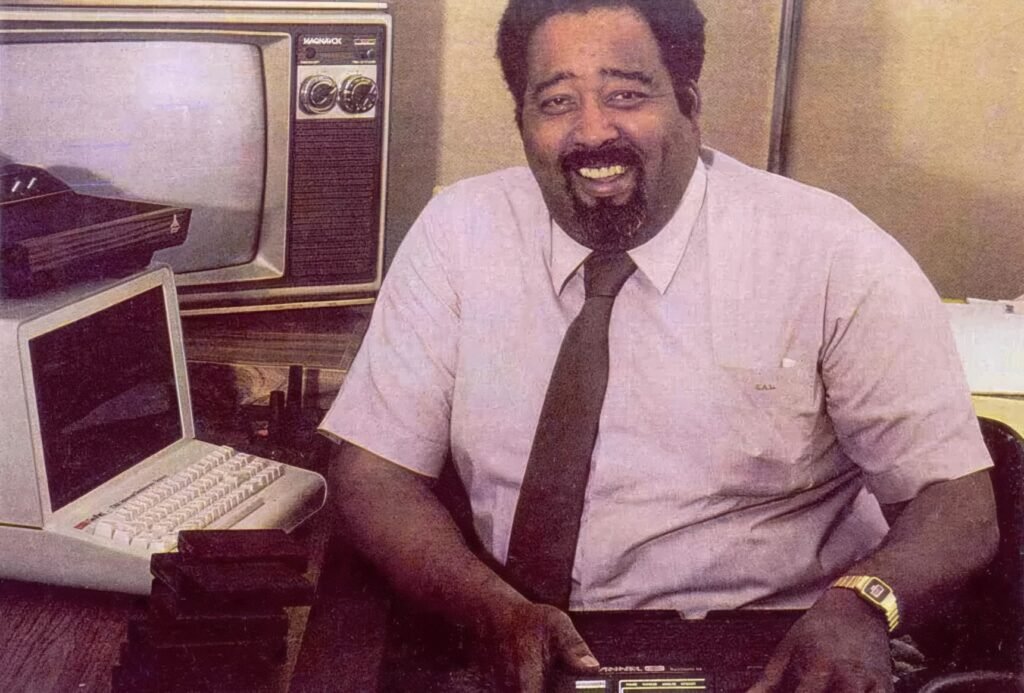
Jerry Lawson was born on December 1, 1940, in Brooklyn, New York. His father was a longshoreman with a deep interest in science. His mother worked for the city and made sure her son got a good education. When Lawson was in first grade, his teacher pointed to a picture of George Washington Carver on the wall and said: “This could be you.” That moment stuck with him for his entire life.

He became fascinated with electronics. At 13, he earned an amateur radio license and built his own station at home. He repaired televisions to earn money. He attended Queens College and City College of New York but did not complete a degree at either. In 1970, he moved to California and joined Fairchild Semiconductor as an applications engineering consultant.
The Garage Arcade Game
In his garage, on his own time, Lawson built a coin-operated arcade game called Demolition Derby. It used Fairchild’s new F8 microprocessor and was one of the first microprocessor-driven games ever made. The game was never commercially released, but it proved that Lawson understood the future of the industry.
When Fairchild created a video game division, Lawson became its chief hardware engineer. He led the team that designed the Channel F console, named for “Channel Fun.” It featured an 8-way joystick and a dedicated pause button, both firsts for home consoles. The system flopped commercially, selling only about 250,000 units. But the cartridge technology was so good that Atari adopted it for the Atari 2600, released in 1977, which became the best-selling console of its generation, selling 30 million units.
The Industry Acknowledges Him
Atari co-founder Allan Alcorn was honest about the debt his company owed to Lawson. “We determined at Atari that the cartridge-based game was the way to go,” he said. “At that point, we sure as hell couldn’t say we couldn’t make one because Jerry had already done it.”
Lawson left Fairchild in 1980 and founded Videosoft, one of the first Black-owned video game development companies. The company made software for the Atari 2600. It closed after about five years. Lawson later worked as a consultant and collaborated with the Stanford mentor program, teaching young people about engineering and technology.
Late Recognition and Death
For decades, Lawson’s story was largely unknown outside the video game industry. In March 2011, the International Game Developers Association finally honored him as an industry pioneer. One month later, on April 9, 2011, he died of complications from diabetes at age 70.
His children, Anderson and Karen Lawson, later said: “Due to a crash in the video game market, our father’s story became a footnote in video-game history. However, over the past few years, there have been numerous awards, scholarships, and media that have recognized him. Our family is eternally grateful to those who have worked tirelessly to bring his story to the public.”
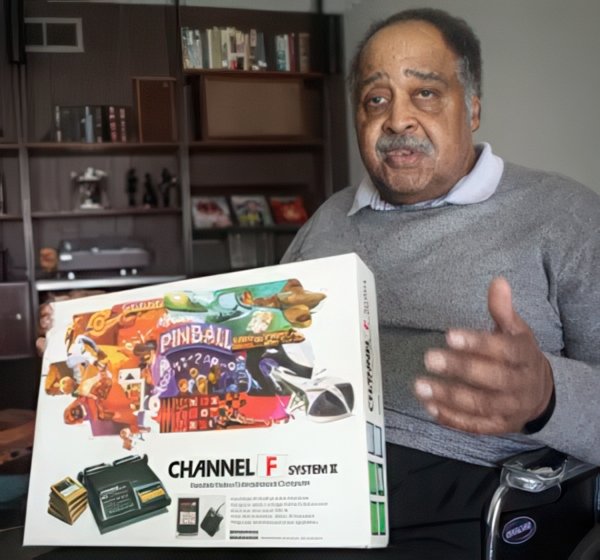
In 2019, the Independent Games Festival awarded Lawson the ID@Xbox Gaming Heroes award. In 2020, a permanent display about his work was installed at the World Video Game Hall of Fame in Rochester, New York. On December 1, 2022, Google honored him with an interactive Doodle on what would have been his 82nd birthday.
The Man Behind the Technology
Lawson stood 6 feet 6 inches tall. He was one of the few Black engineers in Silicon Valley in the 1970s. He had a reputation for being direct, generous with his knowledge, and fiercely competitive. He loved proving people wrong. “The whole reason I did games was because people said, ‘You can’t do it,'” he told the San Jose Mercury News in 2011. “I’m one of the guys if you tell me I can’t do something, I’ll turn around and do it.”
He also had strong opinions about the industry he helped create. He did not like violent video games. He believed games should be used as teaching tools.
Jerry Lawson did not invent the idea of the video game cartridge. Alpex did that. But he took an unreliable prototype and turned it into a commercial product that changed the world. Every time you insert a game into a console, you are using technology that Jerry Lawson helped perfect. His name should be as famous as the consoles he made possible.
Sources:
- Wikipedia – Jerry Lawson (engineer) (https://en.wikipedia.org/wiki/Gerald_Lawson_(engineer))
- Los Angeles Times – Gerald Lawson dies at 70 (2011) (https://www.latimes.com/local/obituaries/la-me-gerald-lawson-20110423-story.html)
- Bangor Daily News – Gerald Lawson, engineer whose innovation changed video games, dies at 70 (2011) (https://www.bangordailynews.com/2011/04/25/news/gerald-lawson-engineer-whose-innovation-changed-video-games-dies-at-70/)
- Black Enterprise – Google Doodle honors Gerald ‘Jerry’ Lawson (2022) (https://www.blackenterprise.com/happy-birthday-gerald-jerry-lawson-todays-google-doodle-honors-the-black-pioneer-of-the-video-game-cartridge/)
- Minecraft – The Father of the Video Game Cartridge (2022) (https://www.minecraft.net/pl-pl/article/the-father-video-game-cartridge)
• • t2ONLINE – Google Doodle celebrates a hidden gem of the video game industry (2022) (https://t2online.in/tech/tech-news/google-doodle-celebrates-a-hidden-gem-of-the-video-game-industry/206898)