
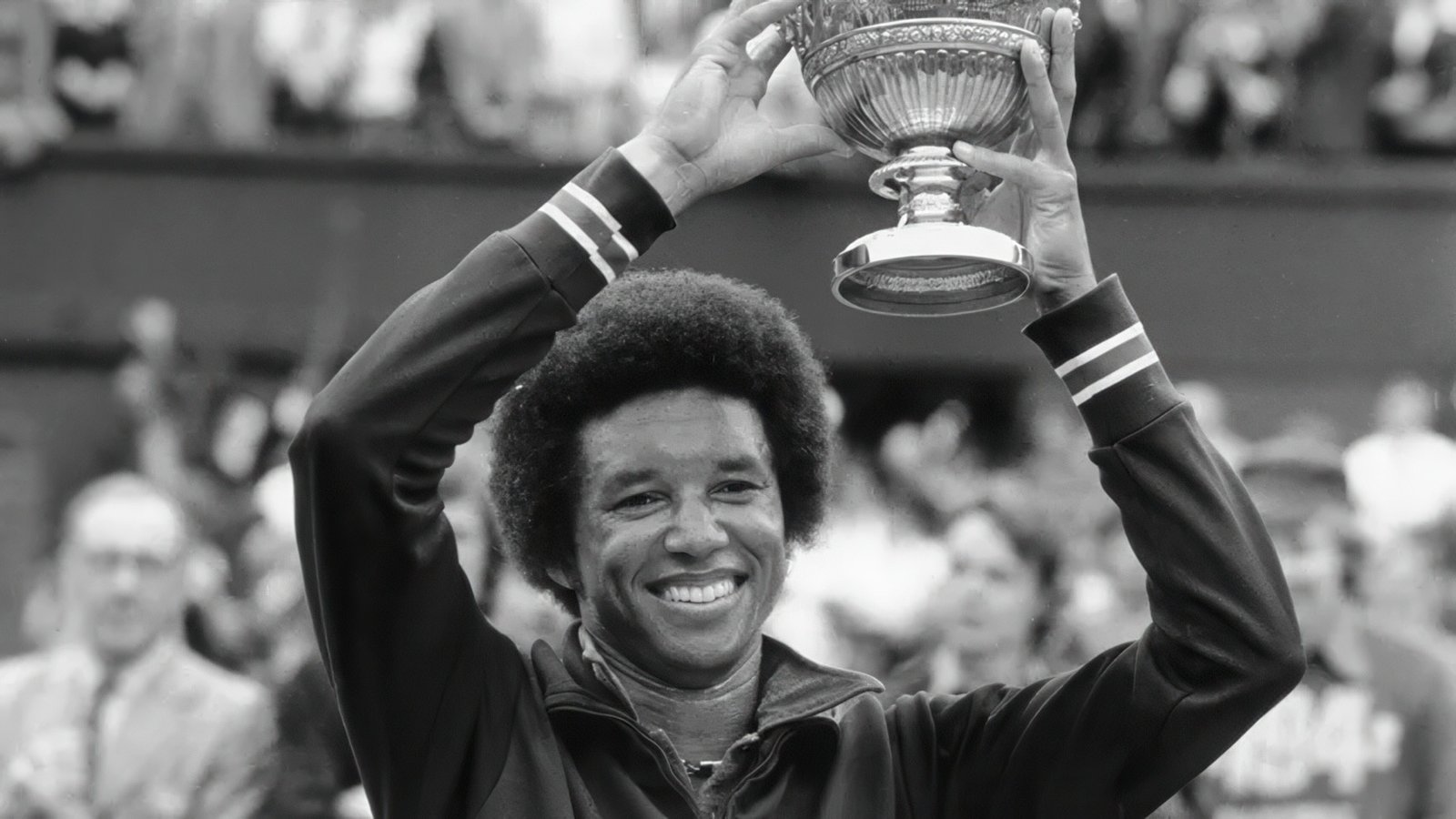

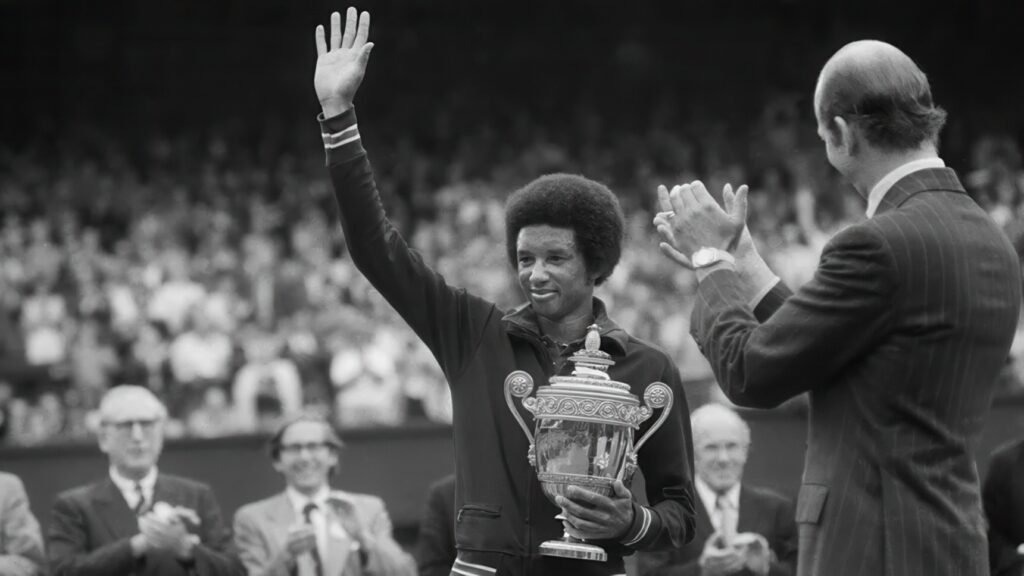
On July 5, 1975, a 31-year-old Black man from Richmond, Virginia, walked onto Centre Court at Wimbledon. He was about to play Jimmy Connors, the defending champion and the world’s number one player. Connors had beaten him eight straight times. No one gave Ashe a chance. Ashe won in four sets. He became the first Black man to win Wimbledon.
Arthur Robert Ashe Jr. was born on July 10, 1943, in Richmond, Virginia. He first picked up a tennis racket at age seven on a segregated playground near his home. Richmond’s public courts were closed to Black players. Ashe trained on the uneven asphalt courts of Brook Field, a Black-only park where the nets were torn and the surfaces cracked.
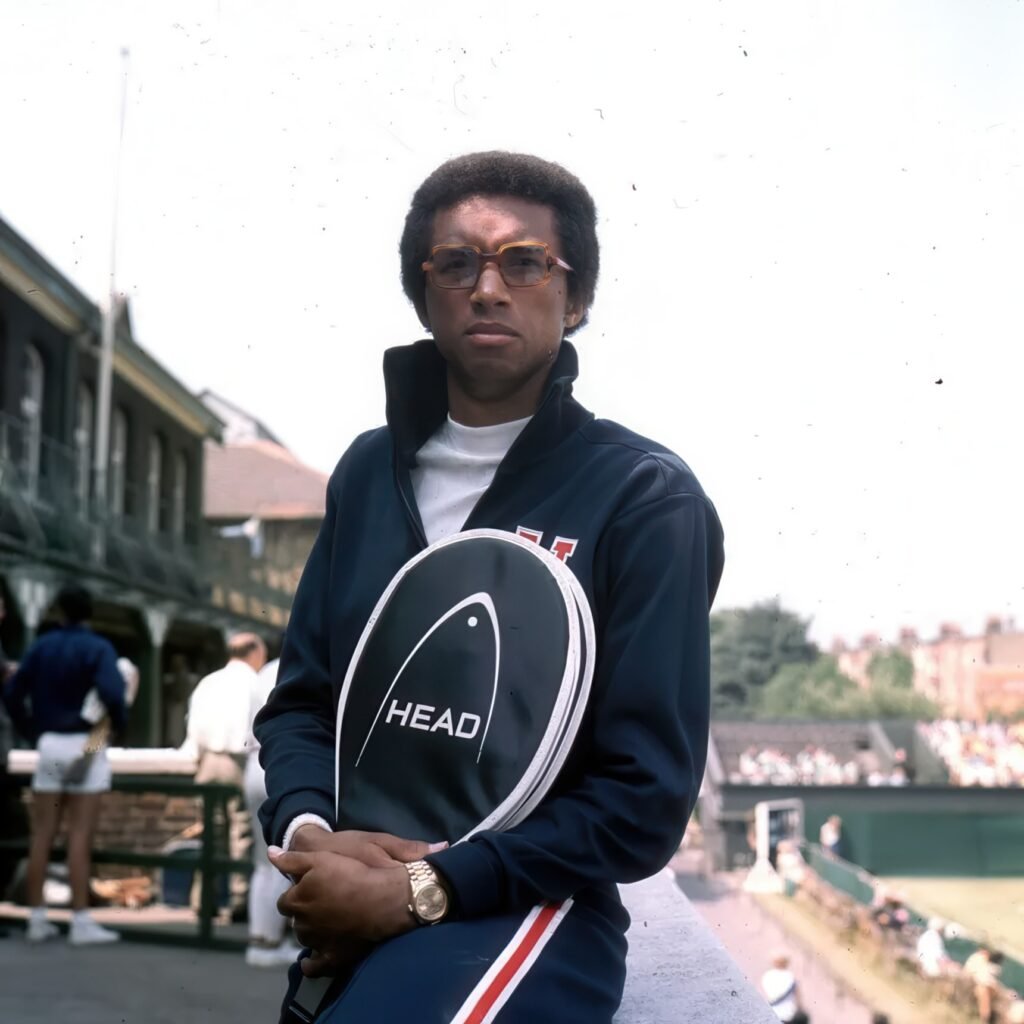
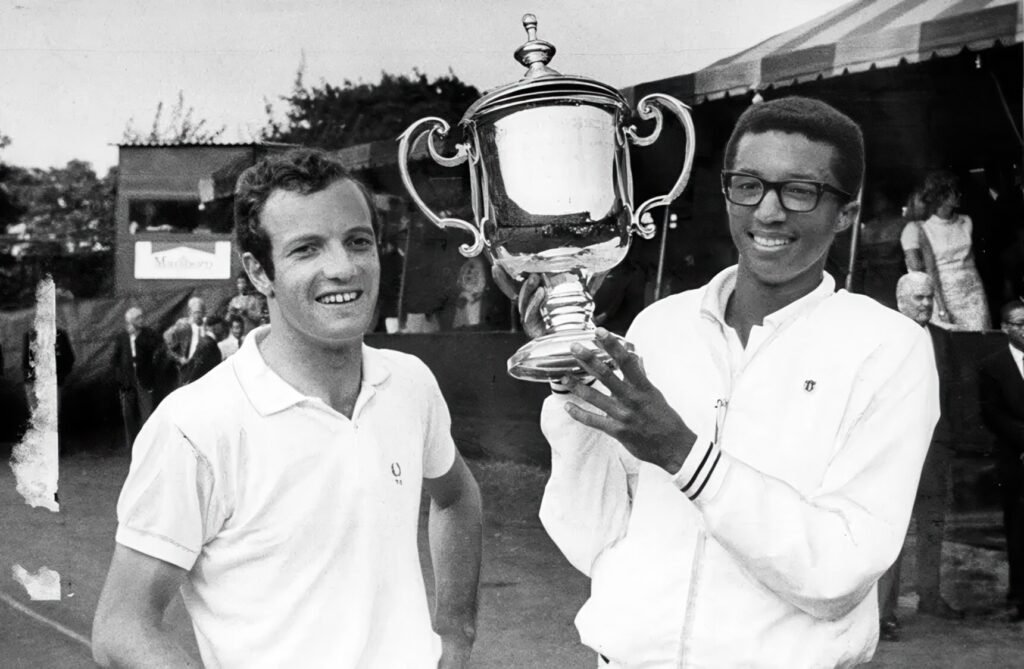
By 1963, he had become the first Black player selected to the United States Davis Cup team. He was 20 years old and still an amateur. In 1968, Ashe won the US Open, becoming the first Black man to win a Grand Slam singles title. But here is the strange part. He could not accept the14,000 first prize. The tournament was the first US Open of the open era, open to professionals and amateurs alike. Ashe remained an amateur to maintain Davis Cup eligibility.
He received 14,000 first prize. The tournament was the first US Open of the open era, open to professionals and amateurs alike. Ashe remained an amateur to maintain Davis Cup eligibility. He received 20 per day for expenses instead. The runner-up, Tom Okker, took the money.

Two years later, in 1970, Ashe won the Australian Open. In 1972, he co-founded the Association of Tennis Professionals, the union for male players. He served as its president. He fought for the rights of players while earning almost nothing himself. In 1975, he won Wimbledon. He remains the only Black man to win the singles titles at Wimbledon, the US Open, and the Australian Open.
Ashe’s activism matched his athletic achievements. In 1969, he applied for a visa to play in the South African Open. It was denied because of his race. Instead of accepting defeat, Ashe called for South Africa’s expulsion from the Davis Cup. In March 1970, the International Tennis Federation voted to exclude South Africa from Davis Cup competition. The ban lasted until 1992.
He retired from professional tennis in 1980 with 87 career titles. He had three Grand Slam singles titles, two Grand Slam doubles titles, and four Davis Cup championships.
In 1983, Ashe underwent the second of two heart bypass surgeries. During the operation, he received a blood transfusion. The blood was tainted with HIV. He learned he had AIDS in 1988, when he was hospitalised for emergency brain surgery. He kept the diagnosis private for four years. In April 1992, a newspaper informed him it would run a story about his illness. Ashe called a press conference to announce it himself.
In his final year, he worked to raise awareness about AIDS. He spoke at the United Nations on World AIDS Day. He called the epidemic a war that demanded the same urgency as any armed conflict. He co-founded the Arthur Ashe Foundation for the Defeat of AIDS.
On February 6, 1993, Arthur Ashe died at New York Hospital at age 49. His body lay in state at the Governor’s Mansion in Richmond, Virginia. Thousands of people lined up to pay their respects. In 1997, the USTA named the main stadium at the US Open the Arthur Ashe Stadium. It is the largest tennis stadium in the world, seating 23,771 people.
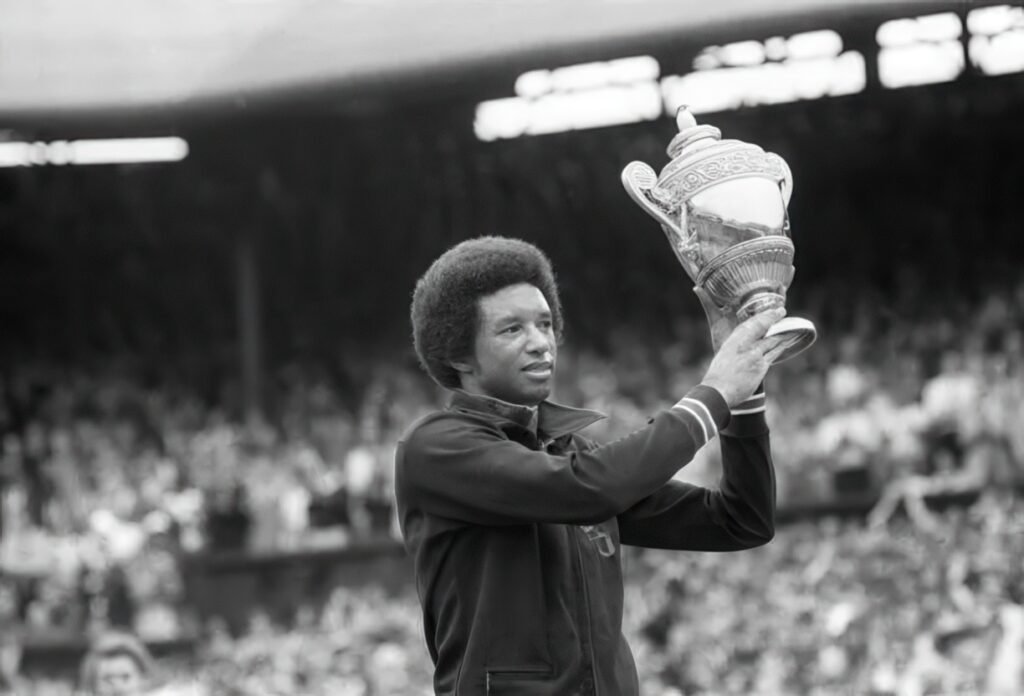
Ashe once wrote: “I don’t want to be remembered for my tennis accomplishments. That’s the smallest part of what I am. I want to be remembered as a person who helped make the world a little better.” He did.
Sources:
- Wikipedia – Arthur Ashe (https://en.wikipedia.org/wiki/Arthur_Ashe)
- Britannica – Arthur Ashe (https://www.britannica.com/biography/Arthur-Ashe)
- History Channel – Tennis great Arthur Ashe dies of AIDS (https://www.history.com/this-day-in-history/february-6/tennis-great-arthur-ashe-dies-of-aids)
- AL.com – Arthur Ashe, first African American to win a Grand Slam singles title, dies of AIDS (https://www.al.com/sports/2015/02/today_in_sports_tennis_great_f.html)
- The New York Times – Arthur Ashe, Tennis Champion, Dies of AIDS (https://archive.nytimes.com/www.nytimes.com/library/sports/020793ashe.html)
• • Times Herald-Record – Arthur Ashe: Athlete & activist (https://www.recordonline.com/story/entertainment/books/2018/09/23/arthur