
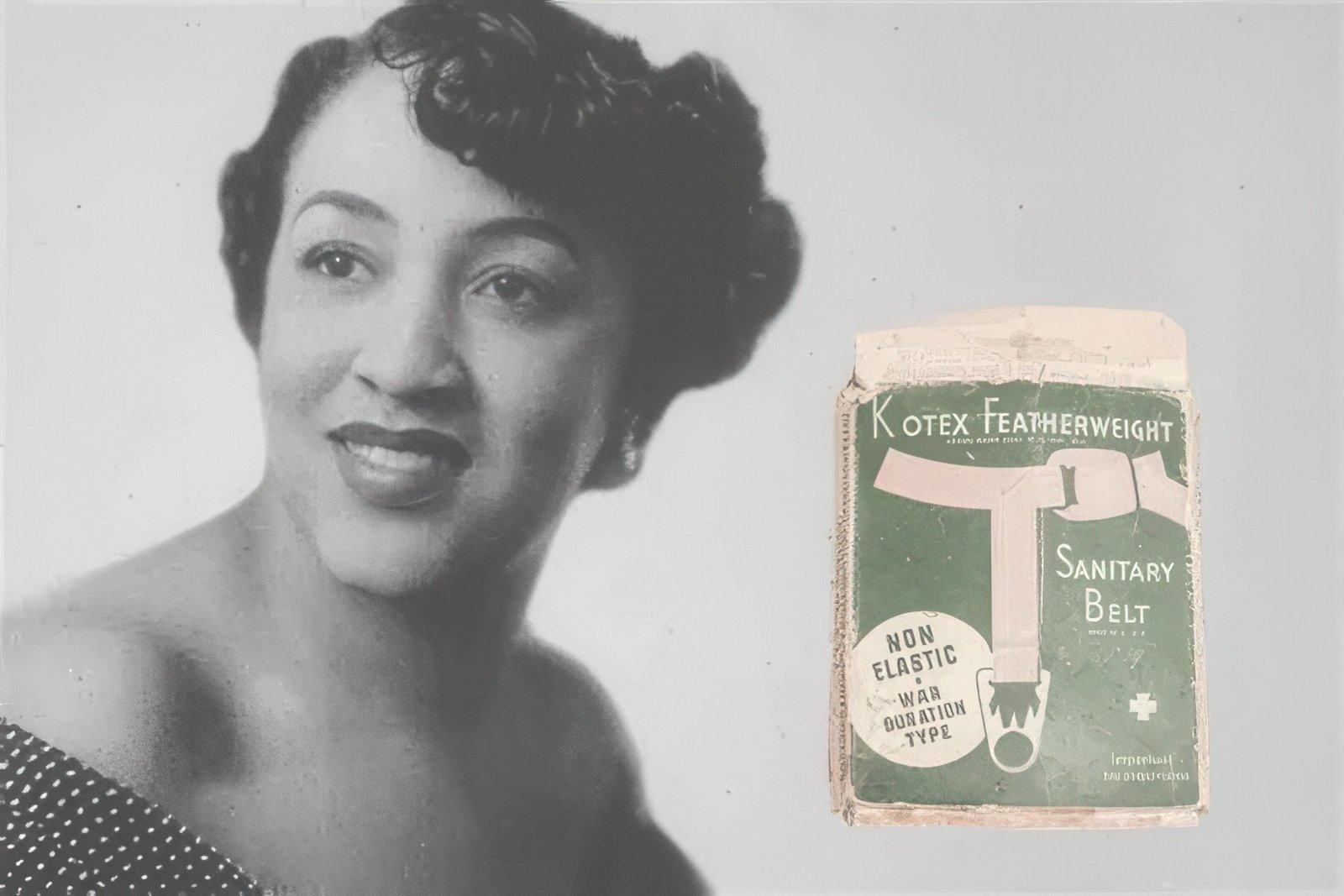

Mary Beatrice Davidson Kenner was 12 years old when her family moved to Washington, D.C. Instead of exploring monuments, she walked the halls of the United States Patent and Trademark Office. She wanted to understand how inventions became patents . She was already an inventor. She had been one since age six, when she tried to design a self-oiling door hinge.

Kenner was born on May 17, 1912, in Monroe, North Carolina. Her father, Sidney Nathaniel Davidson, patented a clothes press that could fit in a suitcase and a window washer for trains. Her maternal grandfather, Robert Phromeberger, invented a tricolor light signal for trains. A white man stole that patent from him. Her sister, Mildred, later patented and sold board games . Invention ran in her blood.
As a child, Kenner sketched ideas for a convertible roof for cars, a sponge-tipped umbrella to soak up rainwater, and a portable ashtray that would attach to cigarette packs. She had one big idea, though, that she kept returning to. A sanitary belt. An adjustable belt with a moisture-proof pocket that would hold a napkin securely in place. No chafing. No leakage. No embarrassment.
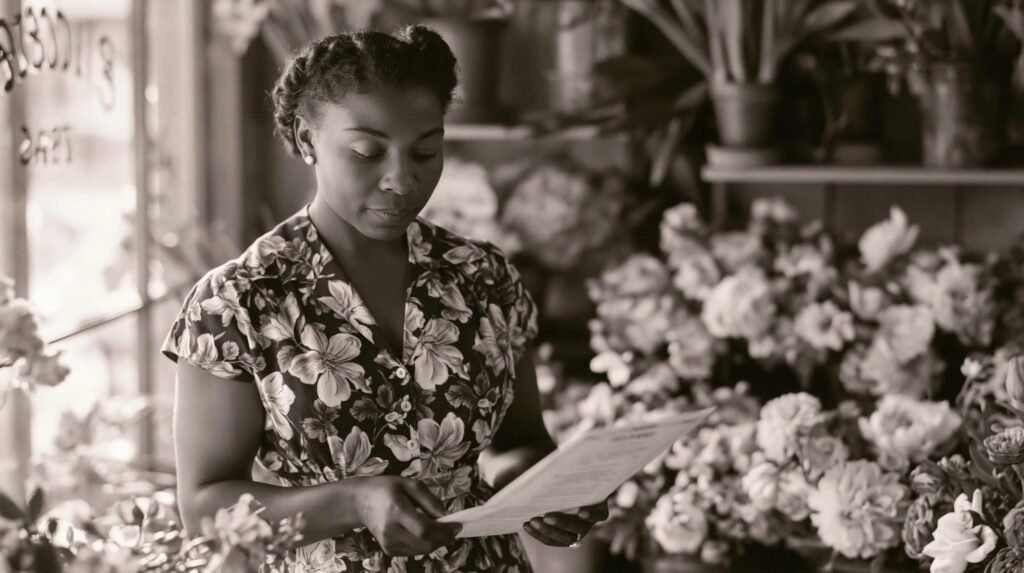
She first conceived the idea in the 1920s, when she was a teenager. She could not afford to file for a patent. For thirty years, she waited. She worked odd jobs. She became a federal employee during World War II, working for the Census Bureau and the General Accounting Office. In 1950, she became a professional florist. She ran four flower shops around Washington, D.C., for 23 years. In her spare time, she kept inventing.

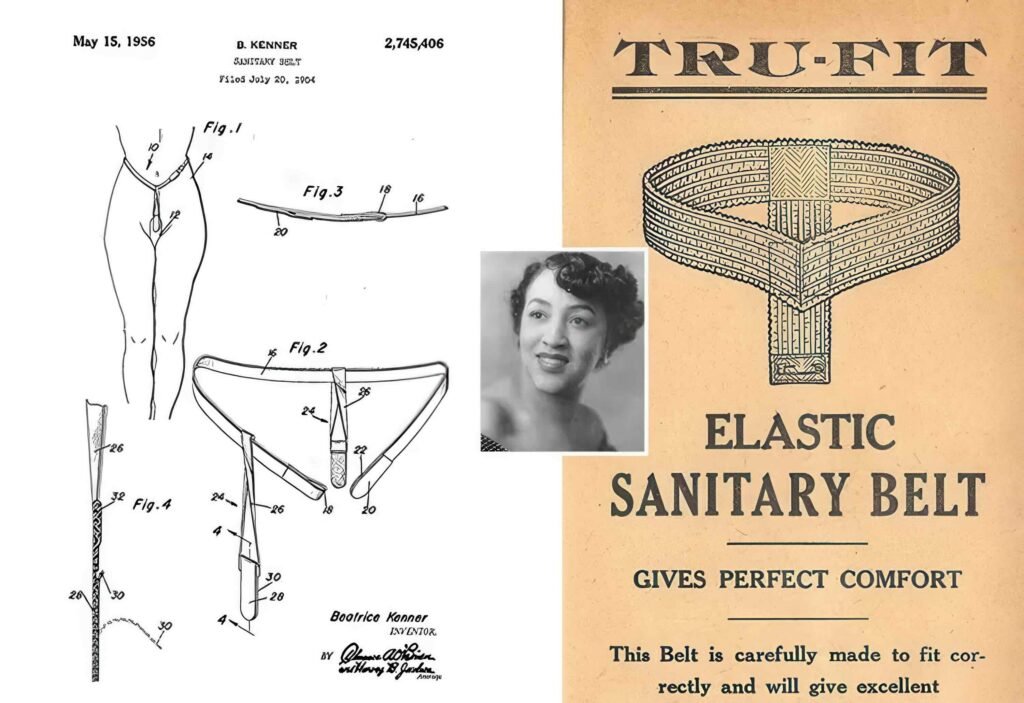
In 1954, she finally completed the patent application. In 1956, the patent was granted . The sanitary belt was described as an eliminator of “chafing and irritation normally caused by devices of [its] class”. A company called Sonn-Nap-Pack expressed interest. A representative traveled from New York to Washington to meet her.
Kenner later recalled: “I was so jubilant… I saw houses, cars, and everything about to come my way”. Then the company discovered she was Black. “Sorry to say, when they found out I was black, their interest dropped,” she said. “The representative went back to New York and informed me the company was no longer interested”.
The rejection was devastating. Kenner never made any money from the sanitary belt. The patent expired and entered the public domain, allowing others to manufacture it freely. The beltless adhesive pads that eventually dominated the market came later, in the 1970s. By then, Kenner’s invention had already been copied and improved upon by companies that never paid her a cent.
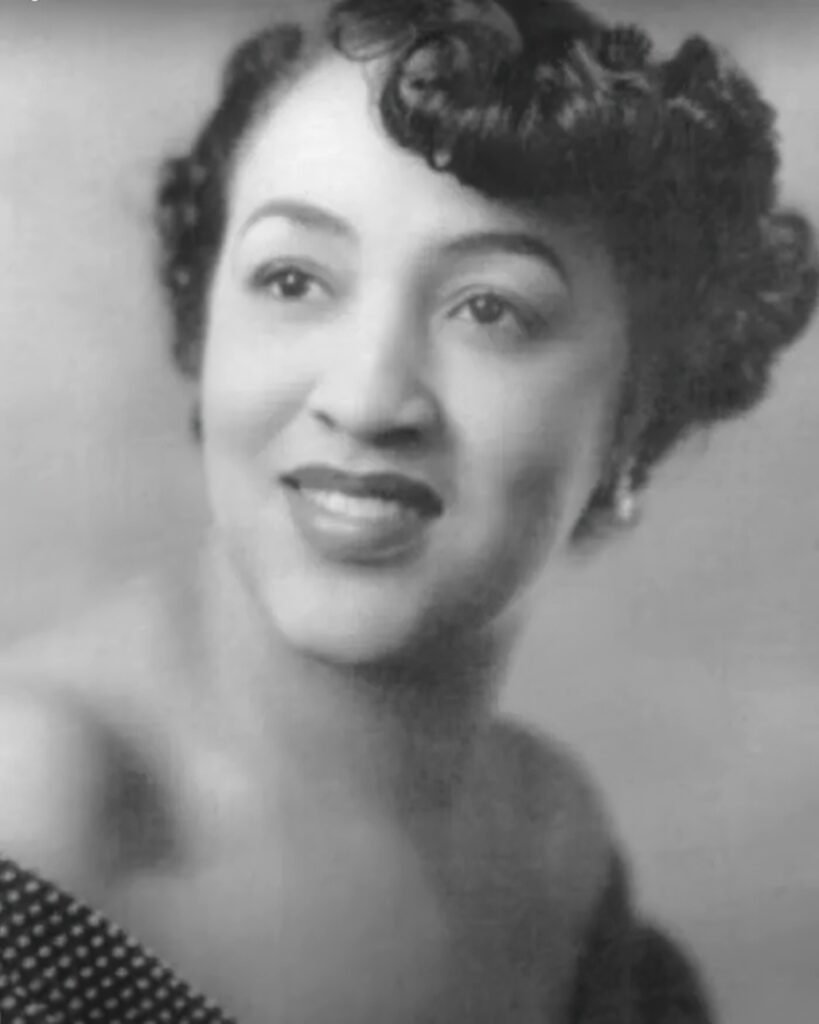
She did not stop inventing. Between 1956 and 1987, she received five total patents. That is the largest number of patents awarded to a Black woman by the U.S. government . When her sister Mildred developed multiple sclerosis, Kenner patented a carrier attachment for a walker with a tray and soft pocket for carrying items. She and Mildred patented a toilet tissue holder together in 1982. Her final patent, granted in 1987, was for a mounted back washer and massager.
Kenner married heavyweight boxer James “Jabbo” Kenner in 1951. They fostered five children and adopted one . She worked as a florist until the 1970s. She never stopped thinking of new ideas. In her final years, she was reportedly working on a way to fix potholes in Washington, D.C.
Mary Beatrice Davidson Kenner died on January 13, 2006, at age 93 . She received no awards during her lifetime. No formal recognition. No wealth. She never saw a dime from the sanitary belt that made daily life easier for millions of women.
But her record stands. Five patents. The most of any Black woman in American history. Her name should be as famous as the inventions she created. Instead, she is a reminder of the inventions we have lost to racism and the women we have forgotten.
Sources:
- Wikipedia – Mary Kenner (https://en.wikipedia.org/wiki/Mary_Kenner)
- BlackPast.org – Mary Kenner (1912-2006) (https://www.blackpast.org/african-american-history/mary-kenner-1912-2006/)
- Science Museum Group – Mary Beatrice Davidson Kenner (https://collection.sciencemuseumgroup.org.uk/people/cp168674)
- Lemelson-MIT Program – Mary Beatrice Davidson Kenner (https://lemelson.mit.edu/resources/mary-beatrice-davidson-kenner)
- UMBC Office of Accessibility – Celebrating Black Disability History (2026)
- National Business League – Mary Davidson Kenner (2024)