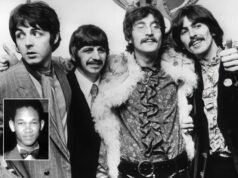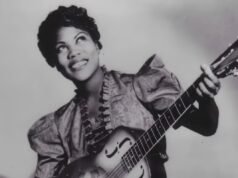

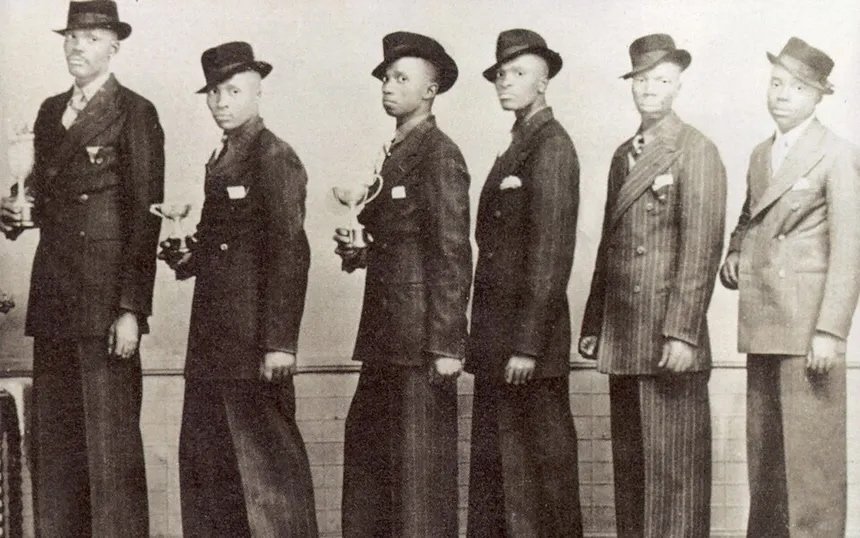

The facts, then. In 1939, a Zulu migrant worker named Solomon Linda walked into the Gallo Recording Studios in Johannesburg after his shift as a record packer. He sang a song he had improvised called “Mbube” – Zulu for “lion”. The recording took three takes. On the third take, Linda took a deep breath, opened his mouth, and improvised a haunting falsetto melody that would become one of the most famous tunes in music history.
Linda was born near Pomeroy, Natal, in 1909. He attended Gordon Memorial mission school, where he learned Western hymns and participated in choir contests. In 1931, like thousands of young Black men, he left his homestead to find work in Johannesburg’s gold mines. He found a job at the Mayi Mayi Furniture Shop and sang with a choir called the Evening Birds, managed by his uncles.

In 1939, Linda was working as a record packer at Gallo Record Company, owned by Italian immigrant Eric Gallo. One night after his shift, he was allowed to use the studio. He and the Evening Birds recorded several songs. Then Linda launched into a new tune. The song “Mbube” was a hit. It sold more than 100,000 copies in South Africa over the next decade, probably the first African pop hit.
Linda received ten shillings for the recording – about half a pound, or roughly one quarter of what a Black urban family needed to survive for a week in 1939 Johannesburg. He sold his rights to the song to Gallo. He could not read. He did not understand royalties.

In the 1950s, American folklorist Alan Lomax found a copy of “Mbube”. He gave it to Pete Seeger of the Weavers. Seeger misheard the Zulu refrain “uyimbube” (you are a lion) as “wimoweh”. The Weavers’ version became a hit in 1951. Then in 1961, the Tokens recorded a doo-wop version with new English lyrics by George David Weiss. They called it “The Lion Sleeps Tonight”. It reached number one on the Billboard charts.

Linda received no credit. No royalties.
He continued performing throughout the 1940s and 1950s. In 1948, the Evening Birds disbanded. In 1949, he married Regina Madiba. They had eight children. In 1959, Linda collapsed on stage from kidney failure. He died on September 8, 1962, at age 53. His bank account held roughly $40 in today’s money. His family could not afford a tombstone.
The Disney Windfall
In 1994, Disney used “The Lion Sleeps Tonight” in The Lion King. The film grossed nearly
1 billion. In 2000, South African journalist Rian Malan wrote an exposé in Rolling Stone, estimating that the song had earned 15 million from The Lion King alone. Linda’s three surviving daughters were living in poverty. One cleaned a doctor’s office. Another ran a home-based grocers. The youngest worked as a nurse.
Malan wrote: “Mbube wasn’t the most remarkable tune, but there was something compelling about the underlying chant. The third take was the best, achieving immortality when Solly took a deep breath, opened his mouth, and improvised the melody that the world now associates with these words: ‘In the jungle, the mighty jungle, the lion sleeps tonight.'”

The Legal Battle
In 2004, Linda’s descendants sued Disney. Copyright lawyer Owen Dean used the “Dickens Provision” – a 1911 British Imperial Copyright Act clause that returns rights to heirs 25 years after a creator’s death. The clause was named after Charles Dickens, whose family was left destitute while publishers profited from his works. South Africa was a British colony in 1911, so the law applied.
Dean later recalled: “The musical was netting millions of dollars and Solomon Linda’s daughters were trying to survive as domestic servants, not earning enough to feed their families.”
In February 2006, just before trial, Abilene Music settled. The terms were not publicly disclosed, but the agreement acknowledged Linda as co-composer of “The Lion Sleeps Tonight”. His heirs received past and future royalties. A trust was established to administer the payments.
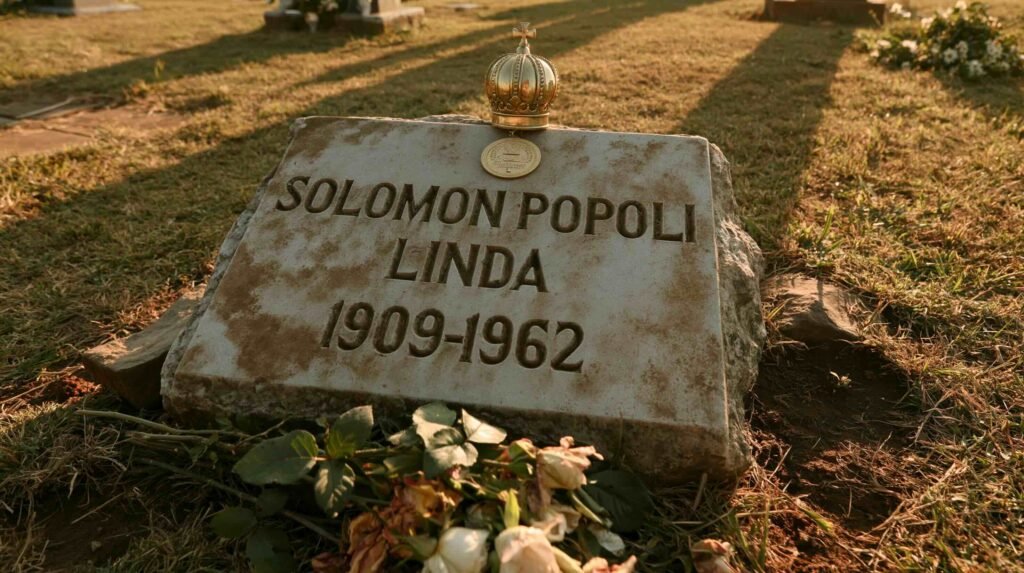
A tombstone was finally placed on Solomon Linda’s grave. He had been dead for 44 years.
The Legacy
Today, “Mbube” has been covered by more than 150 artists. It has appeared in more than 13 movies, half a dozen TV commercials, and a hit play. It is ranked as one of the top 10 most-loved golden oldies of all time. The four-chord progression Linda improvised in that Johannesburg studio has become one of the most imitated patterns in popular music.
In 2022, Linda’s hometown of Pomeroy was renamed Solomon Linda. His music is now taught in South African schools. His daughters, who once scrubbed floors, finally have financial security.
But the question remains: how many other Solomon Lindas are there? How many artists, especially from the Global South, have watched their work become global sensations while they died in poverty? The lion sleeps tonight. But the system that devoured Linda is still wide awake.
Sources:
- Wikipedia – Solomon Linda (https://en.wikipedia.org/wiki/Solomon_Linda)
- Brand South Africa – Mbube: Linda’s Lion sleeps at last (2006) (https://brandsouthafrica.com/108780/media-facts/mbube-210206/)
- News24 – In the jungle, the mighty jungle of cut-throat propriety (2013) (https://www.news24.com/Archives/City-Press/In-the-jungle-the-mighty-jungle-of-cut-throat-propriety-20150430)
- Ocala StarBanner – ‘The Lion Sleeps Tonight’ writer’s heirs win royalty case (2006) (https://www.ocala.com/story/news/2006/03/23/the-lion-sleeps-tonight-writers-heirs-win-royalty-case/31153381007/)
- Last.fm – Solomon Linda biography (https://www.last.fm/music/Solomon+Linda/+wiki)
- Discogs – Solomon Linda’s Original Evening Birds – Mbube / Ngi Hambiki (https://www.discogs.com/release/5417622-Solomon-Lindas-Original-Evening-Birds-Mbube-Ngi-Hambiki-)
- • FolkWorks – The Lion Sleeps Tonight – Mbube – Wimoweh (2024) (https://folkworks.org/article/the-lion-sleeps-tonight-mbube-wimoweh/)