


The facts, then. From the 12th century until the late 18th century, Europeans consumed ground-up Egyptian mummies as medicine. They believed the blackened remains could cure headaches, stomach ulcers, the plague, and even act as an aphrodisiac . This strange practice lasted about 500 years.
The whole thing started with a translation error. Persian physicians used a black bitumen substance called “mumiya” as medicine. They got it from natural mineral deposits in the mountains . When Arabic medical texts reached Europe during the Crusades, translators misunderstood the word. They associated “mumiya” with the black resinous material found inside Egyptian mummies. Then they assumed the mummies themselves had the same healing power.
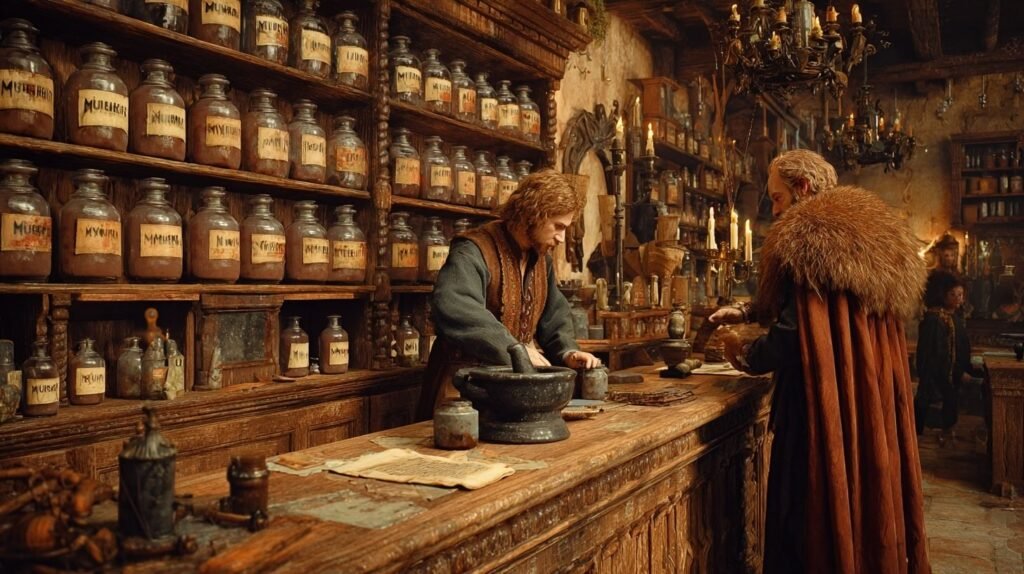
So Europeans began digging up ancient Egyptian tombs. They scraped the blackened flesh off mummies, ground it into powder, and sold it as “mumia” in apothecary shops . People consumed it mixed into food or drink. King Francis I of France reportedly carried a pouch of powdered mummy mixed with rhubarb everywhere he went . Catherine de’ Medici sent her chaplain to Egypt to buy some for her personal use.
The English king Charles II also got in on the act. After suffering a seizure, he took medication made from human skulls . Physicians at the time commonly prescribed ground-up skulls, bones, and flesh for neurological conditions well into the 20th century.

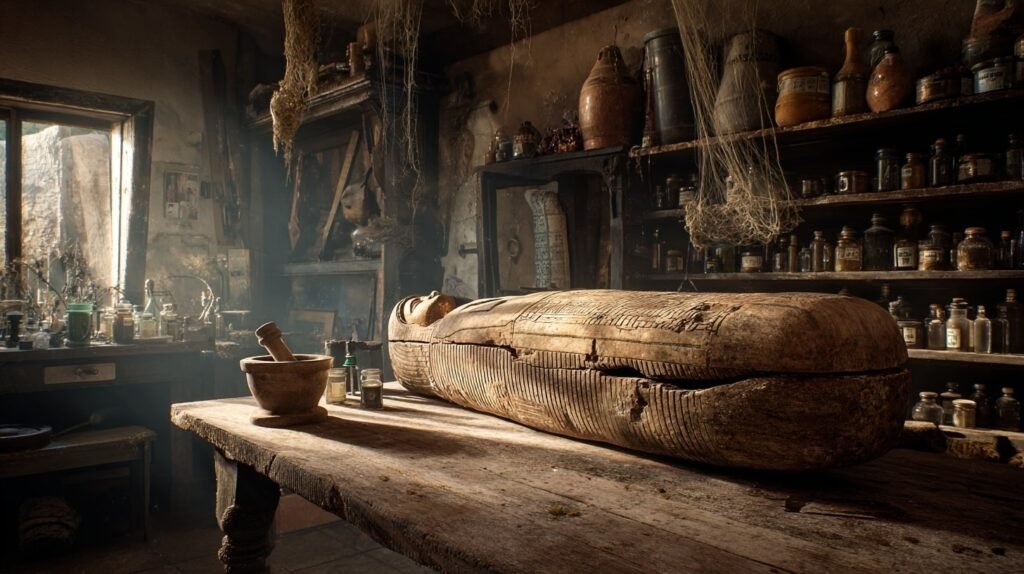
Not everyone was convinced. In 1564, the royal physician Guy de la Fontaine traveled to Alexandria and discovered that merchants were selling fake mummies. They took fresh corpses of executed criminals, slaves, and peasants, treated them with bitumen, wrapped them in bandages, and sold them as ancient Egyptian remains . The demand for mummy medicine was so high that real mummies could not keep up.
The same ground-up mummies also ended up in European art. A deep brown pigment called “Mummy Brown” or “Caput Mortuum” (Latin for “dead head”) was made from white pitch, myrrh, and crushed mummies . It became popular from the 16th through the 19th centuries. The Pre-Raphaelite painters especially loved it for its rich, translucent quality.
Edward Burne-Jones, a famous Pre-Raphaelite artist, reportedly buried his tube of Mummy Brown after learning what it was made from . His wife described him running to his studio, grabbing the pigment, and insisting on giving it a “decent burial” in the garden. They marked the spot with a daisy root.
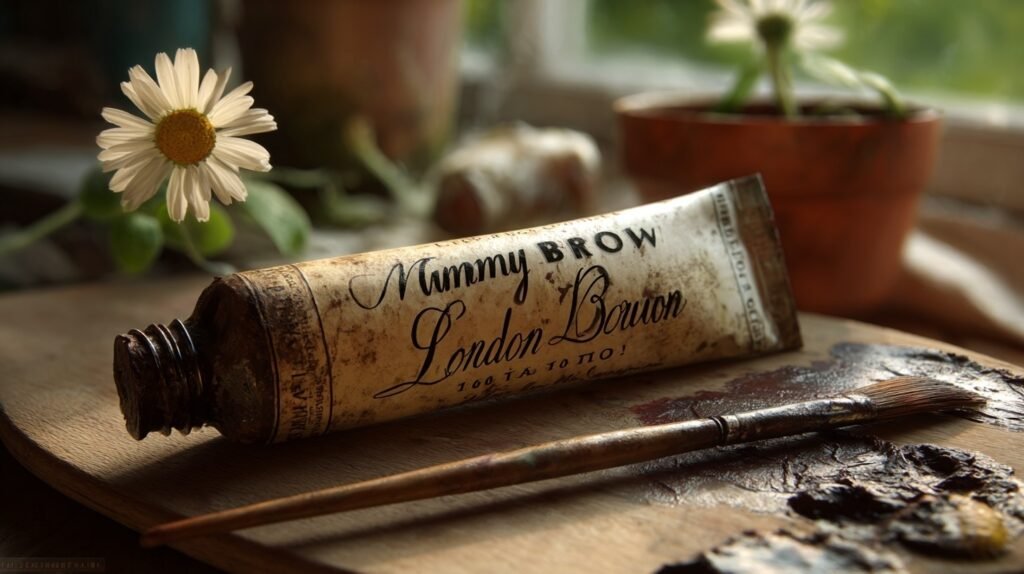
Mummy brown stayed on the market until 1964. That year, the London firm C. Roberson, which manufactured the pigment, announced they had run out of mummies to grind up . The managing director reportedly said, “We might have a few odd limbs lying around somewhere, but not enough to make any more paint.”
The European mummy trade was not just bizarre. It was disrespectful on a massive scale. Thousands of ancient Egyptian corpses were destroyed for medicine and paint. And the forgeries made from executed criminals and slaves added another layer of exploitation on top of the original desecration.
Today, you cannot buy real Mummy Brown anymore. Synthetic alternatives exist. But the 500-year history remains a strange reminder of how far people will go for a cure, and how badly translation errors can go when profit is involved.
Sources:
- The Sun / The Conversation (2022)
- Harvard Art Museums (2013)
- Historia Magazine (2023)
- Wikipedia – Mummia
- Wikipedia – Mummy brown
- Smithsonian Magazine (2014)
- HuffPost (2016)
ALL IMAGES GENERATED WITH A.I