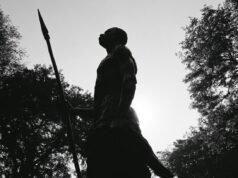


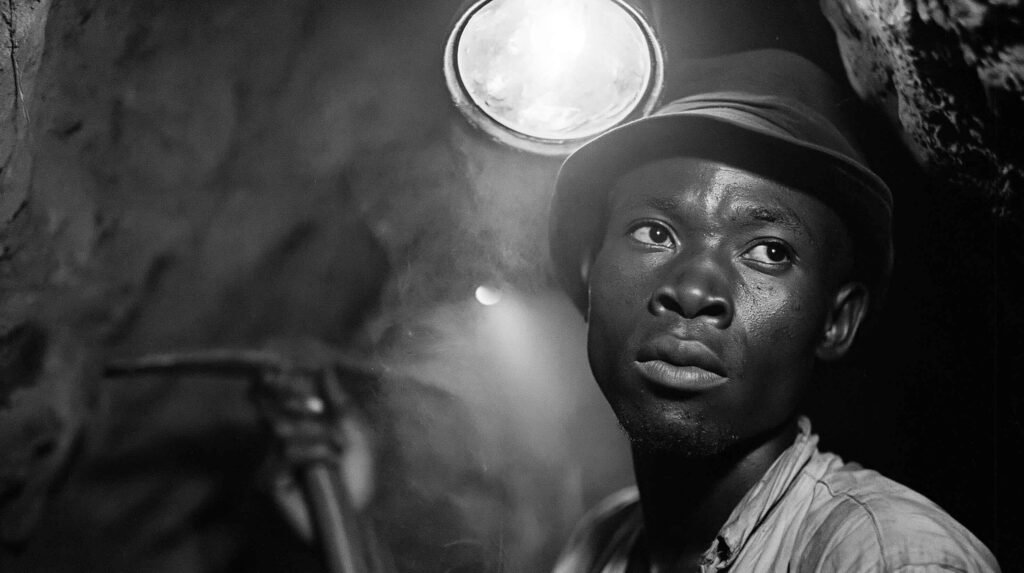
Job Maseko was born around 1922 in KwaThema, a township in Springs, South Africa. He worked in the gold mines. When war came, he volunteered for the South African Native Military Corps. The NMC was the only place the army would accept Black men. They were not issued firearms. They carried spears for ceremonial duty. They cooked, drove trucks, carried stretchers, loaded bombs. They did everything a soldier does except shoot.
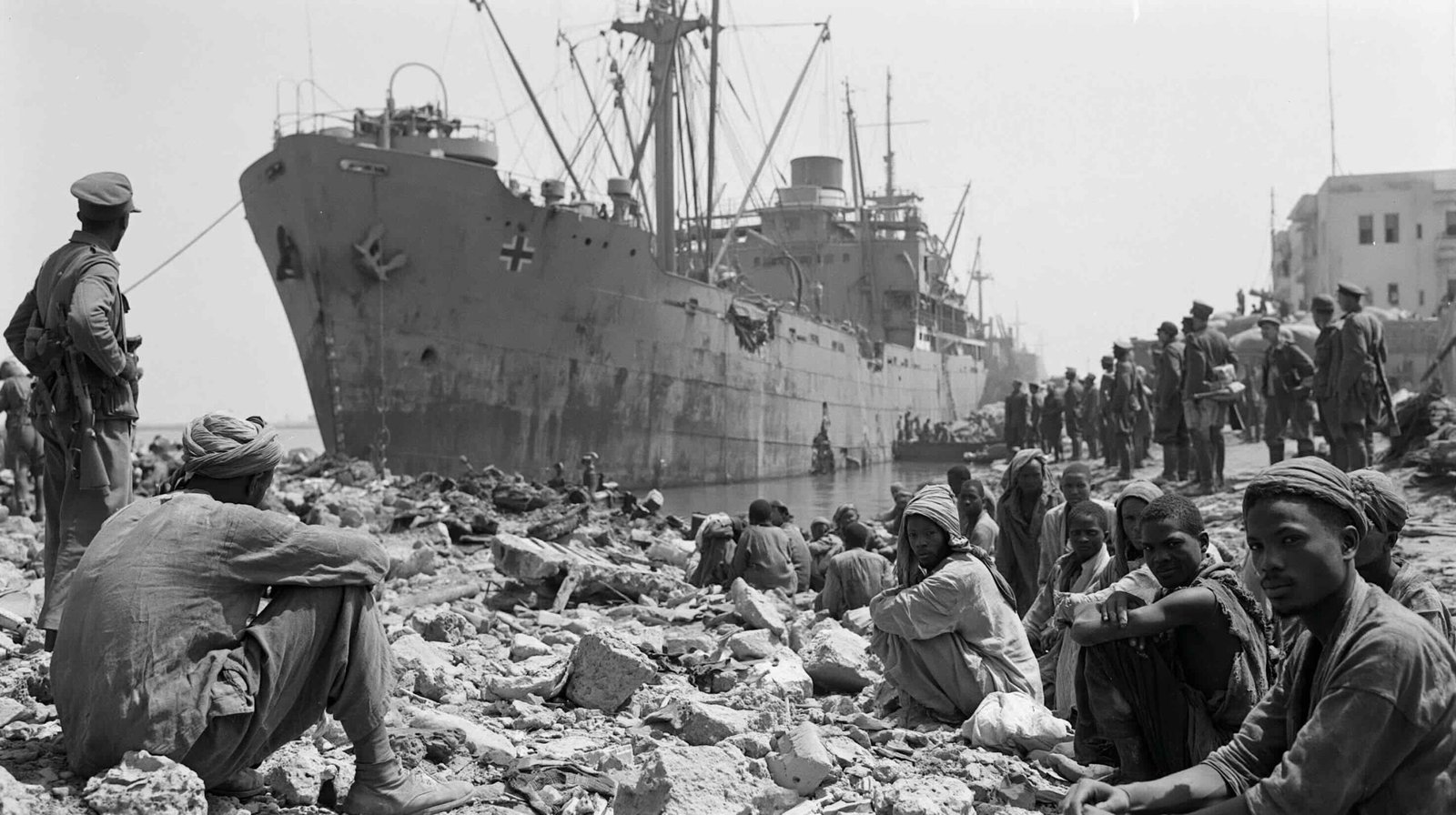
Maseko was sent to North Africa with the 2nd South African Infantry Division. He became a prisoner of war on 21 June 1942, when Tobruk fell to Rommel. The Germans rounded up 32,000 Allied troops, including 10,722 South Africans. They sorted them by colour. The white prisoners were shipped to camps in Europe. The Black prisoners stayed behind in Italian camps and worked as forced labour in Tobruk harbour.
On 21 July, Maseko and three other NMC men were ordered to unload cargo from a German freighter. Maseko had worked with explosives in the mines. He saw his chance.
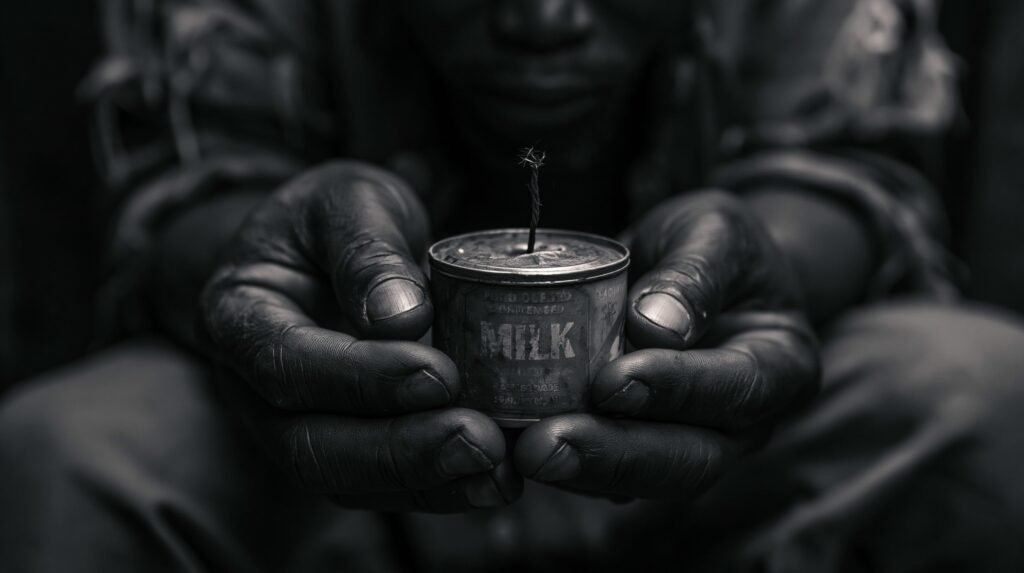
While his friends kept the guards busy, he went below deck. He took a condensed milk tin. He packed it with cordite from ammunition he had access to on the docks. He fitted a long fuse. He tucked the bomb among jerrycans of petrol in the hold. As they took the final load off the ship, he lit the fuse and walked away.

The explosion destroyed the ship. It burned and sank in Tobruk harbour.
The next morning, the Italian guards interrogated the prisoners about smoking on board. Maseko and his friends pointed out that cigarettes were not part of their rations, so how could they have been smoking? The Italians could not argue with that.
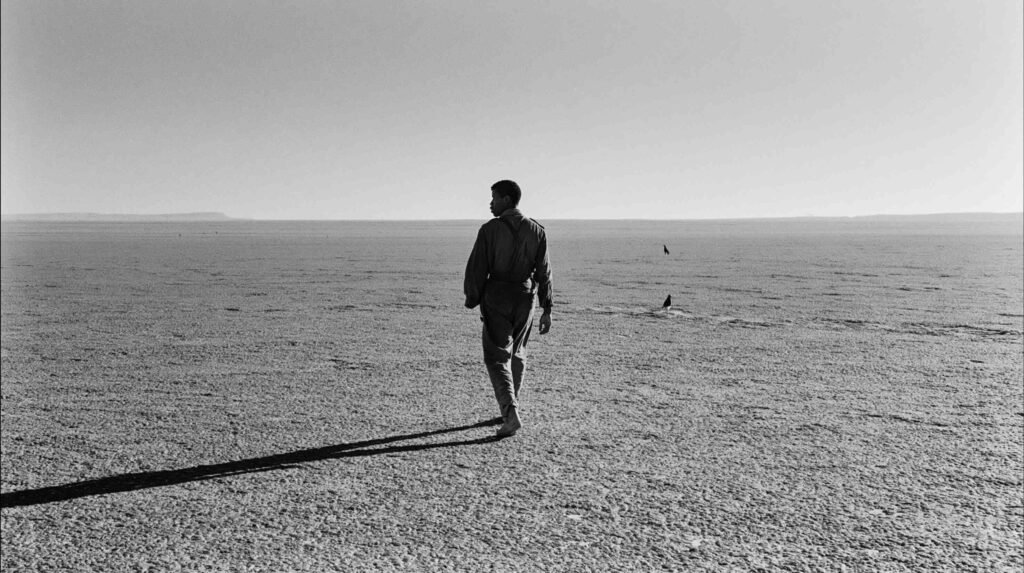
Maseko did not stop there. He escaped from the POW camp and walked for three weeks across the desert, behind enemy lines, to reach the Allied position at El Alamein. He arrived in time to serve as a stretcher bearer in the battle that broke the Afrika Korps. He was then transferred to the 6th South African Armoured Division and fought through Italy.
On 11 March 1943, the London Gazette published the award of the Military Medal to “No N 4448 L/Cpl Job Masego” of the Native Military Corps. The citation read: “For meritorious and courageous action in that on or about the 21st July, while a Prisoner of War, he, Job Masego, sank a fully laden enemy steamer.”
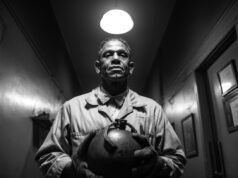
There is a debate about whether he deserved a higher award. The war artist Neville Lewis, who painted Maseko’s portrait, claimed that Maseko had been nominated for the Victoria Cross and that a senior officer vetoed it because of his race. This story has been repeated for decades. The BBC, campaigners, and Maseko’s own family have pushed for a posthumous VC. But the National Archives tell a different story. The records show that Maseko was actually recommended for the British Empire Medal, a lower award, and that his citation was upgraded to the Military Medal. No VC recommendation exists in the files.
Both versions circulate. The truth is somewhere between a failure of the system and a system that was designed to fail Black soldiers either way.
After the war, Maseko returned to South Africa. He was discharged with a pair of boots and a bicycle. White veterans received housing and land. Black veterans received two-fifths of the pension rate. The skills they had learned in the army meant nothing under apartheid.
Maseko could not find stable work. He slipped into poverty.
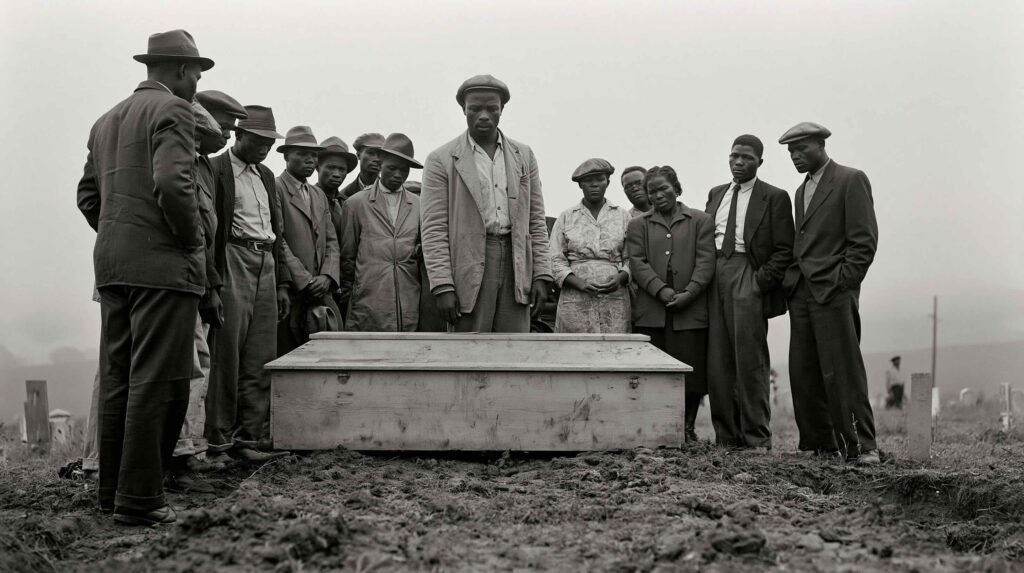
On 7 March 1952, he was hit by a train and killed. He was about thirty years old. He had no money for a funeral. Friends and family borrowed what they could. He was buried in Payneville Township Cemetery, where his grave went untended for decades.
In 1997, the South African Navy renamed a missile attack craft SAS Job Masego in his honour. In 2019, a regiment was renamed after him. A primary school in KwaThema carries his name. A mural of his face looks out over the township. A campaign continues to have his Military Medal upgraded.
But none of that changes the central fact. A man who sank a German ship with a bomb made from a milk tin, who escaped a POW camp and walked three weeks through the desert to keep fighting, who served his country for the entire war, came home to a country that paid white veterans in land and Black veterans in bicycles. He died broke. He was buried on borrowed money.
That is the story. Not just what he did in the war. What the country he fought for did to him after it ended.
Sources:
1. London Gazette, Supplement 35934 (11 March 1943)
2. Wikipedia, “Job Maseko”
3. BBC News, “Job Maseko: The South African WW2 hero who didn’t get a Victoria Cross” (17 May 2021)
4. South African Military History Journal (Mohlamme, 1995)
5. War History Online (Hemmings, 2019)
6. The National Archives, UK — Recommendation for Award for Masego, Job (Ref: D7369613)
7. Martin Plaut, “How an artist’s myth led the Daily Mail and BBC to get the story of Corporal Job Maseko wrong” (2022)
8. Springs Advertiser, “Do you know who Job Maseko was?”