

The facts, then. When we think of slavery in America, we picture Southern plantations, the cotton gin, and the Civil War. But there is another chapter, one often left out of textbooks. It involves the Cherokee, Chickasaw, Choctaw, Muscogee (Creek), and Seminole Nations. Collectively known as the “Five Civilised Tribes,” these nations were forcibly relocated from the southeastern United States to Indian Territory (present-day Oklahoma) in the 1830s. And many of them brought enslaved Africans with them.
The Scale of Enslavement
By 1860, the Five Tribes held thousands of Black people in bondage. The Cherokee alone owned nearly 1,600 enslaved people by 1835. Among the most prominent enslavers were 11 of the 12 signers of the 1827 Cherokee Constitution. Cherokee Chief John Ross and Choctaw Chief Greenwood Leflore each owned between 100 and 400 enslaved people. The Choctaw and Chickasaw together held over 5,000 enslaved Blacks by 1860. Across all five nations, documentary evidence confirms no less than 7,000 enslaved people, with some estimates reaching as high as 10,000, spread across over 1,000 slaveholding families.
The Seminole Exception

There is one critical exception to this story. The Black Seminoles also called Seminole Maroons or Freedmen had a very different experience. In Florida, where the Seminole Nation coalesced in the 18th century, enslaved Blacks lived separately in their own villages, were allowed to own weapons, and paid only an annual tribute of a percentage of their harvest to the Seminoles. This was not chattel slavery as practiced elsewhere. It had “nothing to do with ownership or free labour,” scholars note.
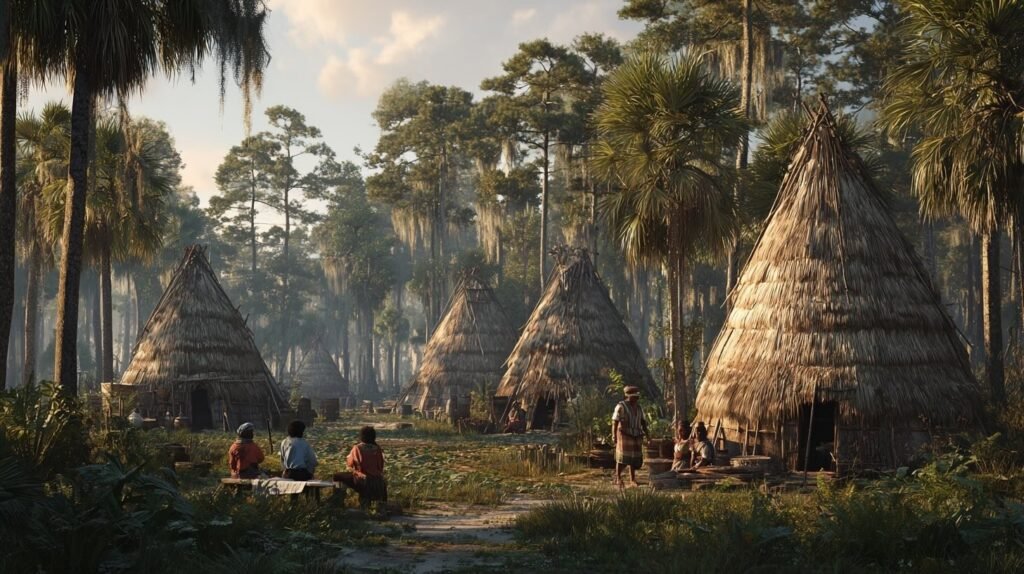
When the U.S. government forcibly removed the Seminoles to Indian Territory, Black Seminoles went with them. There, under the authority of the Creek Nation, the maroons found themselves subjected to far harsher slave codes prohibited from owning weapons and threatened with sale to white slaveowners. Many fled to Mexico in 1849, where they became known as Mascogos.
The 1866 Treaties: Freedom and Broken Promises
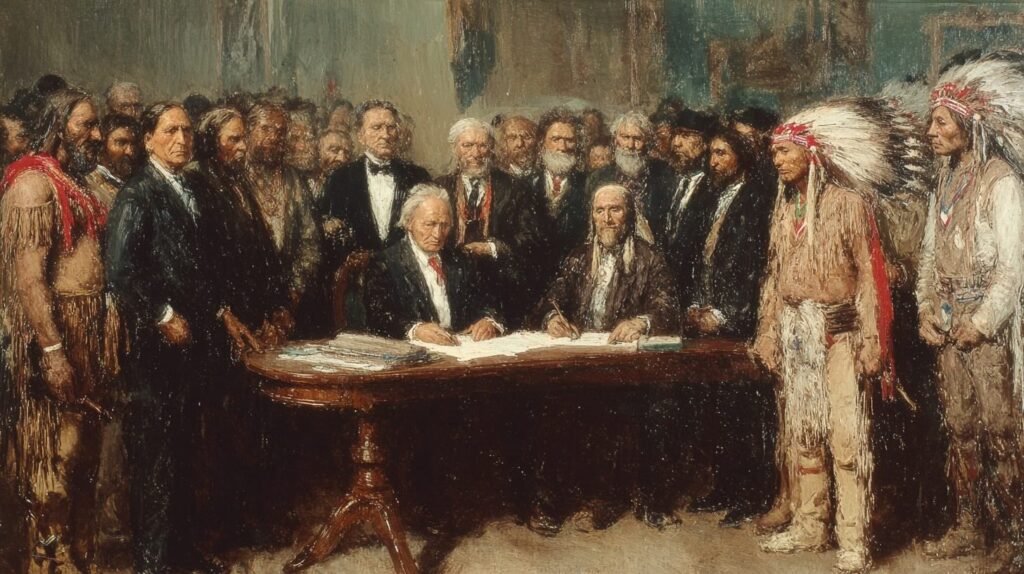
After the Civil War, the United States negotiated new treaties with each of the Five Tribes. The Treaties of 1866 did three things: They abolished slavery, granted citizenship to the formerly enslaved (now called “Freedmen”), and provided land within the reservations for those who chose to stay. Unlike the situation for formerly enslaved Black Americans in the South, the Cherokee Freedmen were actually granted free land. But here is where the story takes a sharp turn.
Over the following decades, all five nations limited or revoked Freedmen citizenship. The Dawes Rolls compiled between 1898 and 1907 to allot tribal lands categorised people as “by blood” (having documented Indian ancestry) or “Freedmen” (descendants of the formerly enslaved). This distinction has determined tribal citizenship ever since.
The Legacy Today
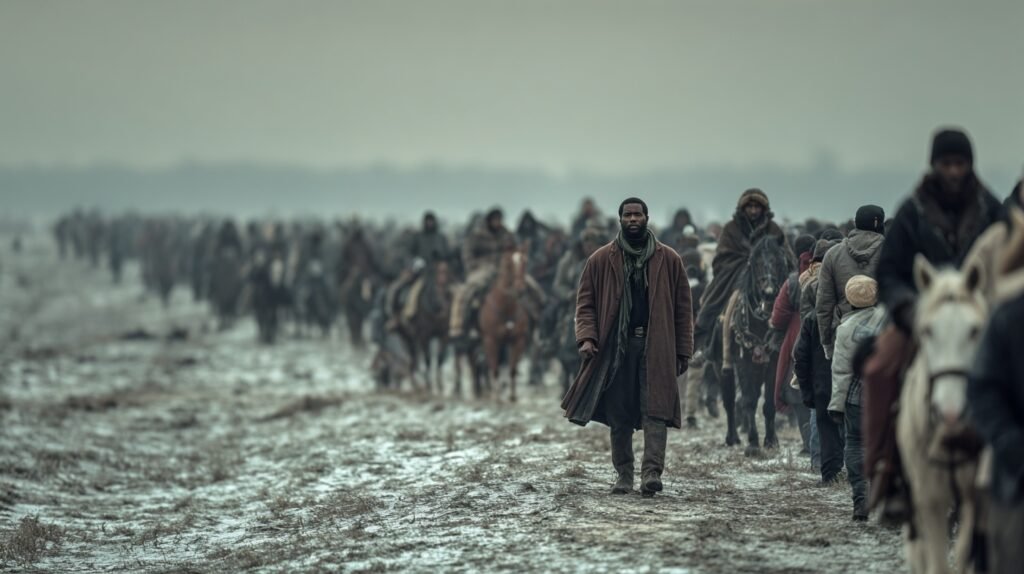
The fight for citizenship is not over. As of 2025, a U.S. Government Accountability Office (GAO) report found that Freedmen descendants are eligible to enrol as tribal citizens in the Cherokee and Seminole Nations, but not in the Chickasaw or Choctaw Nations. In July 2025, the Muscogee (Creek) Nation Supreme Court ruled that its 1866 Treaty guaranteed citizenship to Freedmen descendants.
The GAO estimates that the population of Freedmen descendants could range from 146,400 to 395,400 as of 2022. Many still face barriers accessing federal services, healthcare, education, housing, because of the “Freedmen” classification. In February 2026, Principal Chief Chuck Hoskin Jr. of the Cherokee Nation published a sobering acknowledgment: “We must recognise that the long struggle to honour that promise is also part of our history and our responsibility.”
Why This Matters
The story of the Five Nations and slavery is uncomfortable. The oppressed became oppressors. People who knew the horror of forced removal, the Trail of Tears, nevertheless held other human beings in bondage. But as historian Nakia Parker reminds us, “Indian removal and slavery are not separate, unrelated events. They’re intertwined.” We cannot teach one without the other. The descendants of the Freedmen are still waiting for full justice. And the full truth is still being written.
ALL IMAGES CREATED WITH A.I
Sources:
- Emerging Civil War (2018)
- Oklahoma Historical Society – Chickasaw
- Britannica – Black Seminoles
- GAO Report GAO-26-107118 (2025)
- Cherokee Nation – Task Force Report (2026)
- Wikipedia – Cherokee Nation (1794–1907)
- Indianz.Com – Julianne Jennings (2012)
- SPL Center – Inseparable Separations (2020)
- Texas State Historical Association – Black Seminole Indians