
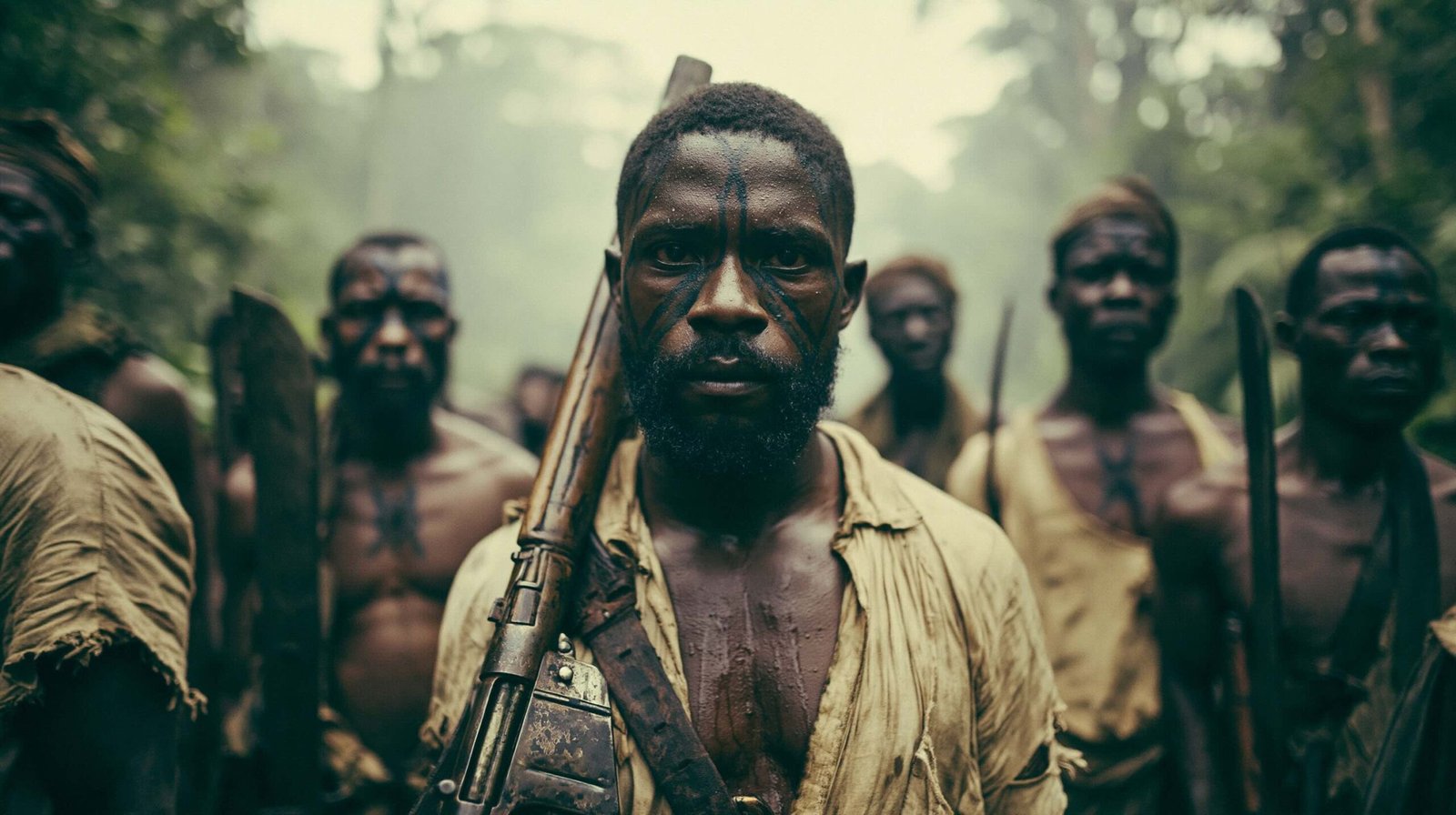

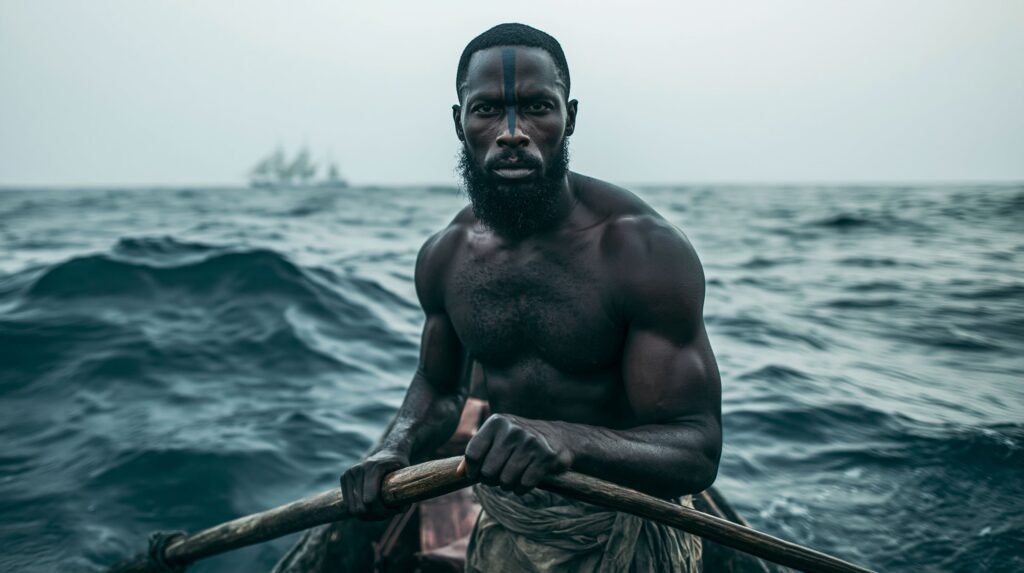
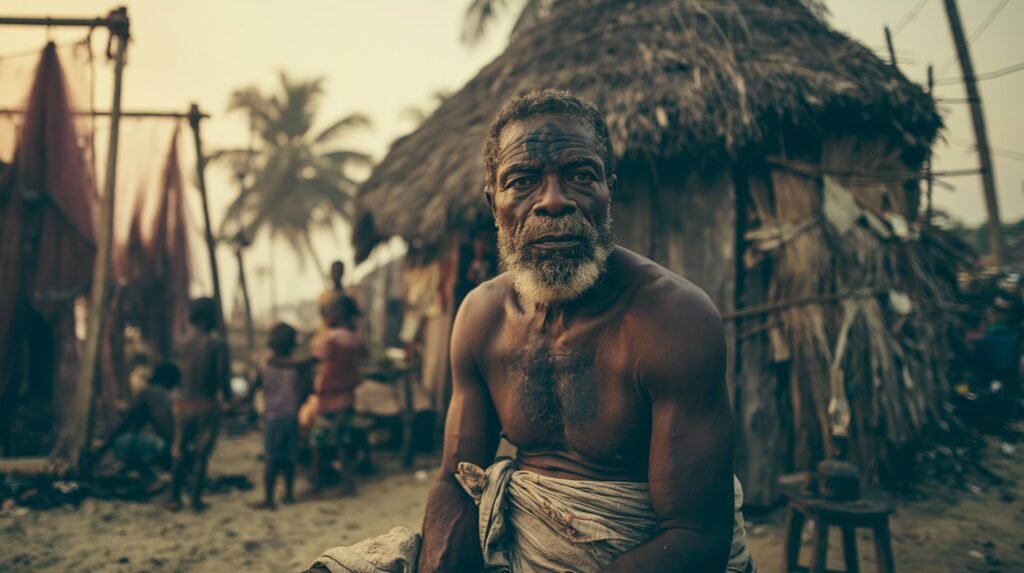
The first thing you need to understand about the Kru is the mark. It was a line of indigo blue, drawn from the centre of the forehead straight down to the tip of the nose. Every Kru person wore it. It was not decoration. It was a declaration. It said: I am a freeman. It said: I will die before I am cargo.
And the slave traders believed it. The Kru lived along the coast of what is now Liberia and Ivory Coast, a stretch of land named the Grain Coast by the Portuguese who arrived there in the 15th century. When the transatlantic slave trade began in earnest, the Kru did what almost no one else did. They refused to participate as victims.
Oral traditions among the Kru hold that they were never enslaved. That is a strong claim for any West African people to make. The evidence supports it. European slavers learned quickly that capturing a Kru person cost more than it returned. The Kru fought back ferociously. And when capture was inevitable, they took their own lives. A Kru captive on a slave ship was a liability. They jumped overboard. They starved themselves. They attacked the crew. They made it clear that the price of taking them was not worth paying.
The indigo tattoo was the visible part of the strategy. But it was not the only part. It was backed by a reputation earned in blood. European slave traders documented that Kru captives would starve themselves, attack crew members, or leap into the ocean chained to other captives rather than cross the Atlantic in the hold of a slave ship. The cost of subduing a Kru prisoner was higher than the value they could fetch at auction. Economics, not morality, is what kept the Kru free.”}]}

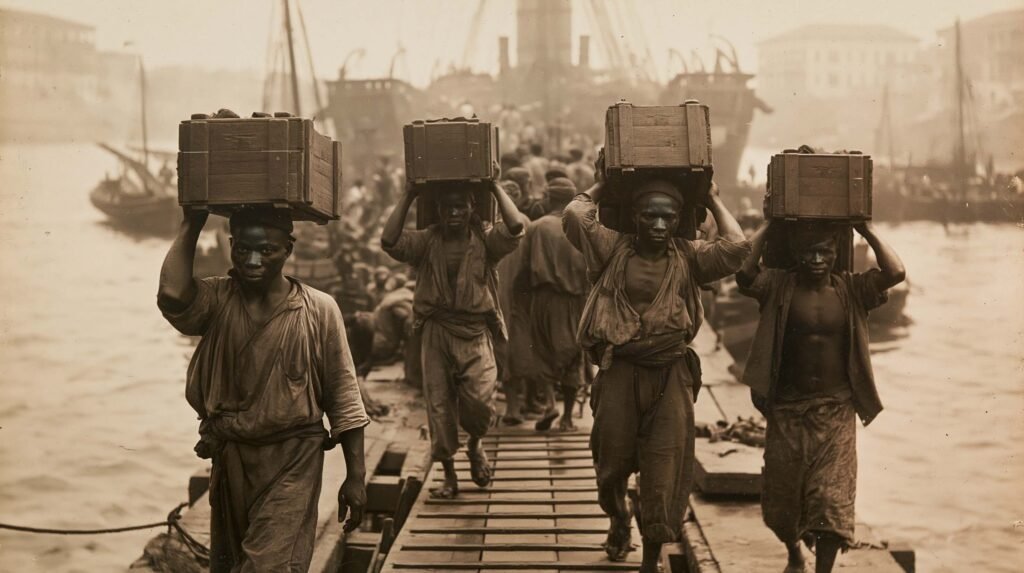
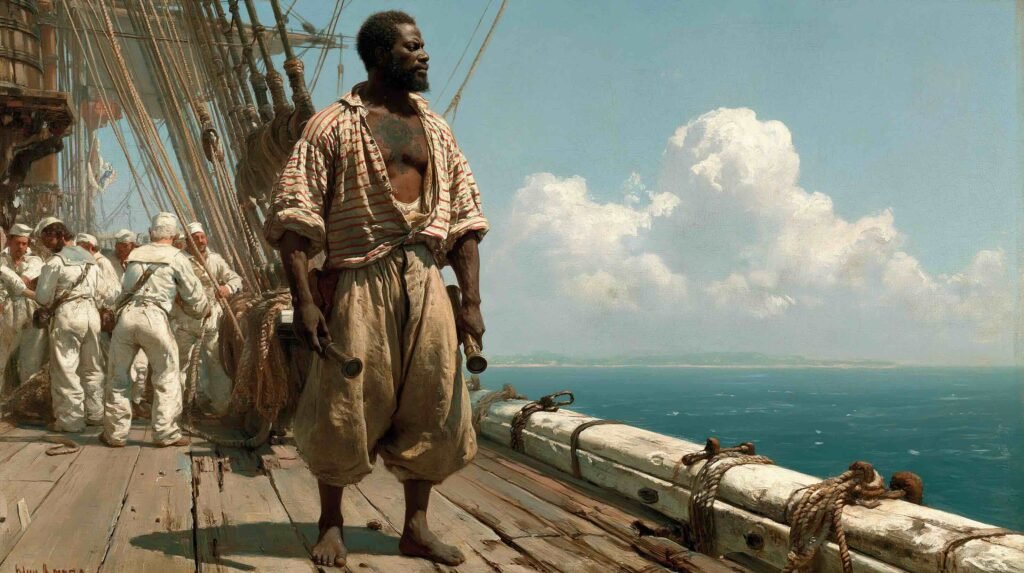
The Kru were the finest mariners on the West African coast. They knew the inshore waters, the currents, the sandbars, the hidden reefs that wrecked European ships. By the 1790s, Kru men were being hired as free sailors on European vessels. They paddled their canoes up to twelve miles out to sea to meet arriving ships. They negotiated their wages on the spot. They worked as navigators, interpreters, stevedores, and deckhands. They had headmen who kept written credentials from previous employers. They were organised.
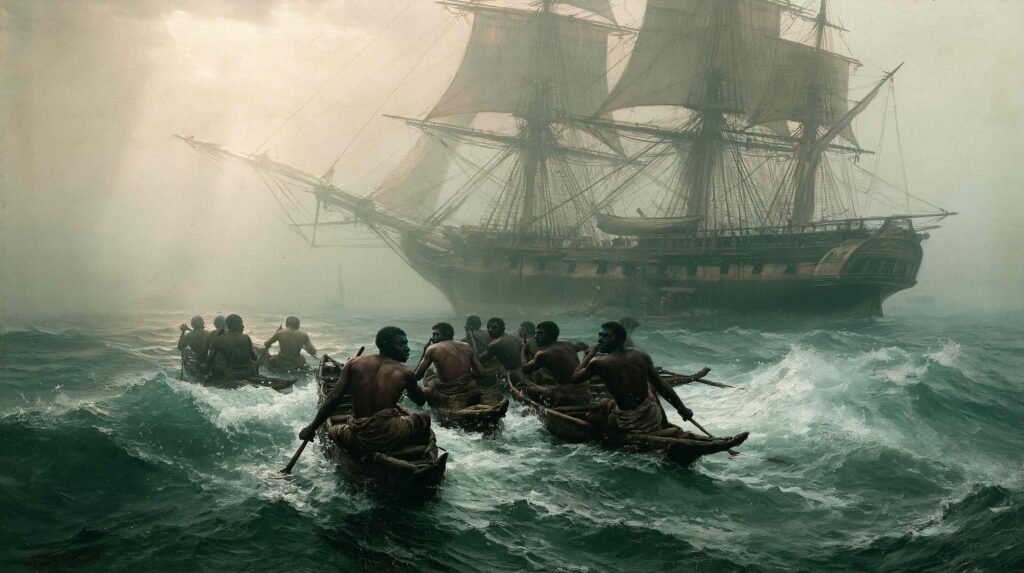
The British Royal Navy employed them by the hundreds. The French used them. The Dutch used them. The Germans used them. Every European power operating on the West African coast needed Kru seamen because the Kru understood something the Europeans did not. They understood the surf, the tides, and the hidden sandbars that could wreck a ship in minutes. American warships hired them. They served on the same ships that patrolled the West African coast against the slave trade. They also served on slave ships, a complicated truth that sits inside a bigger one. The Kru did not refuse to engage with the slave trade. They refused to become its merchandise.
Kru sailors travelled the Atlantic world. They formed communities in Freetown, where they built a reputation for reliability and skill. They moved to Lagos and Accra. They settled in Liverpool, one of the first organised African labour diasporas in Europe. They worked on the French attempt to build the Panama Canal. They were recruited as soldiers and labourers as far east as India and Malaya. Wherever the Atlantic and Indian Oceans needed skilled African hands, the Kru were there.
The price of that freedom was constant vigilance on their home coast. The Americo-Liberian settlers who founded Liberia in the 19th century did not recognise Kru autonomy. They saw the Kru as subjects to be taxed and controlled. The Kru saw the settlers as foreigners who had no authority over their land or their trade.
In 1856, the Kru and their Grebo allies fought the Republic of Maryland over control of coastal trade. They lost, but the resentment never died.
In 1915, the Kru rose again. They attacked government posts in Sinoe County. The Liberian government, unable to suppress the rebellion, asked the United States for help. President Woodrow Wilson sent the USS Chester, a cruiser that arrived with 500 rifles and a quarter million rounds of ammunition. The ship’s guns shelled Kru towns. The rebellion collapsed. Hundreds of Kru were killed.
They rose a final time in 1932, against forced labour and taxation policies that amounted to a new kind of enslavement in all but name. Again they were crushed.
The Kru today are 7% of Liberia’s population. Their language is still spoken. Their mariner legacy is still a source of pride. They have produced two presidents: Ellen Johnson Sirleaf, the first elected female head of state in Africa, and George Weah, the footballer turned politician. But the deeper story is older than both of them.
It is the story of a people who saw the slave trade coming, decided they would not be part of its cargo, and backed that decision with their bodies, their blood, and a mark of indigo on their faces.
They did not need to be freed. They freed themselves.
Sources
– Wikipedia: Kru people
– Britannica: Kru
– TalkAfricana: Fighting Slavery With Suicide
– Qiraat Africa: The Kru/Kroo of West Africa
– 101 Last Tribes: Kru people
– GlobalSecurity.org: Kru-Liberian War of 1915
– US State Department FRUS 1915, Document 759: Kru Rebellion Report
– De Gruyter: Gunn, Jeffrey, Outsourcing African Labor (2021)
– face2faceafrica.com: The fascinating story of Africa’s Kru people