
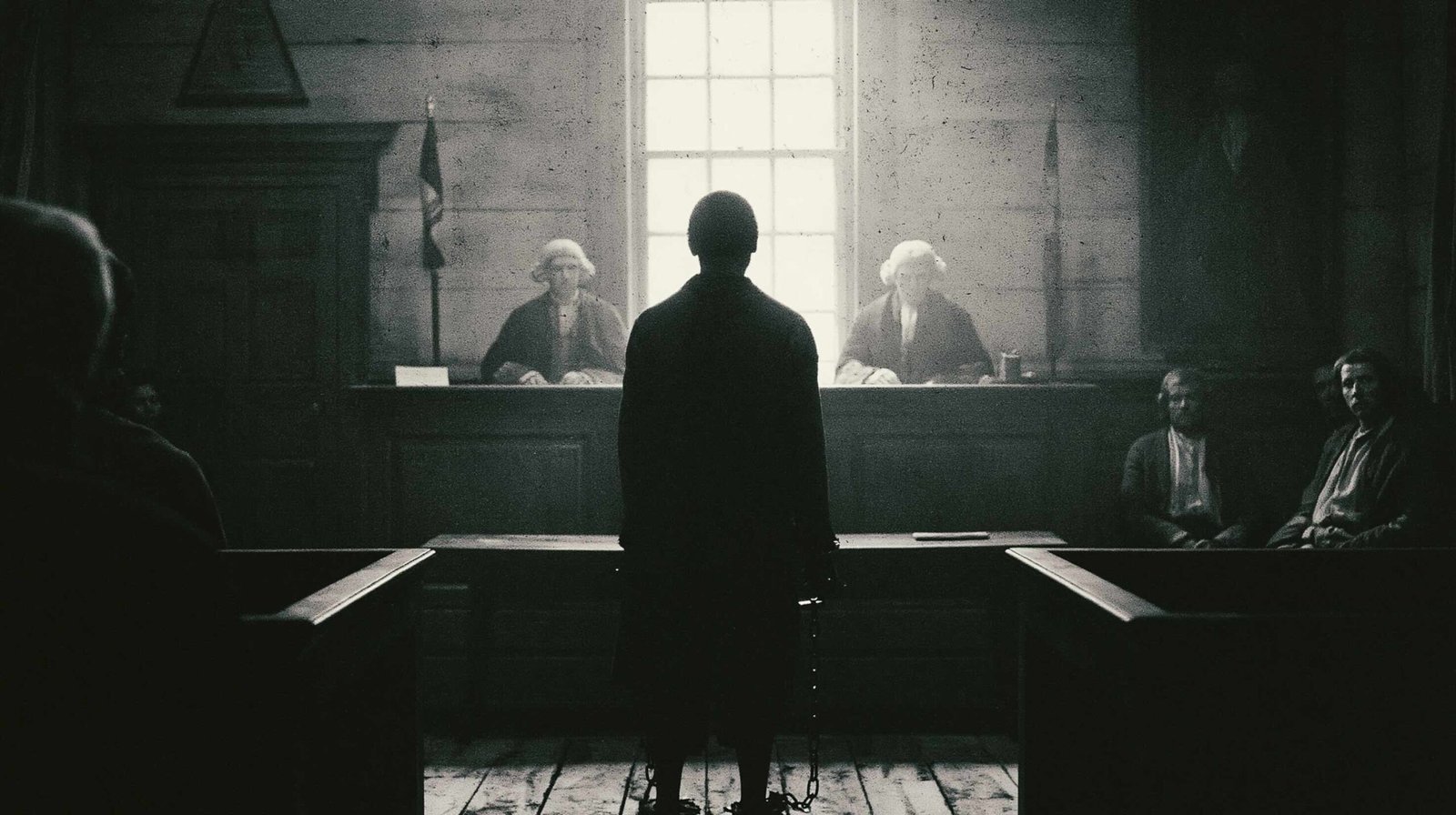

On May 10, 1740, the South Carolina General Assembly enacted the “Bill for the better ordering and governing of Negroes and other slaves in this province.” History knows it as the Negro Act of 1740. It was the most comprehensive slave code of the colonial era. It remained in effect for 125 years. And it became the model for slave laws across the American South. The Rebellion That Changed Everything
The law was a direct response to the Stono Rebellion of September 9, 1739. About 50 enslaved Black people gathered near the Stono River in South Carolina. They seized weapons from a store. They killed between 20 and 25 white people. They marched south toward Spanish Florida, where they had been promised freedom. The militia stopped them before they reached the border. But the damage was done. South Carolina’s white population was terrified. Enslaved people already outnumbered white colonists two to one. The rebellion proved that they could organize, fight back, and potentially overthrow the system. The Negro Act was their answer.
Absolute Slaves, Chattels Personal
Section 1 declared that all enslaved people “shall be and they are hereby declared to be and remain forever hereafter absolute slaves, and shall follow the condition of the mother.” It also defined enslaved people legally as “chattels personal” property like furniture or livestock. They could be bought, sold, inherited, and destroyed. They had no legal rights because they were not legally people. The Act also created a legal presumption that every Black and mixed-race person in the colony was a slave unless proven otherwise. The burden of proof fell entirely on the person claiming freedom. This reversed centuries of English common law. For enslaved people, there was no presumption of innocence at all. You Could Be Killed for Resisting

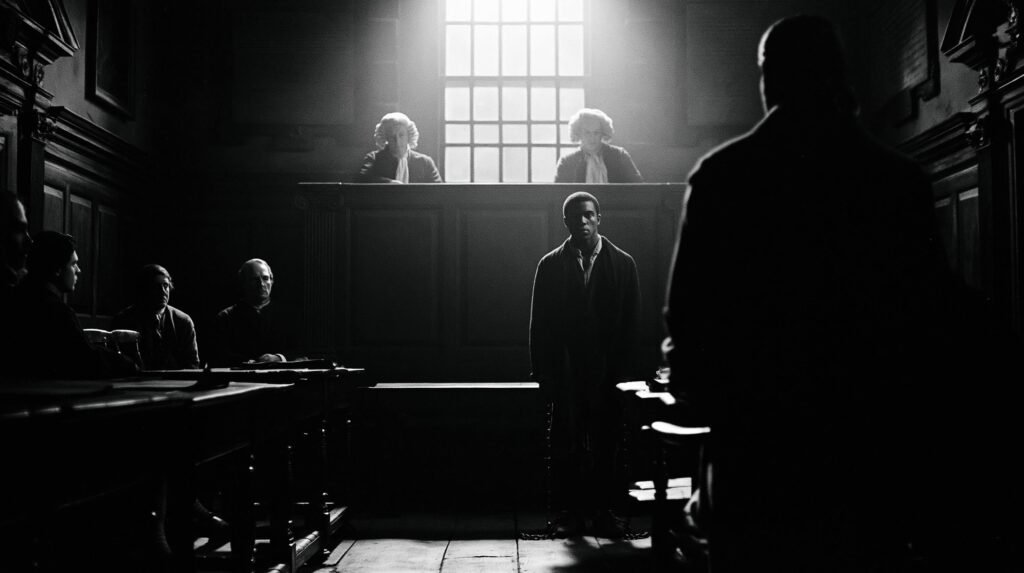
Section 5 allowed any white person to stop, question, and “moderately correct” any enslaved person found off their plantation without a written ticket. If the enslaved person resisted, the white person could kill them. The law did not say “may be punished.” It said “may be lawfully killed”. Section 17 made it a capital offence for any enslaved person to kill a white person, even in self-defence. The same section mandated that when multiple enslaved people were convicted together, at least one must be executed “for example, to deter others”.
No Jury. No Appeal. Three Days.
Section 9 established special courts for enslaved people accused of crimes. Two justices of the peace and three to five freeholders heard the case. Trials had to be completed within three days. There was no jury of peers. There was no right to appeal. The proceedings were “summary and expeditious” the law’s words, not a metaphor. Banned from Owning Anything
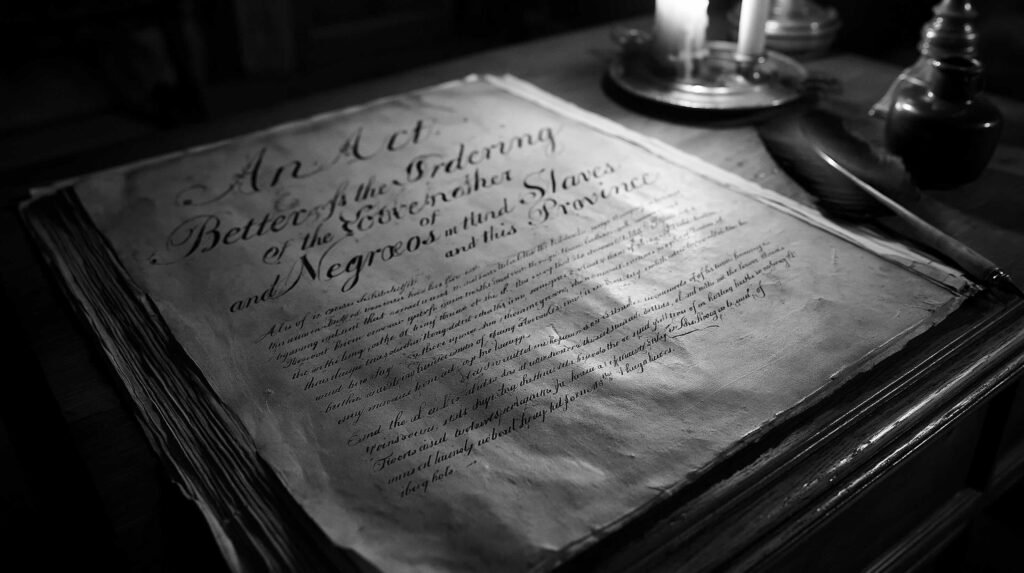
Section 34 prohibited enslaved people from keeping boats, horses, cattle, or hogs for their own use. Any white person could seize these “contraband” items and claim them. Section 33 banned enslaved people from hiring out their labor without written permission. Section 36 outlawed gatherings, weapons, drums, horns, or “other loud instruments which may call together or give sign or notice to one another of their wicked designs”. The law was targeting the economic independence enslaved people had carved out for themselves under the task system. When they finished their daily assignments, they had worked for themselves, growing gardens, raising livestock, selling goods in local markets. The Negro Act criminalized that autonomy .
The Literacy Ban
Section 39 stated: “Whereas the having of slaves taught to write may be attended with great inconveniences… every person who shall teach or cause any slave to be taught to write… shall forfeit the sum of one hundred pounds”. The ban targeted writing specifically, not reading. A literate enslaved person who could write could forge passes, compose letters to other plantations, create petitions, and document the horrors of slavery for outside audiences. The power of the written word to organise, to testify, to create evidence was what the law sought to suppress.
The Legacy
The Negro Act served as a model for other colonies. Georgia legalized slavery in 1750 and enacted its own slave code in 1755, borrowing heavily from South Carolina’s provisions . The law remained in effect for 125 years. The Thirteenth Amendment abolished slavery in 1865, but its legacy lived on. Black Codes and then Jim Crow laws maintained the same structure of control: restricted movement, banned assembly, economic exploitation, and separate, unequal justice.
The Negro Act of 1740 did not just regulate slavery. It invented the legal machinery of white supremacy that would define American life for three centuries .
Sources:
- Equal Justice Initiative – “May 10, 1740 | South Carolina Passes Negro Act of 1740, Codifying White Supremacy” (https://calendar.eji.org/racial-injustice/may/10)
- University of Wisconsin Pressbooks – “Primary Source: The South Carolina Slave Code, 1740” (https://wisc.pb.unizin.org/ls261/chapter/ch-1-1-the-slave-code-of-south-carolina-1740/)
- Gilder Lehrman Institute of American History – “South Carolina Slave Code (1740)” (https://www.gilderlehrman.org/ap-african-american-studies/unit-2/origins-enslavement/south-carolina-slave-code-1740)
- Spartacus Educational – “Education of Slaves” (https://spartacus-educational.com/USASeducation.htm)
- Google Books – “The American Slave Code in Theory and Practice” (https://books.google.iq/books?id=t1cSAAAAIAAJ&pg=PA319)
- CourtListener – “Richardson v. Broughton, 34 S.C.L. 1 (1848)” (https://www.courtListener.com/opinion/7471313/richardson-v-broughton/)
- Georgia Southern University Electronic Theses – “Race, Task Labor, and the Gullah-Geechee” (https://digitalcommons.georgiasouthern.edu/cgi/viewcontent.cgi?article=2878&context=etd)
• • Wikipedia – “Negro Act of 1740” (archived) (https://webarchiveweb.wayback.bac-lac.canada.ca/web/20240512151545/https://en.wikipedia.org/wiki/Negro_Act_of_1740)