
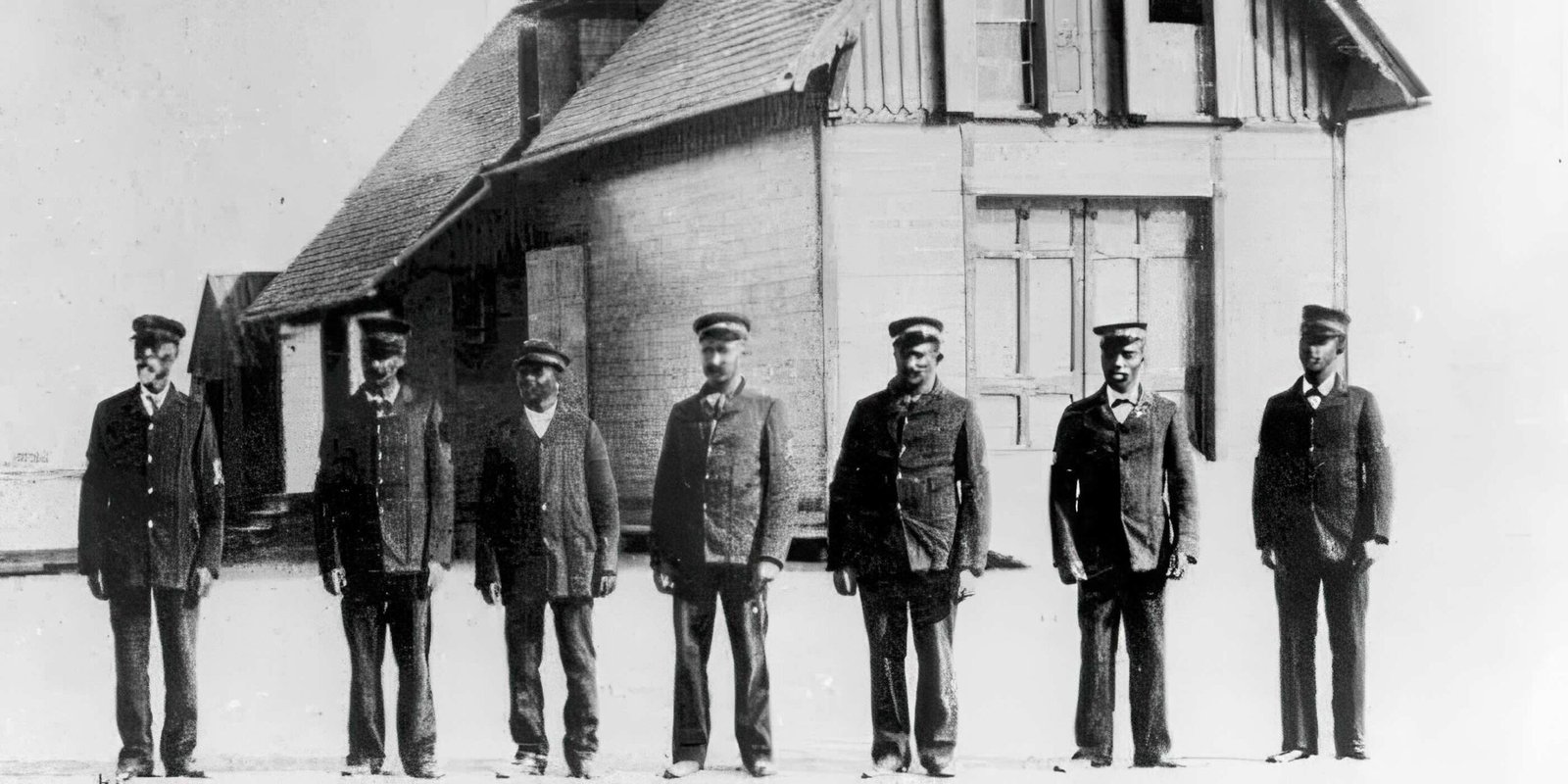

The facts, then. On October 11, 1896, a hurricane was battering the North Carolina coast. The three-masted schooner E.S. Newman had lost all its sails and drifted nearly 100 miles off course. It ran aground two miles south of the Pea Island Life-Saving Station. Nine people clung to the wreckage, including the captain’s wife and his three-year-old son.
The storm was so severe that the Pea Island station’s keeper had suspended beach patrols. But Surfman Theodore Meekins spotted a faint distress signal and alerted his commander.
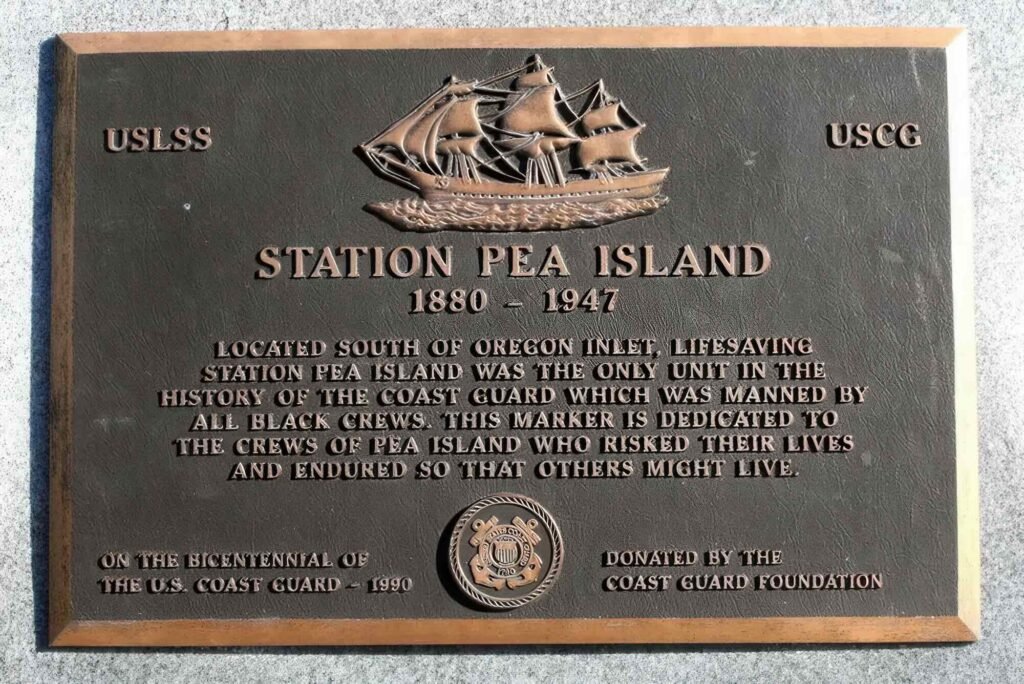
The man in charge was Richard Etheridge, the first African American to command a life-saving station in the United States. His crew was the only all-Black life-saving crew in the nation.
Etheridge was born enslaved on Roanoke Island on January 16, 1842. He was the son of his owner, John B. Etheridge III, and an enslaved woman named Rachel Dough. He learned to read and write while enslaved. When Union troops captured Roanoke Island in 1862, Etheridge was emancipated. He enlisted in the 36th U.S. Colored Infantry and served until 1866, rising to the rank of sergeant.

After the war, he worked as a fisherman, farmer, and inlet pilot. In 1875, he joined the U.S. Life-Saving Service as Surfman #6 at the Bodie Island station.
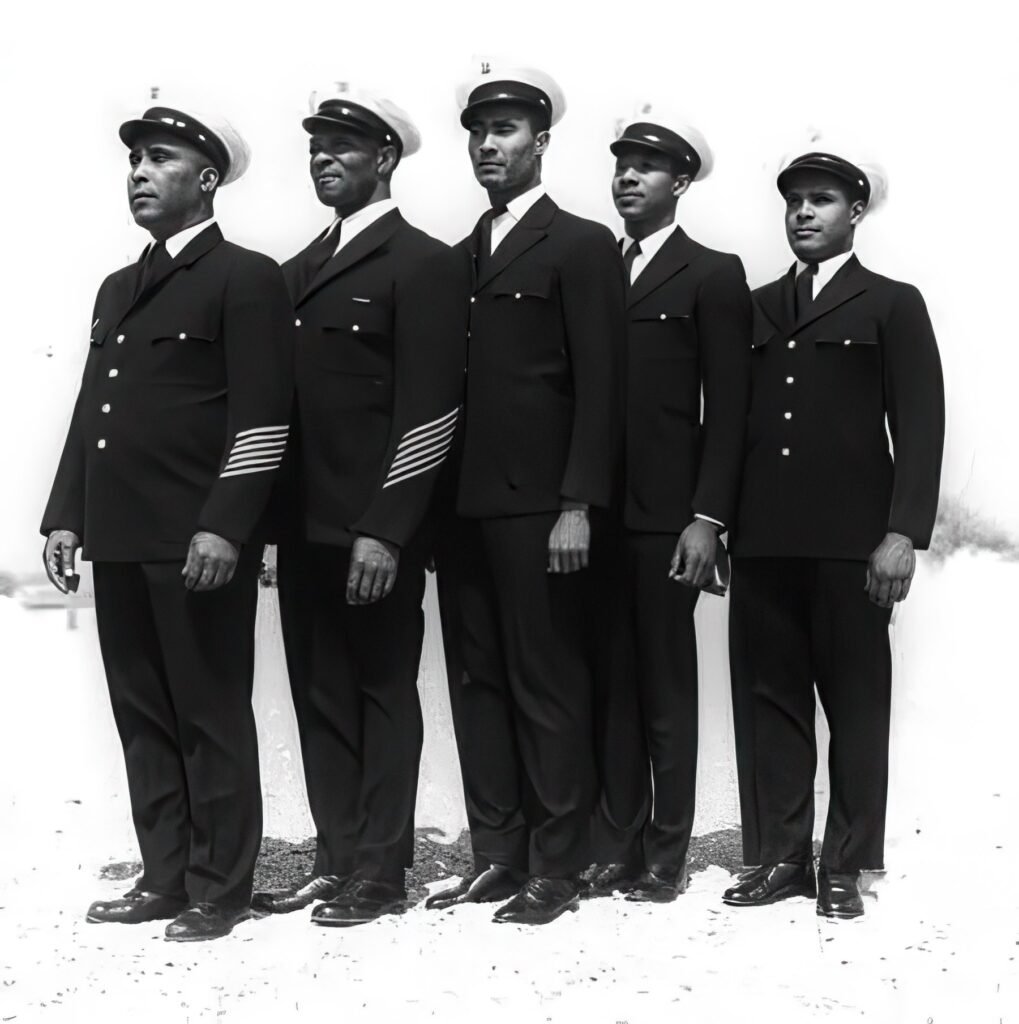
In 1879, the Pea Island station’s white crew was fired after a grossly negligent failure to rescue a shipwrecked crew. The district inspector recommended Etheridge as the new keeper. When he took command in 1880, the white crew refused to serve under him and resigned. Etheridge recruited and trained an all-Black crew, many of them fellow Civil War veterans.
In the years that followed, Etheridge ran a tight ship. His station earned a reputation as “one of the tautest on the Carolina Coast,” with its keeper known as one of the most courageous and ingenious lifesavers in the Service.
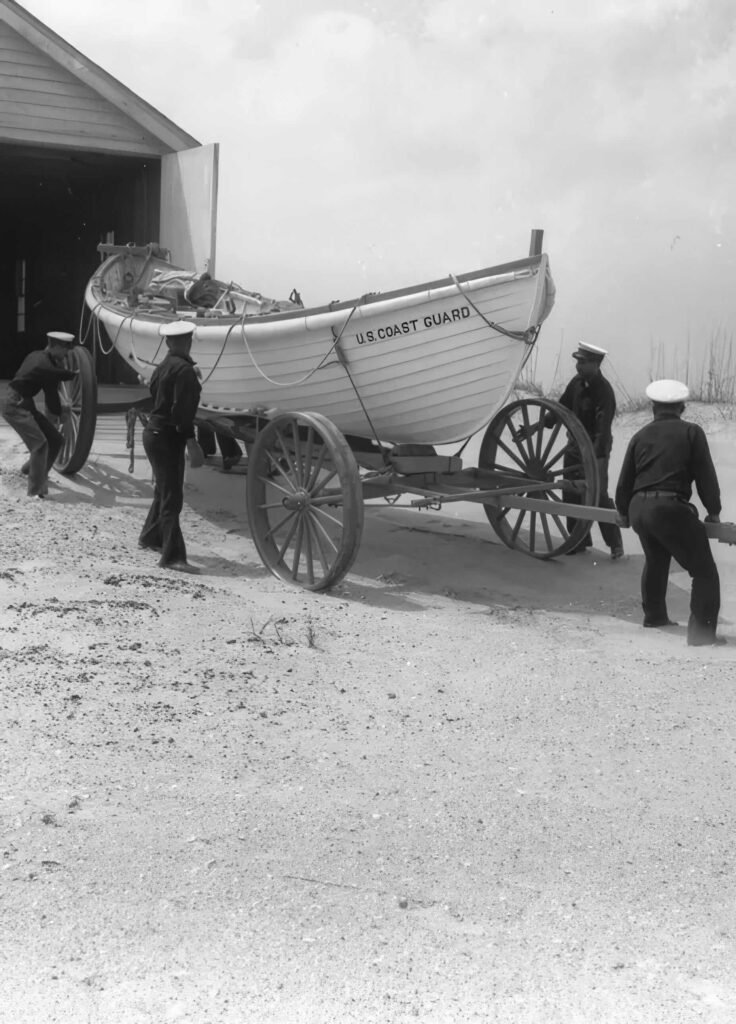
The rescue of the E.S. Newman was their finest hour. Unable to launch the surfboat or fire the Lyle Gun due to the high water and raging surf, Etheridge made a desperate decision. He tied ropes around two of his strongest surfmen and sent them into the breakers. The remaining crew held the shore ends of the lines. The two surfmen reached the wreck, tied a line around one of the survivors, and were pulled back to shore. They made ten trips, rescuing all nine people aboard.
For their heroism, the crew received no official recognition in their lifetimes. They were Black men doing dangerous work in a segregated nation. Recognition was not forthcoming.
Etheridge continued to command the Pea Island station until his death in January 1900, at the age of 58. He died at the station, still on duty. The Pea Island station remained under Black command until it was decommissioned in 1947.
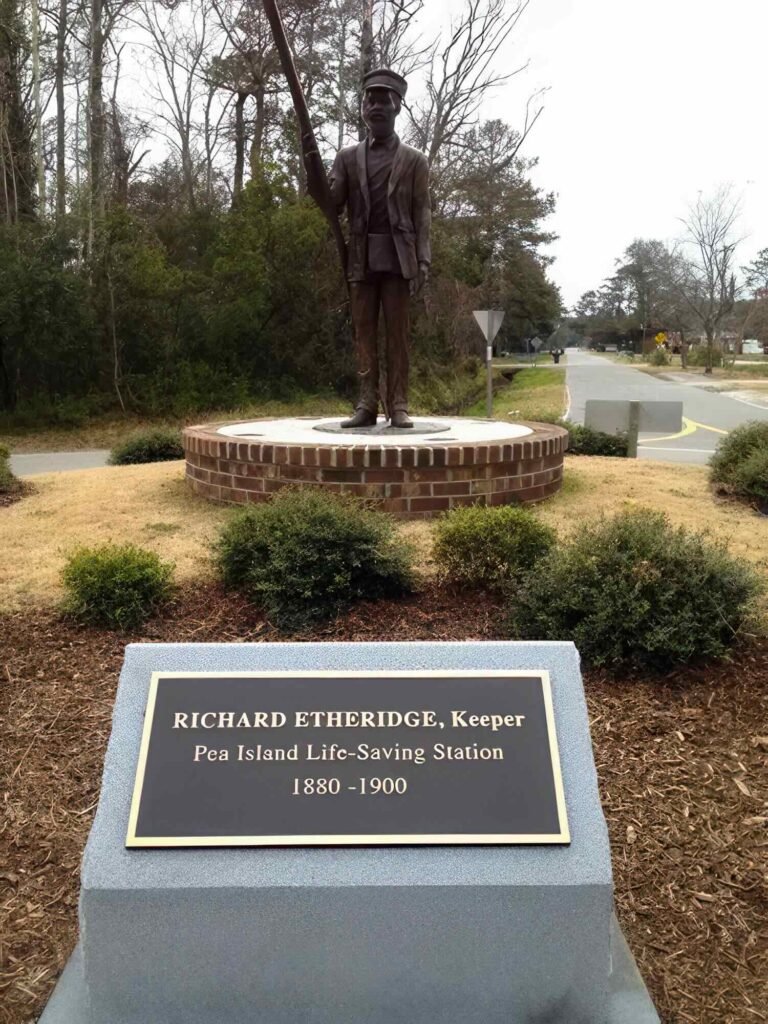
In 1996, exactly 100 years after the E.S. Newman rescue, the U.S. Coast Guard posthumously awarded Etheridge and his crew the Gold Life-Saving Medal. Today, a statue of Etheridge stands in Manteo, North Carolina. A Coast Guard cutter bears his name. And the Pea Island Lifesavers finally have the place in history they always deserved.
Sources:
- United States Coast Guard Historian’s Office – Captain Richard Etheridge, Keeper, USLSS
- National Park Service – Richard Etheridge
- News & Observer – “Crew ‘battled against the raging seas’ to reach ship in distress 128 years ago off NC” (2024)
- NC DNCR – Pea Island Lifesavers (B-66)
- NCpedia – Richard Etheridge
- NPR – Pea Island (1998)
- Spectrum News – “Braving the sea and segregation: The Pea Island Lifesaving Crew” (2022)
- Library of Congress – Publisher description for Fire on the Beach
| Key Fact | Source & Context | Status |
| Born enslaved on Roanoke Island, North Carolina, on January 16, 1842 | National Park Service ; NCpedia | Verifiable |
| Son of John B. Etheridge III (enslaver) and Rachel Dough (enslaved woman) | NCpedia ; National Park Service | Verifiable |
| Taught to read and write by the Etheridge family while enslaved | National Park Service ; ABC11 | Verifiable |
| Emancipated in 1862 when Union forces captured Roanoke Island | NCpedia ; National Park Service | Verifiable |
| Enlisted in the 36th U.S. Colored Infantry, serving from 1863 to 1866 | National Park Service ; NCpedia | Verifiable |
| Promoted to sergeant; fought in the Civil War | NCpedia ; NC Black Heritage Tour | Verifiable |
| After the war, returned to Roanoke Island, married, and worked as a fisherman, farmer, and inlet pilot | National Park Service ; NCpedia | Verifiable |
| Joined the U.S. Life-Saving Service in 1875 as Surfman #6 at Bodie Island | National Park Service ; Coast Guard Historian | Verifiable |
| Appointed Keeper of Pea Island Life-Saving Station in 1880 | National Park Service ; Coast Guard Historian ; NCpedia | Verifiable |
| First African American to command a U.S. Life-Saving Station | Coast Guard Historian ; National Park Service ; NC Black Heritage Tour | Verifiable |
| White crew resigned after his appointment; Etheridge assembled an all-Black crew | National Park Service ; ABC11 ; NCpedia | Verifiable |
| Pea Island was the only all-Black Life-Saving Station in the United States | Coast Guard Historian ; National Park Service ; NCpedia | Verifiable |
| Station earned reputation as “one of the tautest on the Carolina Coast” | Coast Guard Historian ; National Park Service | Verifiable |
| Rescue of the E.S. Newman occurred on October 11, 1896 | Coast Guard Historian ; National Park Service ; NCpedia | Verifiable |
| Schooner was blown 100 miles off course by a hurricane | Coast Guard Historian ; NC Black Heritage Tour | Verifiable |
| Nine people on board, including the captain’s wife and his 3-year-old child | Coast Guard Historian ; National Park Service | Verifiable |
| Surfman Theodore Meekins spotted the distress signal | Coast Guard Historian ; National Park Service | Verifiable |
| Unable to launch the surfboat or fire the Lyle Gun due to high water and surf | Coast Guard Historian ; National Park Service | Verifiable |
| Etheridge tied ropes around two surfmen and sent them into the breakers | Coast Guard Historian ; National Park Service ; NCpedia | Verifiable |
| Made nine or ten trips and rescued all nine survivors | Coast Guard Historian ; National Park Service ; ABC11 | Verifiable |
| Etheridge died in January 1900 at the station, aged 58 | National Park Service ; NCpedia ; ABC11 | Verifiable |
| Pea Island operated with an all-Black crew until decommissioned in 1947 | Coast Guard Historian ; National Park Service ; NCpedia | Verifiable |
| Gold Life-Saving Medal posthumously awarded to Etheridge and crew on March 5, 1996 | Coast Guard Historian ; National Park Service ; NCpedia | Verifiable |
| Bronze statue of Etheridge unveiled in Manteo, North Carolina, in 2010 | National Park Service ; NCpedia | Verifiable |
| USCGC Richard Etheridge, Sentinel-class cutter, commissioned on August 3, 2021 | National Park Service | Verifiable |
| The rescue remained unrecognized for 100 years due to racial discrimination | Coast Guard Historian ; ABC11 ; Wright & Zoby book |