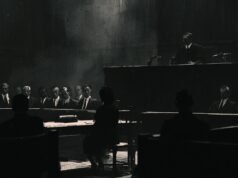

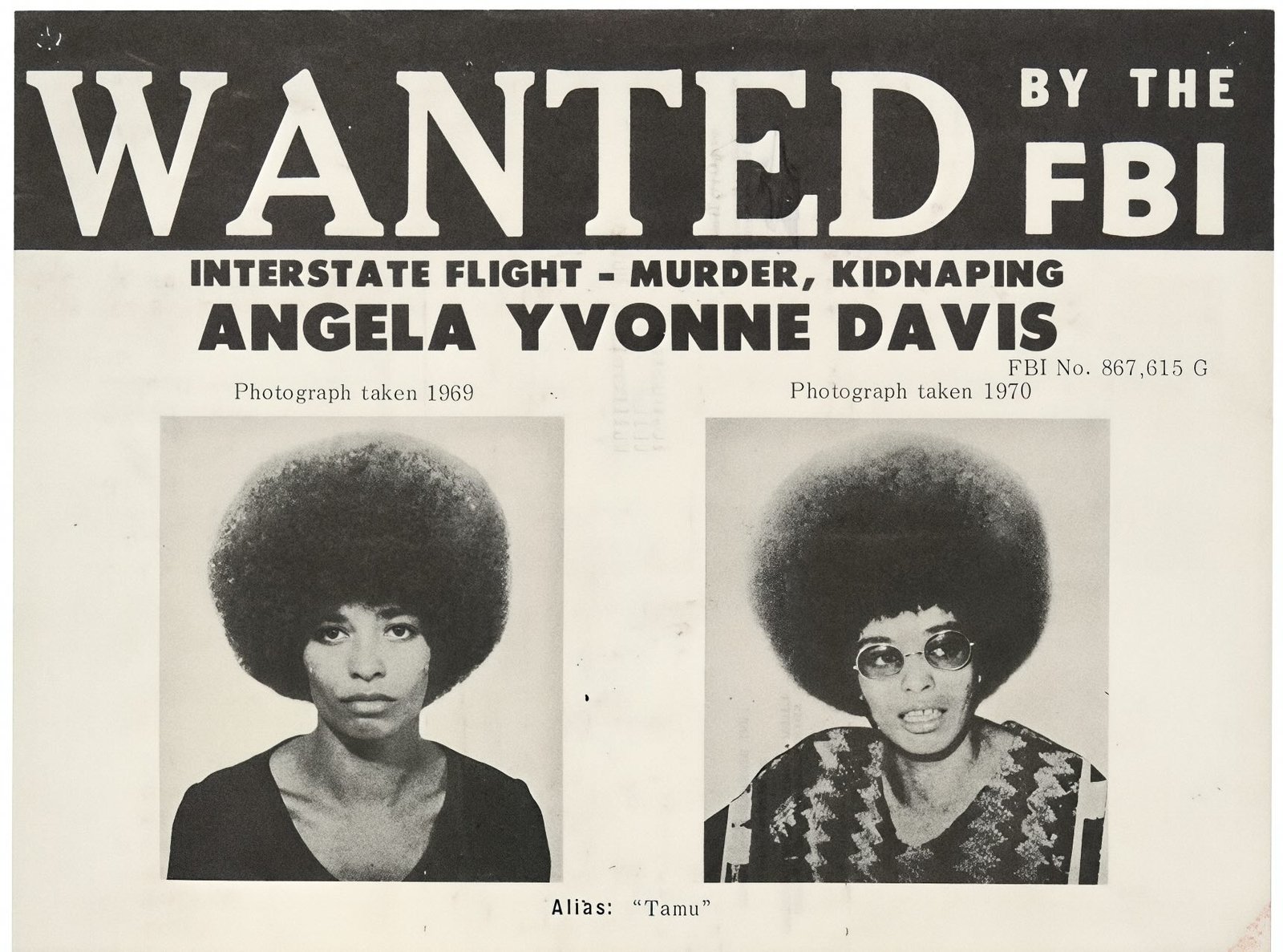

On 4 June 1972, an all-white jury in San Jose, California, found Angela Yvonne Davis not guilty of murder, kidnapping, and conspiracy. The charges carried the death penalty. The jury took thirteen hours to decide. They returned not guilty on all counts.
The story of how a twenty-eight-year-old Black communist philosophy professor ended up facing execution by the state of California begins ten months earlier, on a hot August afternoon in Marin County.
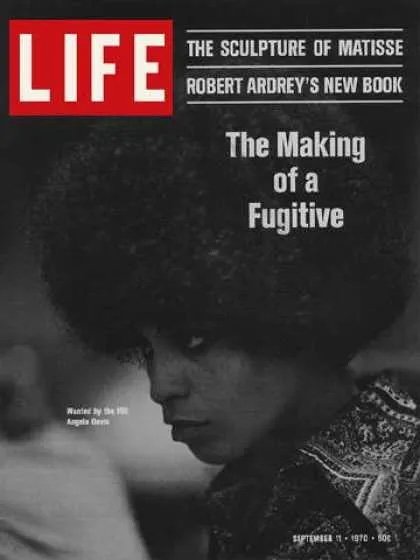
Angela Davis was born on 26 January 1944 in Birmingham, Alabama, in the Dynamite Hill neighbourhood, so named because the Ku Klux Klan had bombed so many Black homes there. Her father was a teacher and a businessman. Her mother was a national organiser for the Southern Negro Youth Congress, an organisation influenced by the Communist Party. Davis grew up knowing communists. She grew up knowing the struggle.
She was a brilliant student. She won a scholarship to Brandeis University, where she studied under the Frankfurt School philosopher Herbert Marcuse. She graduated magna cum laude, Phi Beta Kappa. She studied at the Sorbonne, at the University of Frankfurt, at the University of California, San Diego. She trained in critical theory, in Marxism, in the European philosophical tradition that teaches you to question every assumption.

In 1969, she was hired as an assistant professor of philosophy at UCLA. This was unprecedented. A Black woman teaching philosophy at a major American university was nearly unheard of.
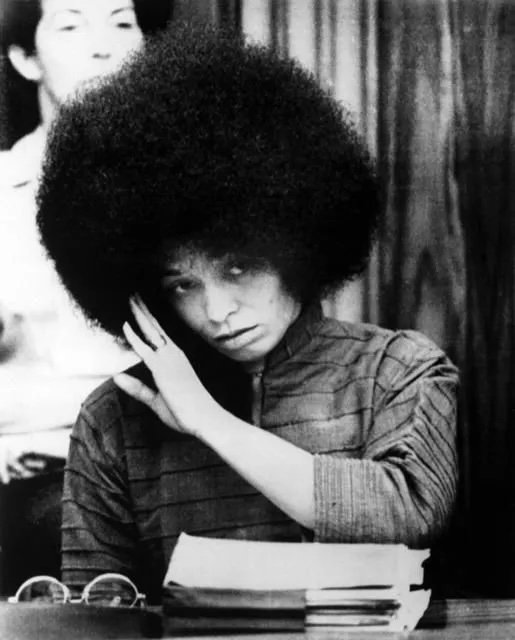
The California Board of Regents fired her a year later because of her membership in the Communist Party. She fought the firing in court and won. The university then fired her again for using inflammatory language. She had called the Regents “a contemptible pack of reactionary lunatics.” She was unapologetic.
While she taught and wrote, she became involved in the campaign to free the Soledad Brothers. These were three Black prisoners at Soledad Prison, George Jackson, Fleeta Drumgo, and John Clutchette, charged with murdering a white prison guard. The guard had been killed four days after three Black inmates had been shot dead by a guard in the prison yard. The racial context was not subtle. The Soledad Brothers became a cause for the left.
Davis corresponded with George Jackson. She became friends with his younger brother, Jonathan, a bright, intense seventeen-year-old. She bought guns for her own protection after receiving death threats from right-wing organisations. She stored them in her apartment.
On 7 August 1970, Jonathan Jackson entered the Marin County courtroom wearing a raincoat on a hot day. He pulled out an M1 carbine. He threw a pistol to James McClain, a prisoner on trial for stabbing a guard. He armed two other prisoners. He took Judge Harold Haley, Deputy District Attorney Gary Thomas, and three jurors hostage. He demanded the release of the Soledad Brothers by noon or the hostages would die.
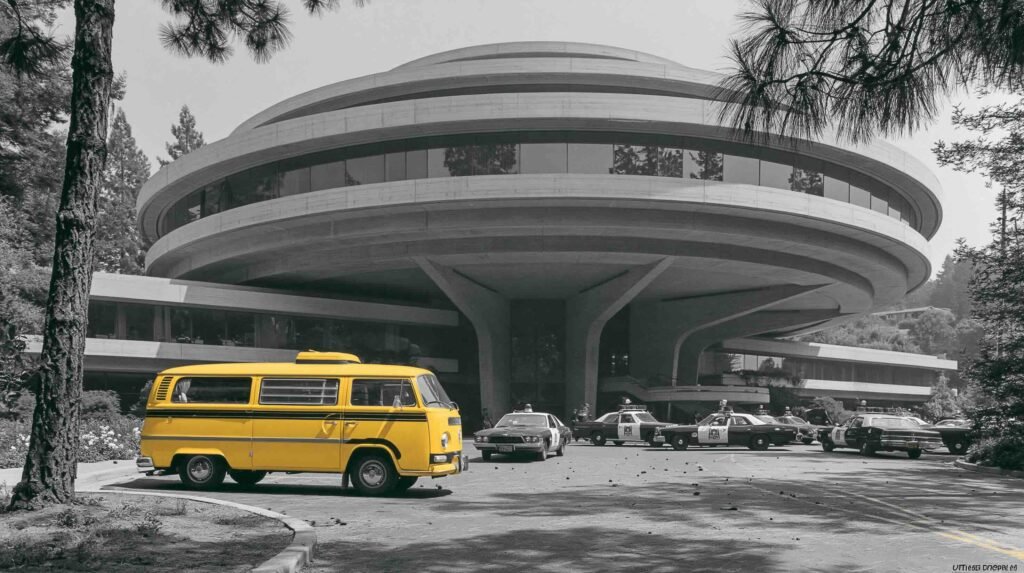
The escape attempt failed. When the kidnappers tried to leave the courthouse in a yellow van, law enforcement opened fire. Jonathan Jackson was killed. Judge Haley was killed, shot through the face with a shotgun that had been taped to his neck. James McClain and William Christmas, another prisoner, were killed. Ruchell Magee and Gary Thomas were wounded.
Angela Davis was not there. She was not involved in the planning. She did not know what Jonathan Jackson intended to do with her guns.
The state of California charged her anyway.
The legal theory was straightforward and aggressive: Davis owned the weapons. Davis knew Jonathan Jackson. Therefore Davis was criminally liable for everything he did. The state argued that by buying the shotgun and leaving it accessible, she had aided and abetted the takeover.
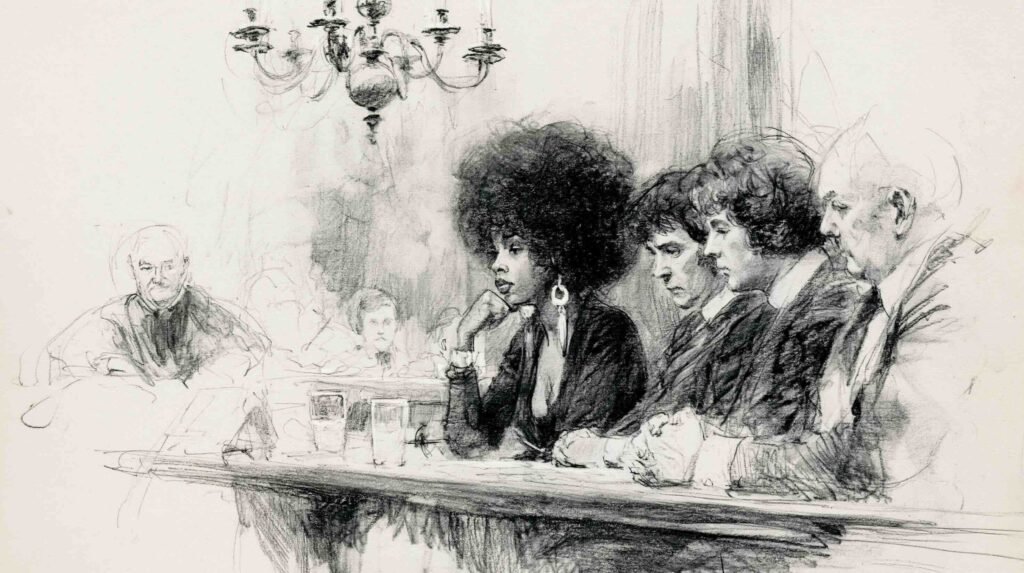
The defence, led by Leo Branton Jr., a Black attorney from Los Angeles, systematically dismantled this case. He called witnesses who placed Davis in San Francisco at the time of the attack, more than an hour’s drive from the courthouse. He proved that Jonathan Jackson had access to her apartment and had taken the guns without her authorisation. He pointed out that if owning a gun and knowing a radical made you guilty of conspiracy, then thousands of people in California were guilty.
The trial was deeply political. The prosecution introduced Davis’s Communist Party membership as evidence of her character. They called George Jackson’s letters to her as evidence of conspiracy. They portrayed her as a dangerous radical who had weaponised the Soledad Brothers campaign.
Branton countered by focusing on the facts. He refused to let the trial become a referendum on Davis’s politics. He kept the jury’s attention on evidence, on timeline, on the absence of any connection between Davis and the attack. One of the most dramatic moments of the trial came when Branton cross-examined the prosecution’s star witness, a man who claimed Davis had admitted her involvement. Branton forced the witness to admit he had been paid for his testimony.
The all-white jury, twelve people from Santa Clara County, deliberated for thirteen hours. They returned a verdict that shocked the state: not guilty on all three counts.
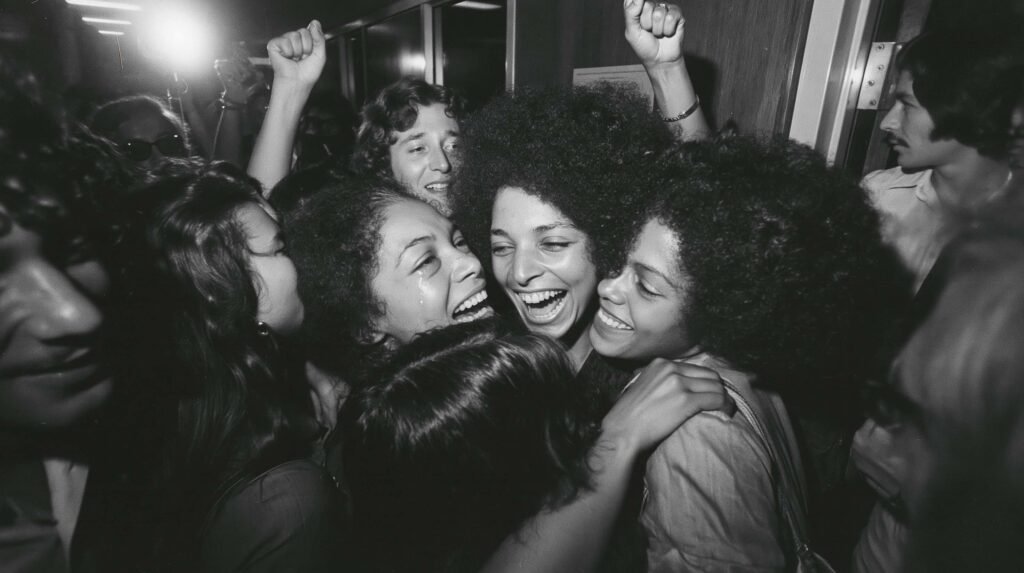
The courtroom erupted. Davis’s supporters wept. The prosecution was silent. The judge looked stunned.
Angela Davis left the courtroom free. She could have been executed. Instead, she returned to her work. She published Women, Race and Class in 1981, a foundational text of Black feminism and intersectional theory. She co-founded Critical Resistance in 1997, one of the leading prison abolition organisations in the United States. She taught at UC Santa Cruz as Distinguished Professor Emerita until her retirement in 2008.
The 1972 verdict was not a vindication of Angela Davis’s politics. It was not a judgment on communism or Black radicalism or prison abolition. It was a finding that the state of California had failed to prove its case beyond a reasonable doubt.
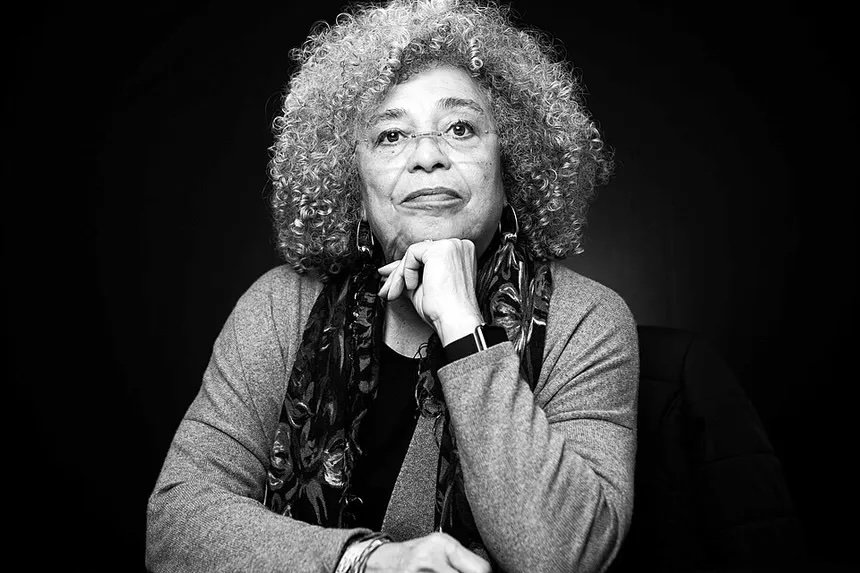
An all-white jury in a deeply conservative county looked at a young Black communist professor under the weight of the entire American criminal justice system and said: no.
That is worth remembering.
Sources:
1. New York Times archives, “Angela Davis Acquitted on All Charges” (5 June 1972)
2. History.com, “Communist activist Angela Davis acquitted” (This Day in History)
3. Wikipedia, “Angela Davis” and “Marin County Civic Center attacks”
4. California African American Museum, “#blackhistory: On June 4, 1972, Angela Davis is acquitted”
5. Los Angeles Times, “Angela Davis trial documents”
6. Encyclopedia.com, “Angela Davis Trial: 1972”
7. The Guardian / historianspeaks.org, “Trial of Angela Davis, 1972”
8. Freedom Archives, “The 50th Anniversary of the August 7th Marin County Courthouse Rebellion”
9. University of Texas, “The Michael Tigar Archive | Angela Davis”
10. Cambridge University, “2025 Honorary Doctorates”