

The facts, then. Ernest Everett Just was born on August 14, 1883, in Charleston, South Carolina. His father and grandfather were builders. When Just was four years old, both died within a short period, his father from alcoholism. His mother Mary became the family’s sole supporter. She taught at an African American school and worked in phosphate mines during the summer. She also helped found a town on James Island, near Charleston, that residents named Maryville in her honor.
When Just was young, he contracted typhoid fever. The illness left him bedridden for six weeks and severely damaged his memory. He had already learned to read and write, but now had to relearn everything. His mother taught him patiently, but after a while, she gave up. He eventually recovered and went on to become one of the most accomplished scientists of his generation.
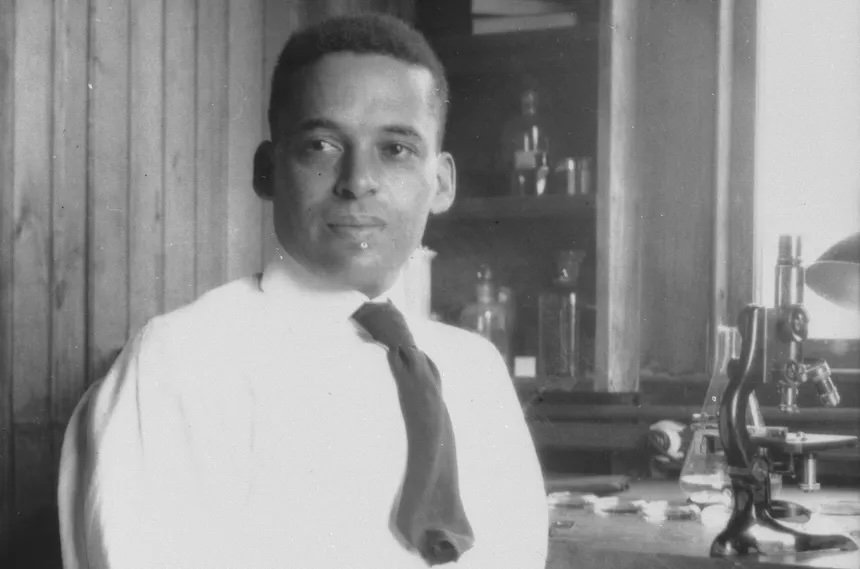
At 13, his mother sent him to the Colored Normal Industrial Agricultural and Mechanical College of South Carolina, now South Carolina State University. Believing northern schools offered better opportunities, Just left the South at 16. He enrolled at Kimball Union Academy in Meriden, New Hampshire, a college preparatory high school. During his second year, he returned home for a visit and learned his mother had been buried just an hour before he arrived. Despite this loss, he completed the four year program in three years and graduated in 1903 with the highest grades in his class.
Just went on to Dartmouth College. He graduated magna cum laude in 1907, the sole magna cum laude recipient in his class. He won special honors in zoology and distinguished himself in botany, history, and sociology. He was also a Rufus Choate scholar for two years and was elected to Phi Beta Kappa.

He wanted to deliver a commencement speech. The faculty denied his request. They decided it would be a faux pas to allow the only Black student in the graduating class to address the crowd of parents, alumni, and benefactors. It would have made too glaring the fact that Just had won almost every prize available.
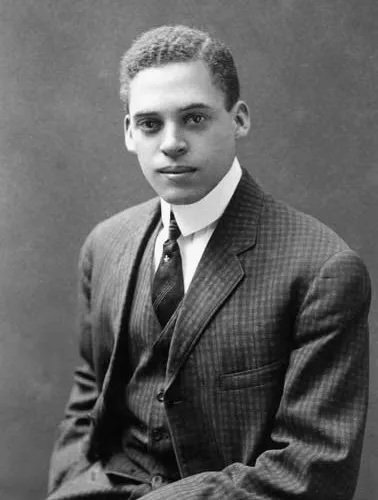
After Dartmouth, Just faced the same problem every Black college graduate of his time faced. No matter how brilliant, it was almost impossible for a Black person to get a faculty position at a white college or university. He accepted a teaching job at Howard University in Washington, D.C. He started teaching rhetoric and English, fields far from his specialty. By 1909, he was teaching biology as well. In 1910, he took charge of a newly formed biology department. In 1912, he became head of the new Department of Zoology, a position he held until his death in 1941.
On November 17, 1911, Just and three Howard students established Omega Psi Phi fraternity on campus. The university’s faculty and administration initially opposed the idea, fearing it could pose a political threat. Just worked to mediate the controversy, and the Alpha chapter was chartered on December 15, 1911.
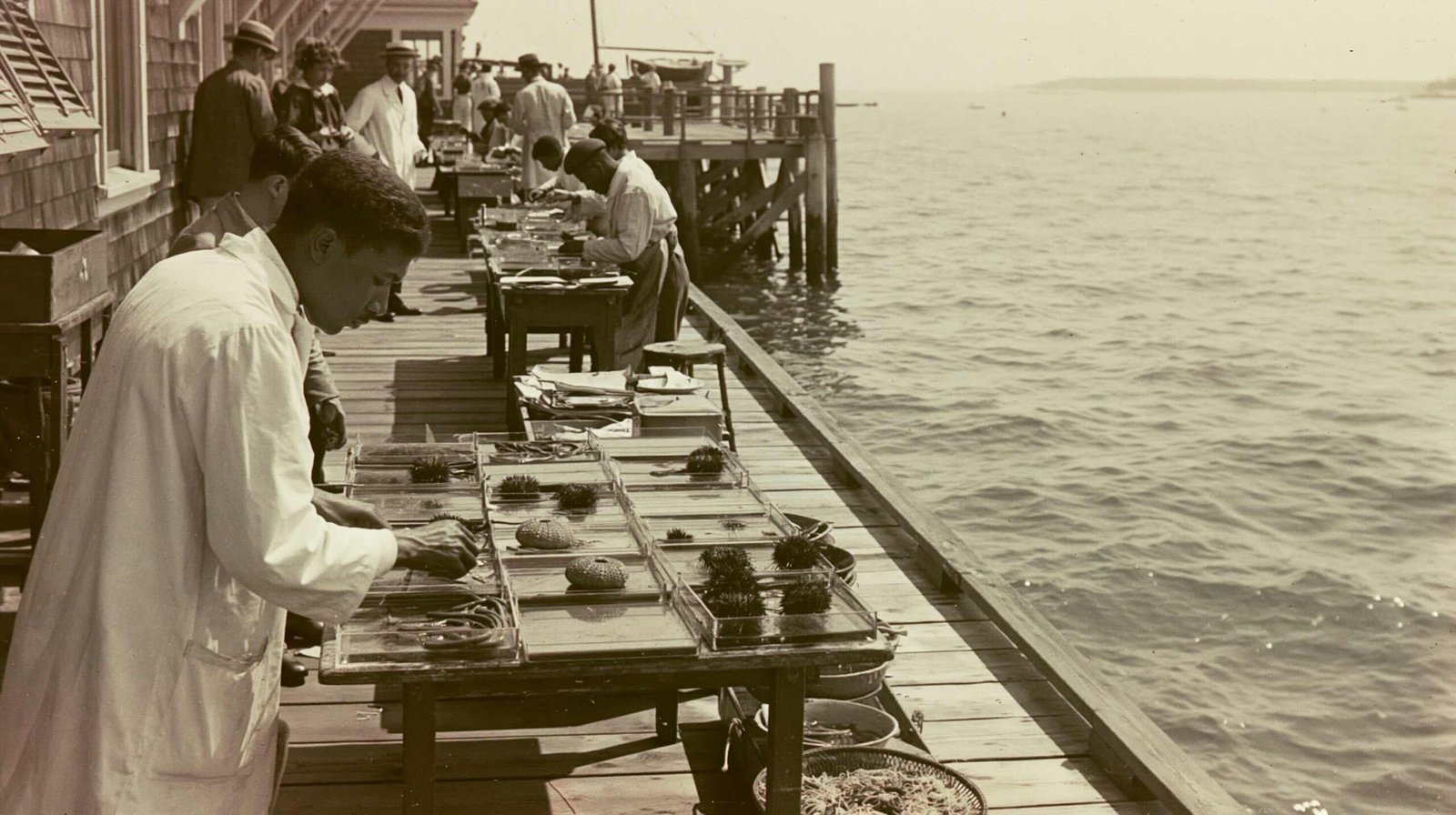
In 1909, Frank R. Lillie, head of the Department of Zoology at the University of Chicago and director of the Marine Biological Laboratory at Woods Hole, Massachusetts, invited Just to spend the summer as his research assistant. That summer marked the beginning of Just’s life’s work. For the next 20 years, he spent nearly every summer at Woods Hole, focusing on the eggs of marine invertebrates like sea urchins and marine worms.
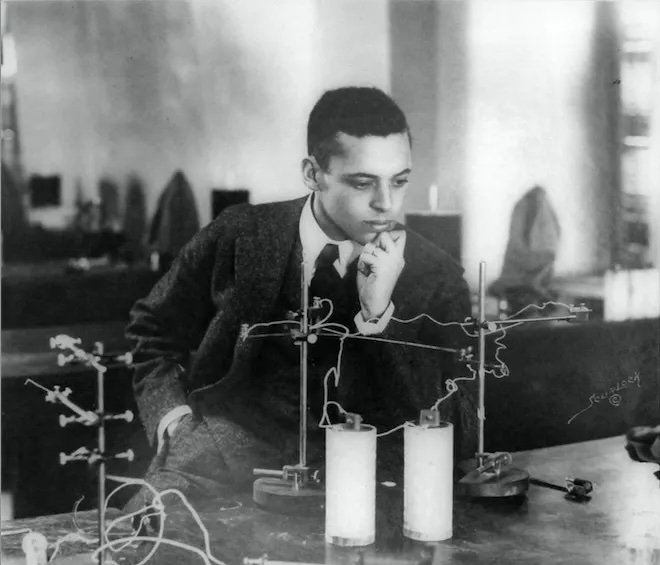
His first paper, “The Relation of the First Cleavage Plane to the Entrance Point of the Sperm,” appeared in the Biological Bulletin in 1912. It demonstrated that the sperm’s entry point determines the egg’s first cleavage plane. The paper became a classic and authoritative study.
In 1915, Just became the first recipient of the NAACP’s Spingarn Medal, recognizing his scientific achievements and his “foremost service to his race.” The same year, he took a leave of absence from Howard to enroll in an advanced program at the University of Chicago. In June 1916, he received his PhD in zoology, becoming one of the only Black people at the time to earn a doctorate from a major university.
Despite his growing reputation, Just could not get a position at a major American university. As Dartmouth Alumni Magazine later reported, Brown University found him “quite ideal except for his race.” Frank R. Lillie, his mentor, wrote that Just was “condemned by race to remain attached to a negro institution unfitted by means and tradition to give full opportunity to ambitions such as his.” Lillie called this “an element of tragedy” that ran through all of Just’s scientific career.
Just became frustrated. He wanted a position that would provide steady income and allow more time for research. Instead, he remained at Howard, which could not fully support his ambitions due to budget constraints. He conducted his experiments during summers at Woods Hole. In Europe, however, scientists treated him like a celebrity. From 1929 to 1938, he made ten or more trips to Europe. He worked at the Stazione Zoologica in Naples, became the first American invited to the Kaiser Wilhelm Institute in Berlin, and later moved to the marine laboratory at Roscoff, France. He did not face the same racial discrimination there, and when he did, it came from other Americans.

In 1939, Just published two books: Basic Methods for Experiments on Eggs of Marine Animals and The Biology of the Cell Surface. The second book argued that the cell surface, not the nucleus, played the fundamental role in development. At a time when nearly every other cellular biologist was focused on the nucleus and DNA, Just championed the importance of the cell’s outer layer. His theories did not become scientifically popular until the 1970s, when cancer researchers began exploring the walls of cells.
Just published more than 70 scientific articles. He was elected vice president of the American Society of Zoologists in 1930. He served as editor of the journal Physiological Zoology from 1929 and was elected to the editorial board of the Biological Bulletin in 1930.
In 1940, after Germany invaded France, Just was interned briefly before being released to return to America. He died of pancreatic cancer in Washington, D.C., on October 27, 1941. He was 58 years old.
As the Dartmouth Alumni Magazine concluded, if Just had been a white man, science would have had a new field.
Sources:
- Wikipedia – Ernest Everett Just (https://en.wikipedia.org/wiki/Ernest_Everett_Just)
- Dartmouth Alumni Magazine – “DR. E. E. JUST, SCIENTIST” (March 1942) (https://archive.dartmouthalumnimagazine.com/article/1942/3/1/dr-e-e-just-scientist-dartmouth-1907)
- Dartmouth Alumni Magazine – “Cellular-Surface Biology” (April 1994) (https://archive.dartmouthalumnimagazine.com/article/1994/4/1/cellular-surface-biology)
- Marine Biological Laboratory – Ernest Everett Just (https://www.mbl.edu/about/history-archives/legacy-leadership/ernest-everett-just)
- American National Biography – Ernest Everett Just (https://www.anb.org/display/10.1093/anb/9780198606697.001.0001/anb-9780198606697-e-1300887)
- Embryo Project Encyclopedia – Ernest Everett Just (1883-1941) (https://embryo.asu.edu/pages/ernest-everett-just-1883-1941)
- Biography.com – Ernest Everett Just (https://www.biography.com/scientists/ernest-everett-just)