

The facts, then. On a Tuesday morning in October 1925, Plymouth Argyle manager Bob Jack called his inside-left into the office. He put an arm around the player’s shoulder and said, “Johnnie, I’ve got great news for you. You’ve been picked for England”.
Jack Leslie was 24 years old. He had scored 14 goals in 40 league games the previous season. His club sat at the top of the Football League’s scoring chart with 31 goals from eight matches . The newspapers had taken notice. One writer called him a “dark fuzzy-haired schemer” . Another described him as a “man of colour”. None of that seemed to matter. Leslie was going to represent his country.
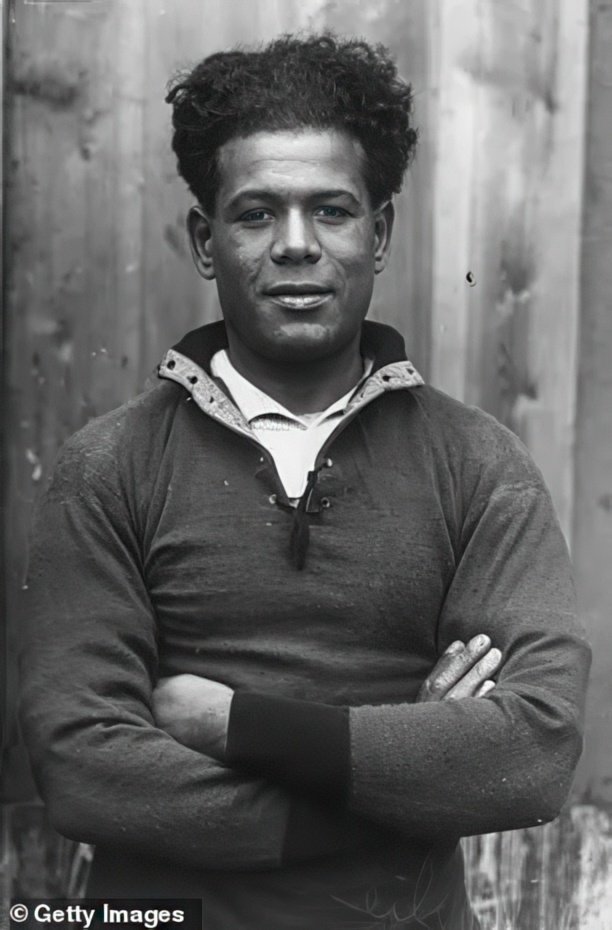
Leslie was born in Canning Town, East London, on 17 August 1901 . His mother Annie was a seamstress from Islington. His father, also named John Francis Leslie, came from Jamaica and had arrived in England in 1863 at 12 years old . The elder Leslie worked at the Beckton gasworks. Young Jack followed him there, training as a boilermaker while playing amateur football for Barking Town.
In 1921, Argyle manager Bob Jack signed him. The club paid him £5 a week, reduced to £4 in the summer . It took three seasons for Leslie to secure a regular first-team spot. But once he did, he never looked back.

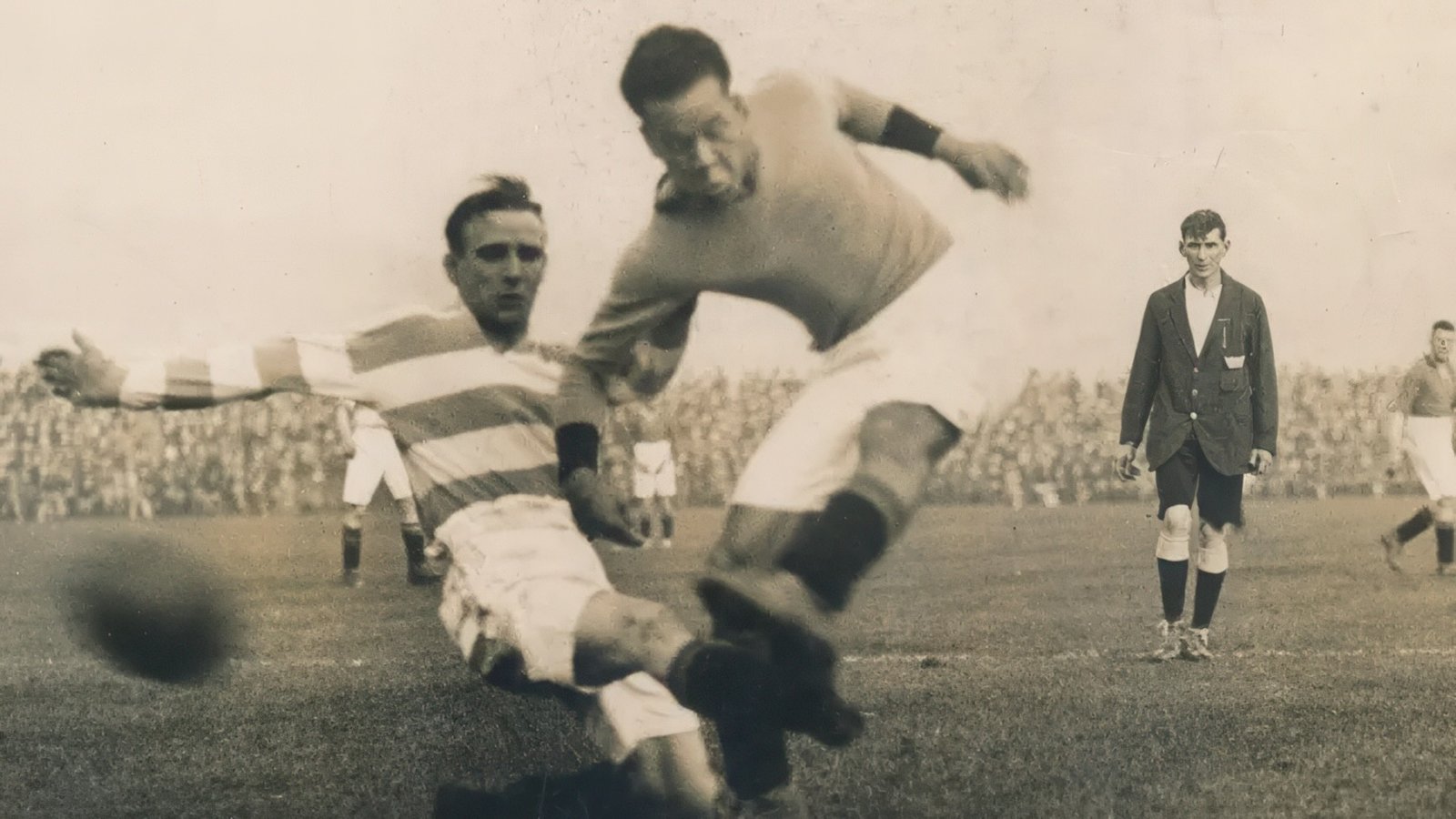
Between 1924 and 1935, Leslie scored 137 goals in 401 appearances for Plymouth Argyle . He formed a partnership with Scottish outside-left Sammy Black that became legendary at Home Park. The two played together 327 times. They scored 319 goals between them . Black remains the club’s all-time leading scorer with 182 goals. Leslie sits fourth with 137.
On 10 March 1928, Leslie captained Argyle in an away match against Norwich City . He became the first Black player to captain a professional Football League side. The October 1925 England call-up should have been another first. Leslie was named as a reserve for the Home Nations Championship match against Ireland in Belfast . The team list appeared in newspapers on 6 October. Plymouth was buzzing.
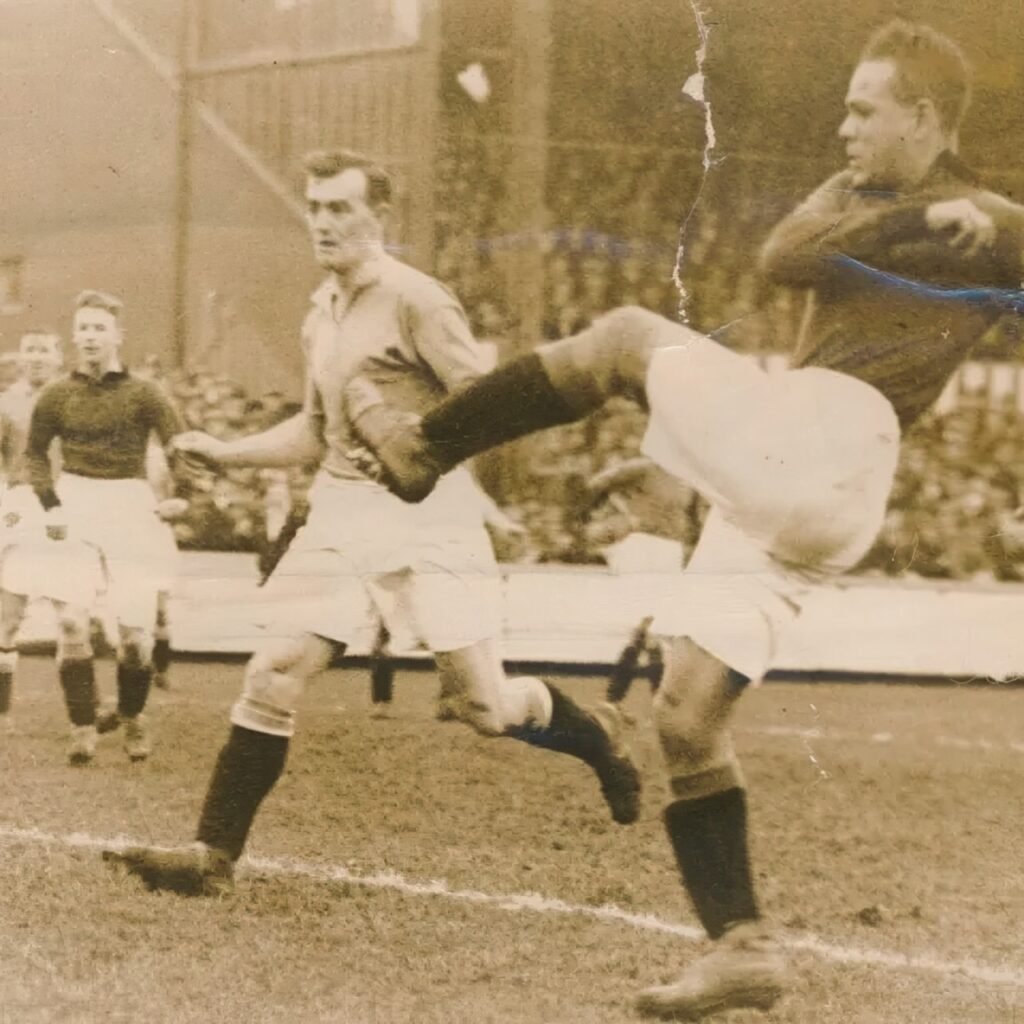
But three days before the match, Leslie’s name disappeared from the squad . No official explanation came. Leslie heard the reason through other channels. He later told journalist Brian Woolnough: “They must have forgot I was a coloured boy”.
In a 1978 interview, he put it more bluntly. “The FA had come to have another look at me. Not at my football but at my face. No one ever told me official-like, but that had to be the reason. There wasn’t any other reason for taking my cap away”. Local journalists were told to stay quiet. One Plymouth reporter wrote: “Unfortunately my pen is under a ban in this matter: but I may say that a mistake was made in London and transmitted to me”.
On the same afternoon England drew 0-0 with Ireland, Leslie scored two goals in Argyle’s 7-2 win against Bournemouth . He finished the 1925-26 season with 17 league goals.
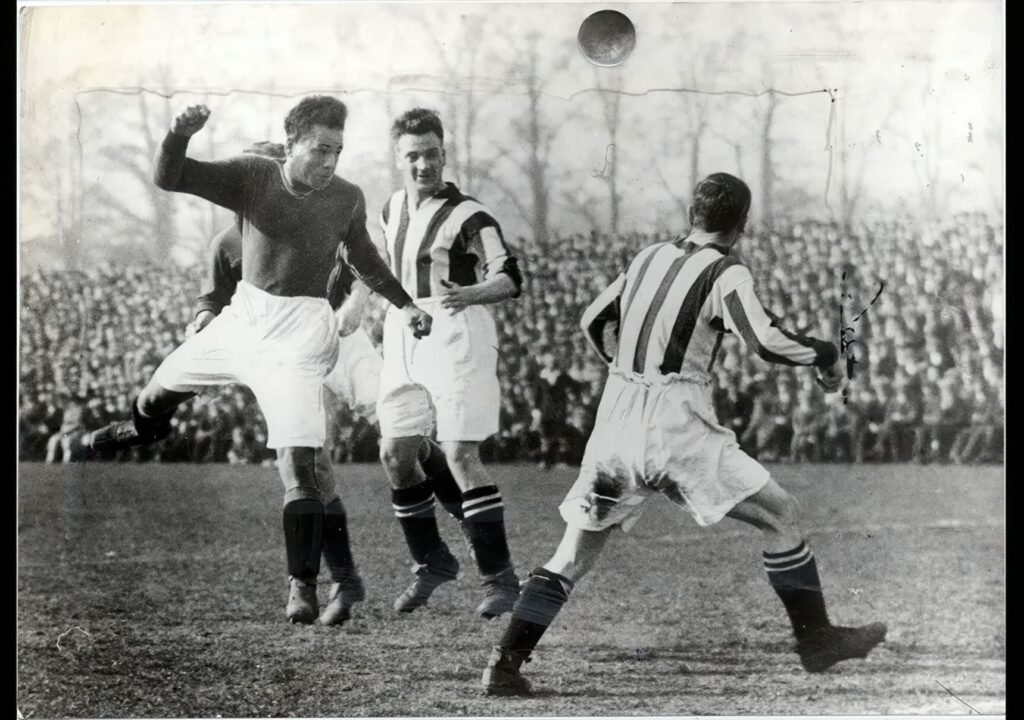
Leslie never received another England call-up. He kept playing. He kept scoring. In the 1928-29 season, he netted 22 goals and was joint top scorer for the club . In 1932, he captained Argyle to a fourth-place finish in the Second Division, the club’s highest-ever league standing.
He retired from professional football in 1935. He ran a pub in Truro for a few years, then moved back to East London and worked as a boilermaker in the East India Docks until 1966 . At his daughter’s suggestion, he took a part-time job cleaning boots at West Ham United. He cleaned the boots of Bobby Moore, Geoff Hurst, and Martin Peters . He swept the terraces. He never complained.
Leslie died on 25 November 1988. He was 87 years old.
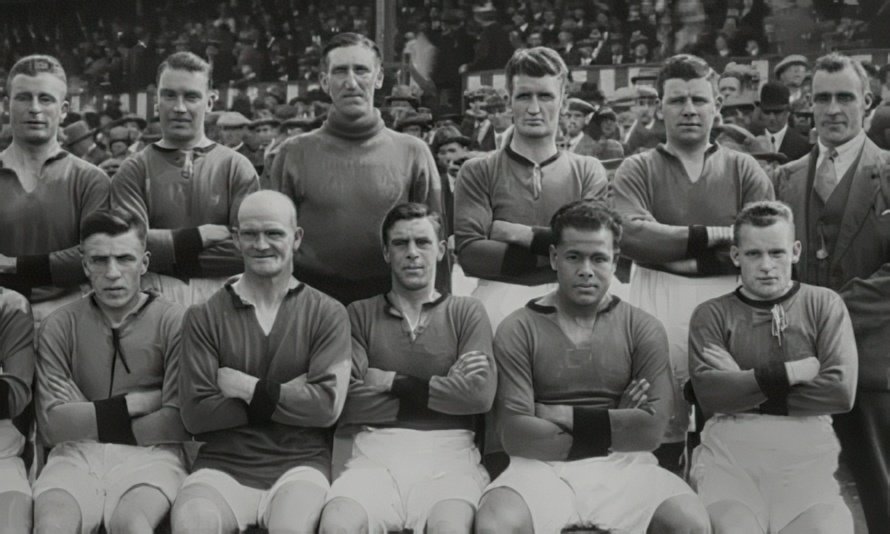
The football world took another 53 years to do what it should have done in 1925. In October 2022, the FA presented Leslie’s granddaughters with a posthumous honorary cap. The FA acknowledged that his deselection “should never have happened” and that he “faced adversity because of the colour of his skin”.
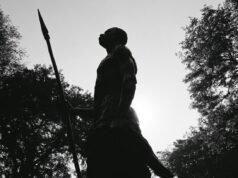
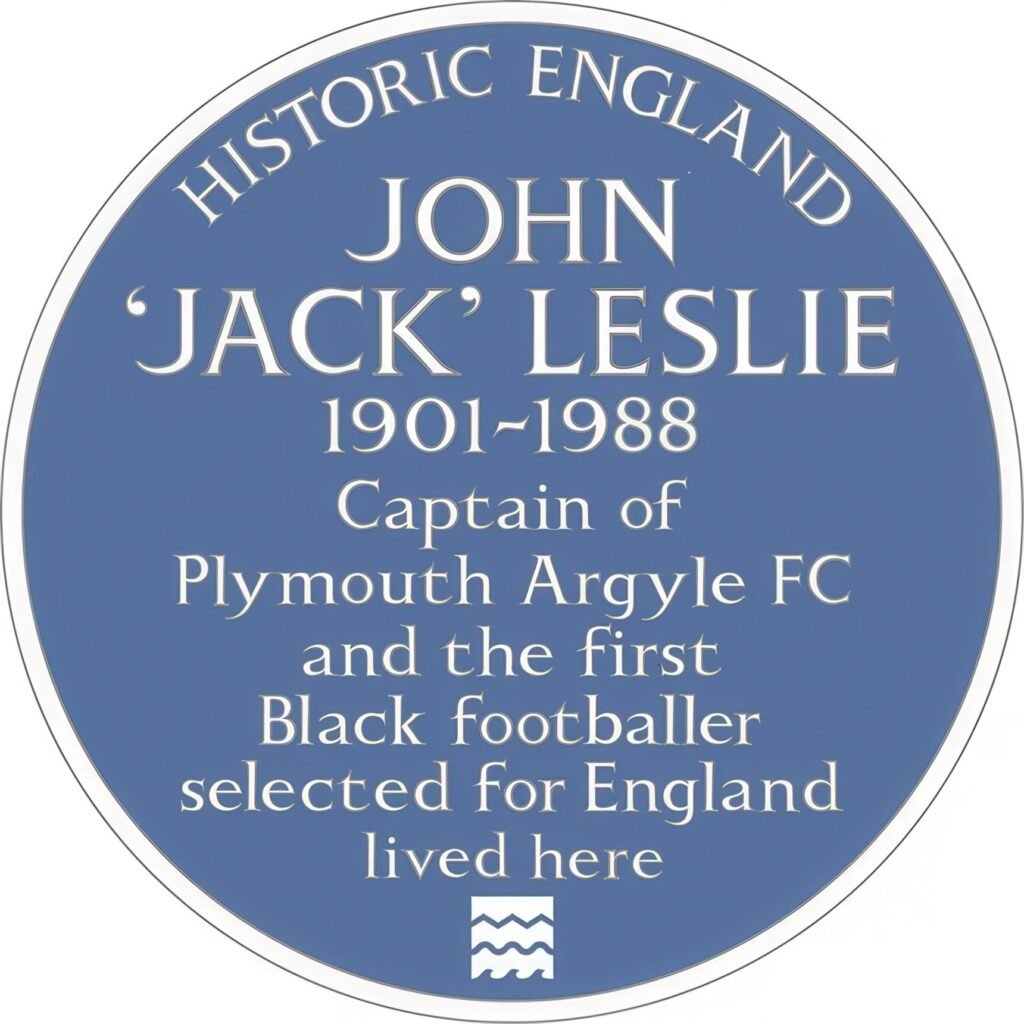
A bronze statue of Leslie was erected outside Home Park stadium the same month. A crowdfunding campaign raised £140,000 for it. On 15 May 2025, Historic England unveiled a national blue plaque at Leslie’s former home on Glendower Road in Plymouth . The plaque calls him “the first Black footballer selected for England”.
The inscription is both a celebration and an indictment. It honours what Leslie achieved. It also marks what was taken from him.
Sources:
- Historic England – Jack Leslie (2025)
- LBC – Blue plaque honour for first black footballer called up by England (2025)
- Wikiwand – Jack Leslie (English footballer)
- The Free Library – Jack Leslie (2020)
- The Box Plymouth – National blue plaque honours Jack Leslie (2025)
- TheFA.com – Jack Leslie honoured with blue plaque (2025)