

In 1922, a Senegalese boxer named Battling Siki walked into a Paris ring as a 10-to-1 underdog. He walked out as the light heavyweight champion of the world. Three years later, he was dead on a New York City street, shot twice in the back. His story is one of triumph, racism, corruption, and a mystery that has never been fully solved.
From Senegal to the Streets of Paris
Louis Mbarick Fall was born on September 16, 1897, in the port city of Saint-Louis, Senegal, then part of French West Africa . As a teenager, he was taken to France by a French actress. Shortly thereafter, she abandoned him. He was alone, young, and Black in a country that did not welcome him. He survived by taking any job he could find. Eventually, he found boxing. By age 15, he had begun his professional career. His early record was unspectacular from 1912 to 1914, he managed just eight wins, six losses, and two draws.
War Hero

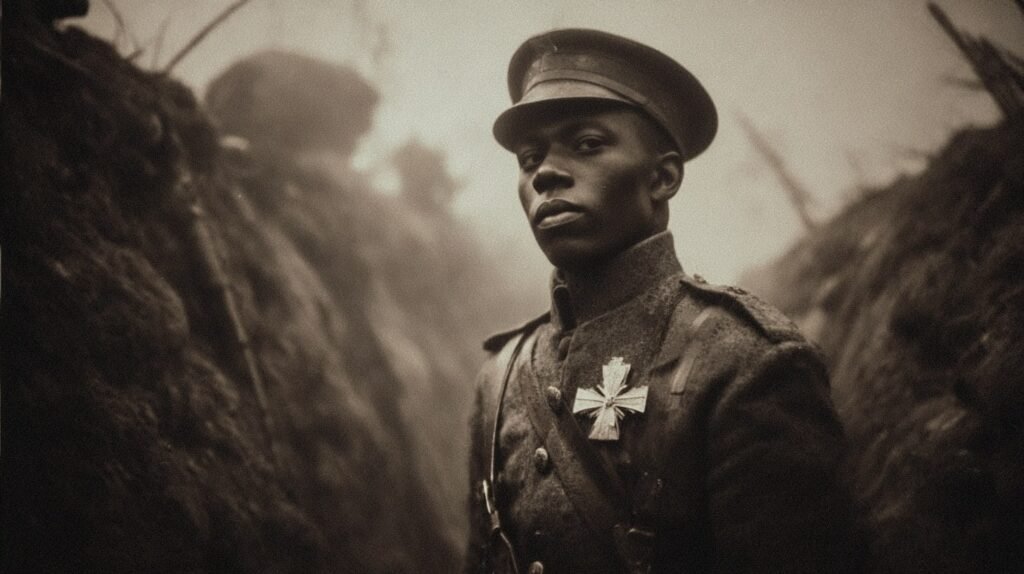
When World War I erupted, Siki put boxing aside. He joined the French army, serving in the 8th Colonial Infantry Regiment . He fought in major campaigns, was wounded by bomb fragments in both legs during the battles around the Somme in the summer of 1916, and became the champion hand grenade thrower of his corps, capable of throwing grenades 75 meters. For his bravery, he received the Croix de Guerre and the Médaille Militaire. His lungs were damaged by mustard gas, an injury that would haunt him for the rest of his short life . Four of his brothers also served; three were killed.
The Fight of His Life
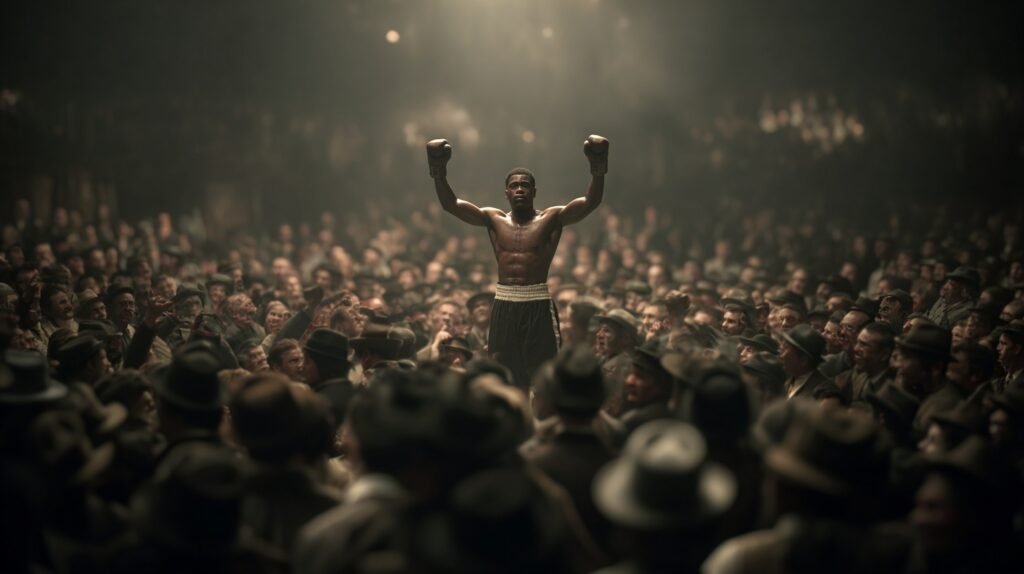
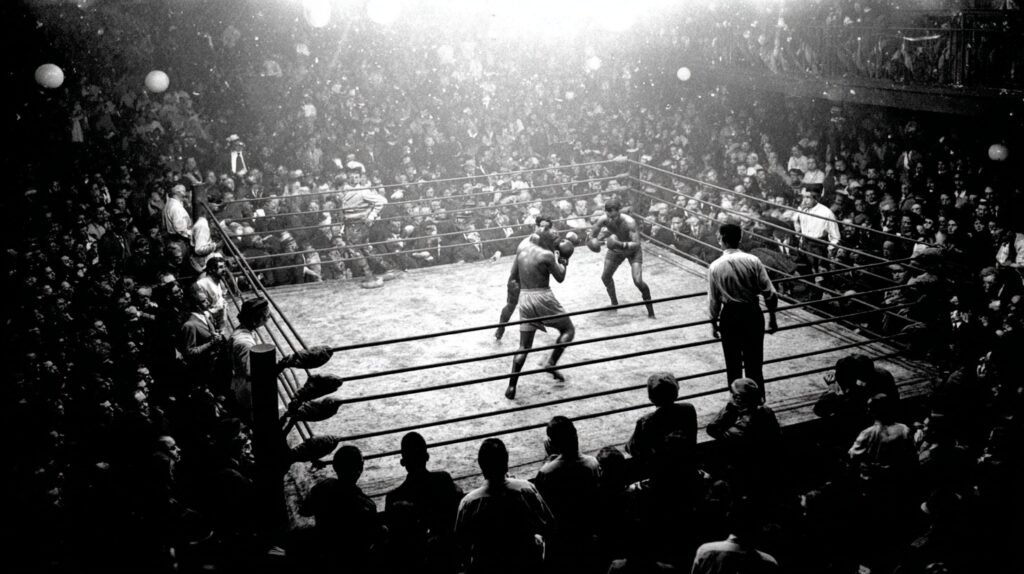
After the war, Siki returned to boxing with renewed determination. From November 1919 until his title shot in 1922, he compiled an impressive record of 43 wins in 46 bouts, with 21 knockouts. On September 24, 1922, at the Buffalo Velodrome in Paris, he faced Georges Carpentier the beloved French champion, the idol of a nation. Before 40,000 stunned spectators, including a young Ernest Hemingway who wrote about the fight, Siki did the unthinkable.
Siki later claimed he had agreed to take a dive. He alleged that Carpentier’s camp had offered him a bribe to lose. Carpentier dropped him in the first and third rounds, apparently following the script. But in the sixth round, Siki threw his famous “windmill” punch a devastating right uppercut and Carpentier went down and out. The referee, however, claimed Siki had tripped Carpentier and awarded the bout to the unconscious champion on a foul. The crowd erupted. Fearing a riot, the three ringside judges overruled the referee. Siki was declared the champion. He became the first African-born boxer to win a world title.
King of Paris, and a Target
His victory should have been his crowning moment. Instead, it made him a target. The French press, which had adored Carpentier, turned on Siki. They mocked him, caricatured him, called him a “savage”. He spoke out boldly against racism and exposed the corruption of the French fight game.
He also lived flamboyantly. He spent a fortune partying, was arrested for firing a pistol in the air, and was frequently seen on the streets of Paris dressed in flashy clothes, walking his pet lion cubs on a leash. The media created an image of him as a drunken, simple-minded savage. In reality, those who knew him described him as intelligent and socially conscious. He detested how journalists portrayed him. He fought Irishman Mike McTigue in Dublin on St. Patrick’s Day, 1923, a decision many called one of the strangest a fighter ever made. He lost the title.
American Nightmare
Siki came to the United States, hoping to rebuild his career. He fought without much success. He continued to drink and got into street brawls. He was arrested for deliberately defying the code of racial segregation in the American South. On the evening of December 15, 1925, at age 28, he left his New York apartment to meet friends. In the Hell’s Kitchen neighbourhood of Manhattan, he was found dead, shot twice at close range. His murderer was never identified. Rev. Adam Clayton Powell Sr. gave the eulogy at his funeral: “No man ever came out of Africa who had a more dramatic life or had a more tragic ending”.
Legacy
For nearly 70 years, Siki lay in an unmarked grave in Flushing Cemetery, Queens. In 1993, his remains were exhumed and returned to Senegal, where he was reburied according to Muslim rites. Today, a hotel in Saint-Louis bears his name. A statue may stand in his honour. The World Boxing Council honoured him on the 125th anniversary of his birth, recognising him as “a passionate champion, known for his honesty, his humour, and a man, who despite pressure, never threw a fight”. He lived only 28 years. But in those years, he went from abandoned teenager to war hero to world champion to murder victim. He was a man who refused to stay down in the ring or out of it.
ALL IMAGES CREATED WITH A.I
Sources
- Benson, Peter. Battling Siki: A Tale of Ring Fixes, Race, and Murder in the 1920s. University of Arkansas Press, 2008.
- University of Arkansas News (2006): “A Tragic and Sinister Boxing Tale” – https://news.uark.edu/articles/8844/
- World Boxing Council (2022): “The WBC honors Battling Siki” – https://wbcboxing.com/en/the-wbc-honors-battling-siki/
- Wikipedia (German): “Battling Siki” – https://de.m.wikipedia.org/wiki/Battling_Siki
- Wikipedia (English): “Battling Siki” – https://en.wikipedia.org/wiki/Battling_Siki
- Library of Congress Authorities: “Siki, Battling, 1897-1925” – https://id.loc.gov/authorities/names/nr2003035147.html
- BoxRec: “NBA World Light Heavyweight Champion” – https://boxrec.com/wiki/index.php/NBA_World_Light_Heavyweight_Champion
- Utah Digital Newspapers (1922): Siki’s Life Story – https://newspapers.lib.utah.edu/ark:/87278/s6bg3r4g/7283949