


In 1996, African nations did something remarkable. Less than a decade after the Cold War ended and only a few years after South Africa dismantled its secret nuclear arsenal, the continent banded together to say “no” to atomic weapons. They called it the Pelindaba Treaty. Named after the South African nuclear facility where apartheid scientists once built six crude bombs, the treaty made Africa the world’s largest nuclear-weapon-free zone. Here’s the full story, including the controversial American and British military base that might be violating it.
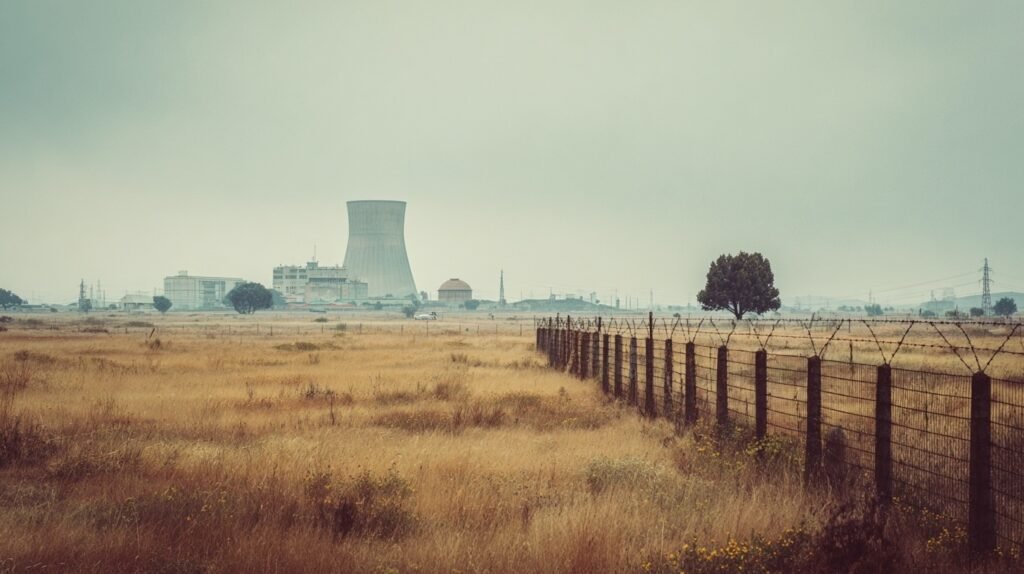
What the Treaty Actually Does
The African Nuclear-Weapon-Free Zone Treaty opened for signature on April 11, 1996, in Cairo, Egypt . Its official name, the Treaty of Pelindaba, is a deliberate reminder of what South Africa achieved: the only nation ever to build nuclear weapons and then voluntarily dismantle them.
The treaty’s core prohibitions are sweeping. Member states cannot research, develop, manufacture, stockpile, acquire, test, possess, control, or station any nuclear explosive device on the entire African continent. They also cannot dump radioactive waste. But the treaty is not anti-science. Article 8 explicitly allows the peaceful use of nuclear technology for medicine, agriculture, and energy development. Another article requires parties to maintain the highest standards of physical protection for nuclear material.

Crucially, the treaty established the African Commission on Nuclear Energy (AFCONE) to enforce compliance. AFCONE can request the International Atomic Energy Agency to conduct special inspections and can refer breaches to the UN Security Council. This enforcement mechanism makes Pelindaba unique among nuclear-weapon-free zones. The treaty entered into force on July 15, 2009, when Burundi became the 28th state to ratify. Today, 43 African nations are States Parties.
The Diego Garcia Problem
There is one significant exception to Africa’s nuclear-free status. And it sits in the middle of the Indian Ocean. The treaty’s Annex I map explicitly includes the Chagos Archipelago, home to the Diego Garcia military base, within the nuclear-weapon-free zone. However, a footnote was inserted at the UK’s request stating that including the territory is “without prejudice to the question of sovereignty”. This refers to the long-running dispute between the UK and Mauritius over who owns the islands.
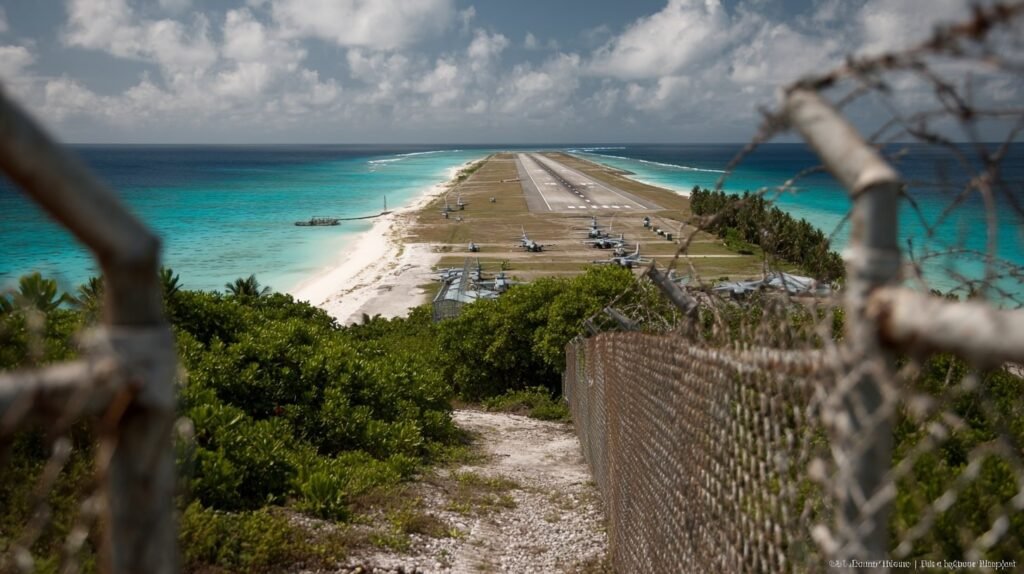
The United Kingdom and United States signed the treaty’s protocols in 1996, promising not to violate the zone. But the UK Foreign Office added a diplomatic note stating it did “not accept the inclusion of that Territory within the African nuclear-weapon-free zone” without its consent. The Clinton administration never submitted the protocols to the Senate for ratification. This matters because Diego Garcia has long hosted U.S. strategic military assets, including nuclear-capable B-52 bombers.
A 2026 Escalation
In January 2026, the issue resurfaced in the British Parliament. Conservative MP Sir Julian Lewis warned about the treaty’s implications for the Chagos Islands, which the UK has agreed to return to Mauritius sovereignty. Lewis noted that if the islands revert to Mauritius, “the Pelindaba treaty not only prohibits the storing of nuclear weapons on the territory of Mauritius, which the Chagos islands would become, but requires an inspection regime”. He specifically pointed out that the country conducting inspections would be South Africa, which he described as “somewhat closer to China and Russia” than to the UK or US.
Why This Matters
The Pelindaba Treaty is not a relic of the 1990s. It is a living legal framework that binds 43 African nations to the world’s strongest nuclear non-proliferation regime. Its enforcement mechanisms, through AFCONE and the IAEA, are stronger than any other regional nuclear-weapon-free zone. The Diego Garcia base remains a diplomatic loose end, a reminder that nuclear non-proliferation cannot be fully achieved while major powers preserve exceptions for strategic convenience.
For fifteen years, the US has supported the treaty politically while failing to ratify its protocols. In 2026, as global tensions rise and non-proliferation regimes face new pressures, that contradiction may finally need resolution. The treaty’s 30th anniversary, marked by the UN in February 2026, is a reminder of what Africa achieved and what remains unfinished.
Sources
- Sand, P.H. (2009). African Nuclear-Weapon-Free Zone in Force: What Next for Diego Garcia? American Society of International Law, 13(12).
- United Nations Office for Disarmament Affairs. (n.d.). Treaty of Pelindaba.
- Center for Arms Control and Non-Proliferation. (2011). What Could Possibly Be Wrong with Ratifying Nuclear Weapons Free Zones? Sen. Kyl?
- UN Office for Disarmament Affairs. (2026). High Representative Izumi Nakamitsu Delivers a Video Message on the 30th Anniversary of the Treaty of Pelindaba.
- African Nuclear-Weapon-Free Zone Treaty (Pelindaba Treaty), 1995. (1996). Kenya Law.
- Hansard. (2026). Foreign Affairs – British Indian Ocean Territory & Treaty of Pelindaba. Rt Hon Sir Julian Lewis MP.