

The facts, then. Hannibal Barca was born in Carthage in 247 BCE. His name in Punic meant “grace of Ba’al”, the supreme god of the Carthaginians. His family’s surname Barca meant “shining” or “lightning”. Both names suited the man who would become Rome’s most dangerous enemy.
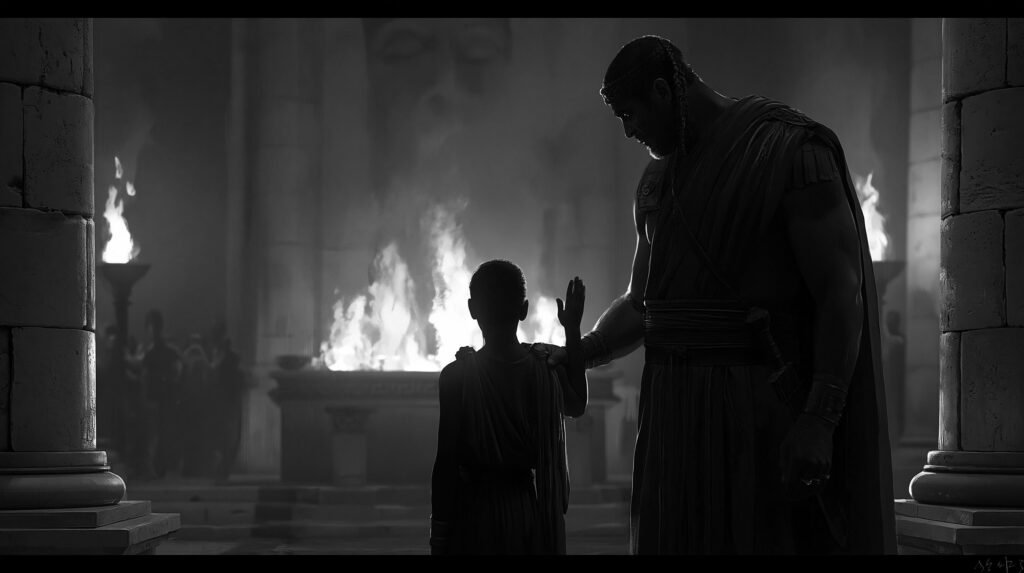
When Hannibal was still a boy, his father Hamilcar Barca prepared to leave Carthage for Iberia, modern Spain. Carthage had lost the First Punic War to Rome. Hamilcar needed to rebuild his country’s power and wealth. According to the Greek historian Polybius, young Hannibal begged his father to take him along. Hamilcar agreed on one condition. He led his son to a sacrificial altar, made him place his hands on the offering, and demanded that Hannibal swear an oath. Hannibal swore that he would never be a friend of Rome. He kept that oath for his entire life.
Hannibal grew up in the army. He learned tactics, logistics, and leadership from his father and his brother-in-law Hasdrubal the Fair. When Hasdrubal was assassinated in 221 BCE, the army proclaimed Hannibal its commander. He was 26 years old.
For two years, Hannibal consolidated Carthaginian control over Iberia. Then he picked a fight with Rome. He laid siege to Saguntum, a city south of the Ebro River that Rome claimed as a protectorate. Rome protested. Carthage refused to back down. The Second Punic War began.

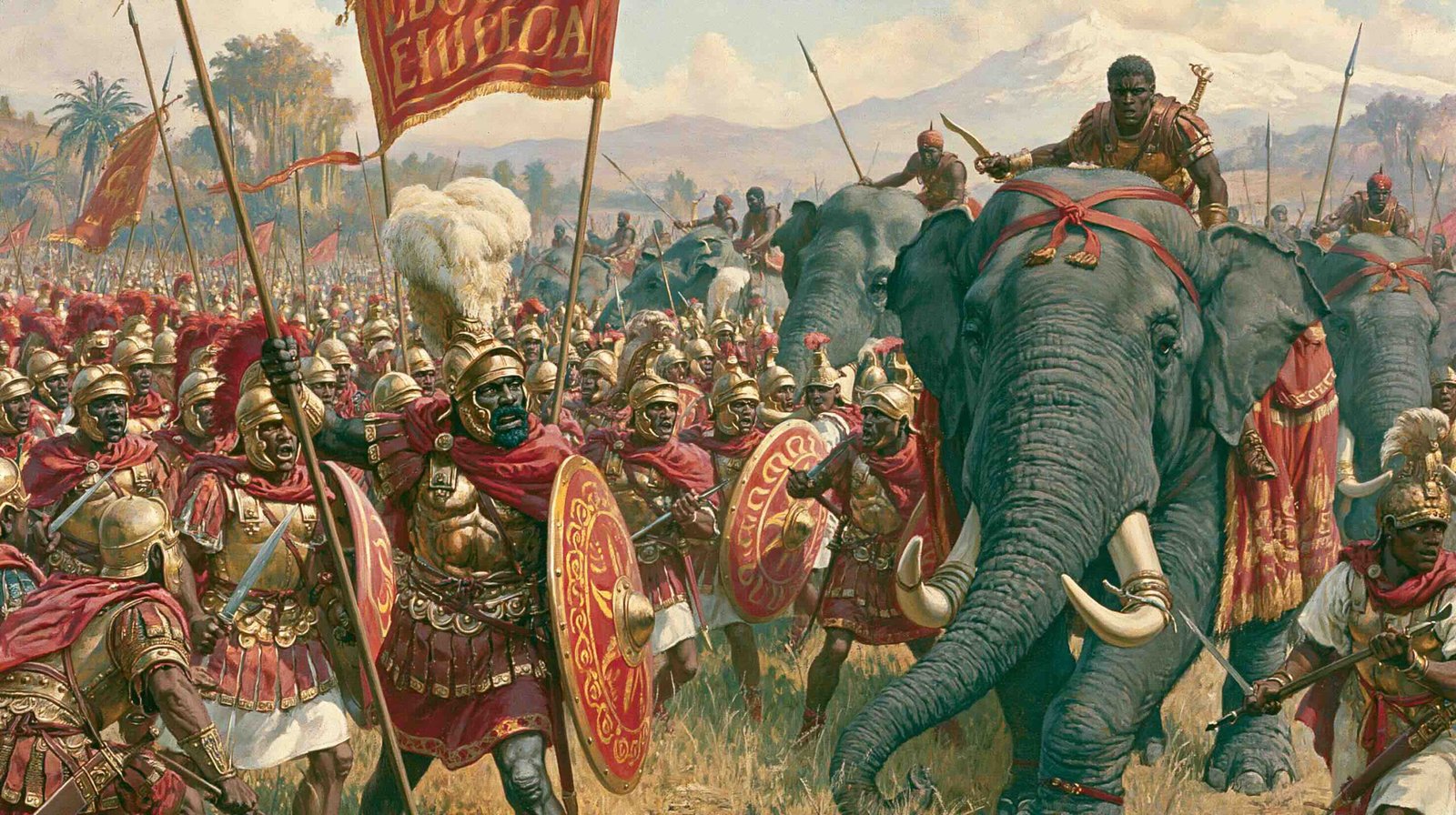
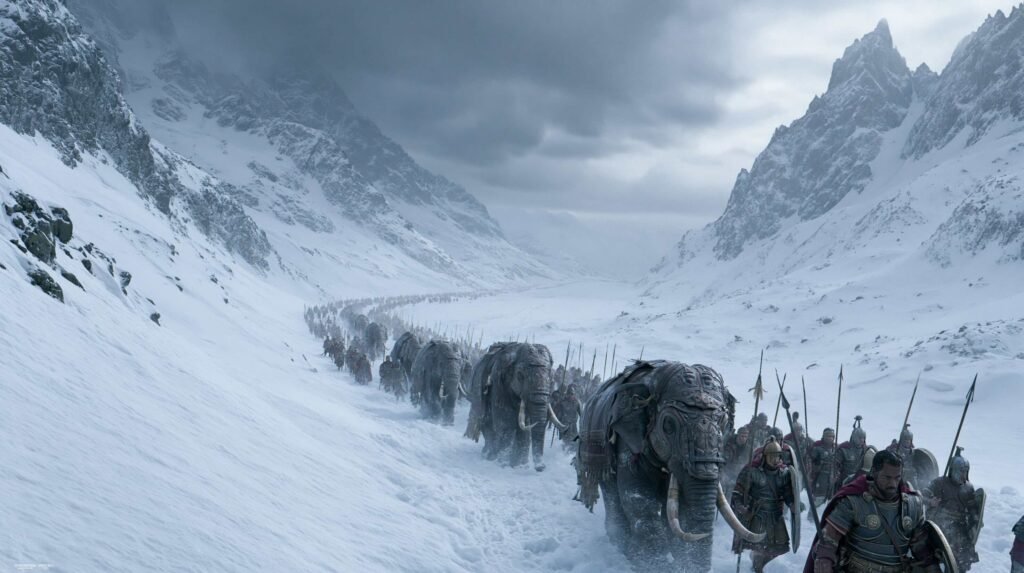
Hannibal did something no one expected. Instead of waiting for Rome to invade Carthaginian territory, he decided to invade Italy. In the spring of 218 BCE, he marched an army estimated at between 40,000 and 50,000 infantry, 9,000 cavalry, and 37 war elephants north from Carthaginian Iberia. He crossed the Pyrenees, fought his way through southern Gaul, and in October 218 BCE, he reached the Alps.
The crossing was a nightmare. Snow, ice, and freezing temperatures killed thousands of his men. Most of his elephants died. Hostile tribes attacked his columns. When Hannibal emerged into the Po Valley after 17 days, his army had been reduced to roughly 26,000 men. But he had done what the Romans thought impossible. He was in Italy.
In December 218 BCE, Hannibal destroyed a Roman army at the Trebia River. In June 217 BCE, he annihilated another at Lake Trasimene, trapping the Romans against the water and slaughtering them. The Romans elected Quintus Fabius Maximus as dictator. Fabius refused to fight Hannibal directly. He followed the Carthaginian army, harassed its supply lines, and avoided pitched battles. This “Fabian strategy” saved Rome but infuriated Roman citizens who wanted revenge.
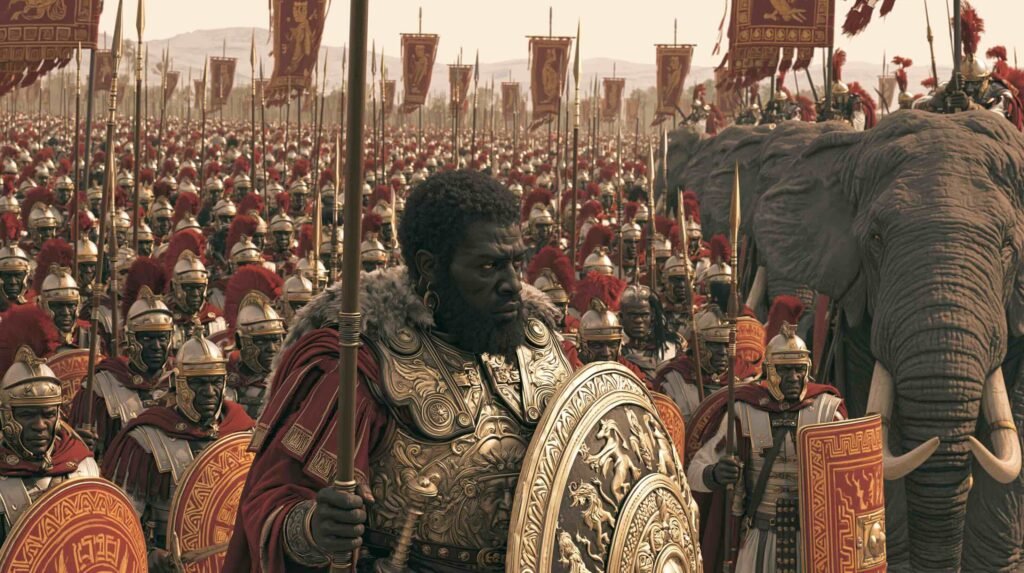
In 216 BCE, the Romans elected new consuls who promised to crush Hannibal. They raised the largest army in Roman history: eight legions, about 86,000 men. Hannibal had about 50,000. On August 2, 216 BCE, the two armies met at Cannae.
Hannibal arranged his troops in a crescent formation, with his weakest infantry in the center. As the Romans pressed forward, the crescent bent inward, drawing them into a trap. Hannibal’s Libyan infantry held the flanks. His cavalry, led by his brother Hasdrubal, swept around behind the Roman line. The Romans were surrounded. By nightfall, between 50,000 and 70,000 Roman soldiers lay dead.
Cannae remains one of the most devastating defeats in military history. Military academies still teach the “double envelopment” Hannibal executed that day. The Prussian General Staff used it at Sedan in 1870. General Norman Schwarzkopf cited it as an influence for the Gulf War’s “left hook.”
But Hannibal could not take Rome. He lacked siege equipment and reinforcements. Carthage’s senate, jealous of his power, refused to send him the men and supplies he needed. Instead, a Roman counter-invasion of North Africa forced him to abandon Italy in 203 BCE. On October 19, 202 BCE, at the Battle of Zama, Scipio Africanus defeated Hannibal. Scipio had studied Hannibal’s tactics and used them against him.
After the war, Hannibal became a statesman. He was elected suffete, the highest Carthaginian office. He reformed the government and raised money to pay Rome’s war indemnity. But his enemies in Carthage and Rome conspired against him. He fled into exile.
He spent his final years advising Antiochus III of Syria in his war against Rome. When Antiochus lost, Hannibal fled again, ending up in Bithynia. There, he led a naval victory against a Pergamene fleet. Rome demanded his surrender. Rather than be handed over, Hannibal took poison. He died in 183 or 182 BCE, around 64 years old.
Plutarch records a famous exchange. Scipio asked Hannibal who he considered the greatest general. Hannibal replied: Alexander the Great first, Pyrrhus second, and himself third. In another version, he placed himself above Scipio. Military historian Theodore Ayrault Dodge called Hannibal the “father of strategy” because Rome adopted his tactics after defeating him.
Hannibal left no writings. Everything we know comes from Roman and Greek sources. Those sources admired him despite his being their enemy. Napoleon studied his campaigns. The Duke of Wellington called him the greatest commander of antiquity. His oath, his Alps crossing, his victory at Cannae, and his bitter exile have inspired stories, films, and military doctrine for more than 2,200 years.
Sources:
- Wikipedia – Hannibal (https://en.wikipedia.org/wiki/Hannibal)
- Institute for the Study of Western Civilization – Hannibal (https://westernciv.com/syllabus/history-of-spain/fall/hannibal/)
- Grateful American Kids – Hannibal (https://gratefulamericankids.org/hannibal-often-regarded-as-one-of-the-greatest-military-strategists-in-history-and-one-of-the-greatest-generals-of-antiquity/)
- Google Books – Hannibal by Jacob Abbott (https://books.google.com.sg/books?id=o7xljwEACAAJ)
- AbeBooks – Hannibal by Jacob Abbott (https://www.abebooks.com/9781530057313/Hannibal-Abbott-Jacob-1530057310/plp)